Township
For Android & iOS · Playrix
- 4.7 out of 5Rating
- 12.96MReviews
- 500.00M+Downloads
- CasualGenre
Game details
- Version
- 39.1.2
- Updated
- Requires
- Varies with device
- Price
- Free
- Age rating
- Everyone
- In-app purchases
- $0.99 - $149.99 per item
Screenshots
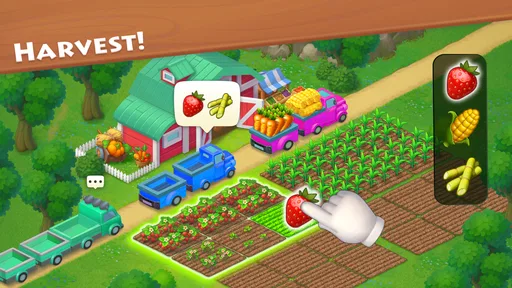
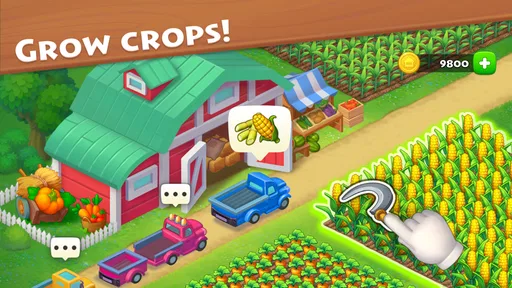
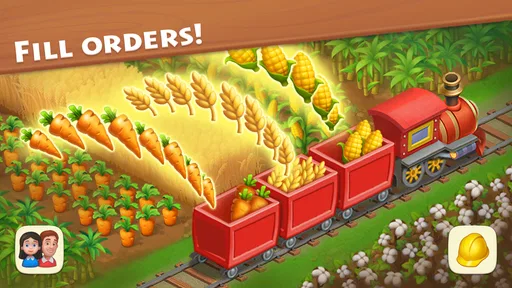
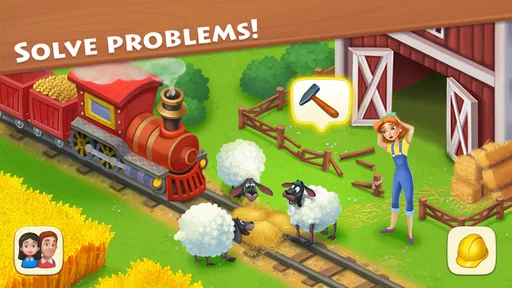
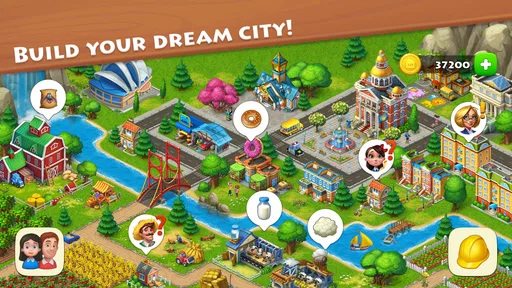
Township review
 Analysis by Gamesive
I would recommend Township to someone who likes short puzzle sessions but wants a town to grow between them. It combines match-3 boards with farm and town development, so a completed level can feel like more than a score: it helps move a larger project along. That blend is its main appeal, and also the reason it is worth approaching with the right expectations. This is a casual game, not a deep city simulator, and progress works best when you enjoy both the puzzles and the gradual expansion.
What to expect from the mix of puzzles and town building
Playrix has built Township around two kinds of activity. On one side are match-3 levels, where you make combinations to meet a board’s goal. On the other is a developing town with farms and buildings that give those puzzle wins a broader context. I found the combination more engaging than playing a string of unrelated boards, because returning to the town gives each session a sense of continuity.
The two parts do not carry equal weight at every moment. If you mainly want a focused puzzle game, the town layer may feel like an interruption. If you want a hands-off construction simulation with detailed planning, the match-3 requirements may become the part you have to tolerate. Township sits between those expectations: the puzzles provide the active challenge, while the town gives you a long-term reason to come back.
That makes it easy to fit into ordinary gaps in the day. A short session can be a level or two; a longer one can involve checking the town and deciding what to work toward next. I would not treat it as a game that promises a quick finish. Its pleasure comes from returning, making incremental progress, and seeing a town take shape rather than reaching a final destination.
For a first-time player, the most reassuring starting point is that you do not need to understand every part of the town before playing. Follow the game’s immediate prompts and focus on the current puzzle objective. The wider management side becomes easier to understand as it gives you reasons to notice what the town needs. The best early goal is simply to learn how a puzzle win connects to your next town task.
Township is free to download and is rated Everyone, which makes it approachable for a broad range of players. It has a 4.7 average from around 13 million ratings and over 500 million installs, but those figures do not tell you whether its particular blend will suit you. The useful question is whether you enjoy having a puzzle game attached to a steadily developing setting. If you do, the format has plenty to offer; if you want puzzles alone, a dedicated match-3 title may feel more direct.
Getting started without trying to master everything
My advice for the opening session is to resist the urge to plan the whole town. Start with the tutorial’s immediate requests, play the level it points you toward, and then look at what that result lets you do. This simple loop—check the current need, play, return, and act—teaches the game’s rhythm without making the town screen feel like a checklist you must complete all at once.
When a board appears, read its goal before making the first move. Match-3 games can tempt you to take the easiest visible combination, but the board’s objective should guide your choices. A move that looks satisfying may not help with what the level asks for. I make a quick scan for combinations that serve the goal, then take the simplest useful move rather than trying to predict every consequence several turns ahead.
It also helps to separate learning from optimization. Early on, you are learning where the game shows tasks and how the puzzle side feeds into town progress. You do not need a perfect strategy for every board to get your first meaningful success. Once you have completed a level and used the result toward a visible town objective, the central idea is clear: puzzles are not an isolated mode, but the active work that supports the settlement.
One small habit that saves frustration is checking the town before leaving a session. The next useful action may be obvious there, and remembering it makes it easier to return later without wandering between screens. I treat the town as my bookmark: I look at the current need, note the next sensible step, and stop when I have reached a natural pause. That is more satisfying than continuing just because the game offers another thing to do.
Because the game includes optional in-app purchases, I would decide early whether I want to spend anything at all. Items range from $0.99 to $149.99 per item, so the range is wide. I would begin as a free player and learn how the ordinary pace feels before considering a purchase. If you prefer a game with no purchase prompts or optional spending, Township may not be your ideal choice; if you are comfortable ignoring optional offers, you can approach it as a free game.
Making the first win count
A first successful action is not just clearing a board; it is understanding why that win mattered. After a level, return to the town and connect the result to the current task. That check turns an abstract puzzle victory into progress you can see. I find this especially useful for new players because it prevents the early game from feeling like two separate apps stitched together.
As you play more, use the board goal to decide whether to make a straightforward match or set up a more useful one. The right choice depends on the actual layout, so there is no universal move sequence. What does transfer is the habit of pausing for a moment before tapping: identify the objective, notice which available match contributes to it, and avoid spending moves on combinations that merely look appealing.
When a level takes more than one attempt, I would not immediately assume that the town plan is wrong. The puzzle is its own challenge, and a failed try can still show which part of the objective is proving difficult. On the next attempt, focus your attention there rather than repeating the same casual pattern. This is a practical way to make the match-3 side feel less random without pretending every board has one obvious solution.
For a realistic everyday routine, imagine opening the game while waiting for an appointment. I would check the town’s current request, play a level with that goal in mind, and stop after using the result or reaching a clear pause. That gives the session a beginning and an end. It also helps prevent the common trap of tapping through screens without remembering what I was trying to accomplish.
The town gives the game a different emotional pace from a conventional match-3 app. A puzzle title usually asks, “Can I clear this board?” Township adds, “What am I building toward?” That extra context is a real strength if you like visible, incremental development. The trade-off is that players who want every session to be only about solving boards may find the extra layer slows them down.
What can feel confusing, and how I handle it
The main source of confusion is switching between immediate puzzle goals and longer town goals. A board’s objective is concrete; town growth can feel broader. I keep those priorities separate: first understand what the current level asks, then check what the town needs after the level. Trying to plan a large town project while still learning the puzzle rules makes the game feel busier than it needs to be.
Another point to keep in mind is that “simulation” here should not be read as a promise of unrestricted city design. The game’s identity is shaped by the match-3 progression, and the town is part of that loop. If your ideal game is a sandbox where you can spend most of your time arranging a city without puzzle gates, a dedicated building simulator is likely a better fit. Township is more suitable when the building provides motivation for the puzzles.
It is also easy to mistake an optional purchase for a necessary step when progress feels slower than you would like. I would first ask whether I am enjoying the current loop at its ordinary pace. The presence of purchases is a reason to be deliberate, not a reason to spend automatically. Since the game is free to play, a cautious first-time player can try the core experience before deciding whether any paid item is worthwhile.
Township is designed for casual play, but casual does not mean every level will be effortless. Match-3 boards can ask for attention, and a player who dislikes repeating a challenging puzzle may find that friction more noticeable than the town rewards. Conversely, if you enjoy working out a board and then seeing progress elsewhere, a difficult level can make the eventual success feel more meaningful.
The game is a poor choice for someone who wants a purely offline-feeling puzzle session with no surrounding progression to think about, or for someone who finds optional purchases distracting. It may also disappoint players expecting a realistic farming simulator or deep economic management. I would choose a focused puzzle game for quick board variety, and a dedicated town builder for construction-first play. Township earns its place when you want a little of both.
Who will enjoy it, and what to try next
I think Township is especially well suited to players who like alternating between active challenges and low-pressure progress. It can work for a family audience, since its age rating is Everyone, though individual preferences still matter: some people love the match-3 loop while others would rather build without it. It is also a sensible choice for someone who wants a familiar puzzle format to anchor a longer-running game, rather than a one-off set of levels.
It is less compelling for players who want every action to have strategic depth, or who need a clear endpoint and a fast sense of completion. The town can encourage a “one more task” habit, while the puzzle progression asks you to keep returning. I recommend treating it as a relaxed ongoing pastime, not a productivity challenge. Pick one immediate objective per session and let the town develop at its own pace.
The game launched on November 8, 2013, and its current version is 39.1.2. That long-running history is reflected in its scale: it has passed 500 million installs. I mention this as context, not as a guarantee that every player will enjoy it. A large audience can indicate a widely approachable concept, but the personal fit still comes down to whether you want a puzzle-and-town loop rather than one genre on its own.
If you install it, give the first session enough time to complete a puzzle and then return to the town. That is the point at which the design becomes easiest to judge. If the connection between the two feels rewarding, continue with small goals and avoid worrying about perfect planning. If it feels like the town gets in the way of the puzzles, or the puzzles get in the way of building, you have learned something useful about your preferences.
My overall take is that Township is a welcoming casual game with a satisfying reason to revisit its match-3 boards. Its strongest feature is the link between a quick puzzle and a visible, ongoing town project; its biggest limitation is that neither side is entirely independent of the other. I would recommend it to a friend who enjoys gradual progress and does not mind optional purchases being part of a free game. Start with one board, follow its result back to the town, and see whether that small loop makes you want to return.
What we like
- Combines city building with farm management for varied gameplay.
- The town expands as you complete orders and unlock new areas.
- Decorative options let you customize the town's appearance.
- Regular events offer extra goals and limited-time rewards.
- Friends can help with supplies and cooperative tasks.
What could be better
- Construction and crop timers can slow progress.
- Some upgrades require hard-to-collect materials.
- Expanding the town can demand substantial in-game currency.
- Events may encourage frequent play to earn top rewards.
- Optional purchases can speed progress but add up over time.
Frequently Asked Questions
What is Township and what do you do in the game?
Township is a casual city-building and farming game in which you grow crops, process goods, fulfill orders, and expand a town. As you progress, you can construct community buildings and decorations, unlock new areas, and take part in additional activities. The game combines several familiar management and puzzle elements, so it suits players who enjoy gradual progress and returning to check on a developing virtual community.
Is Township free to download and play?
Township is generally available as a free-to-download game, and you can make progress without paying. It includes optional in-app purchases, such as items or resources that may help speed up certain parts of the experience. Waiting for production and managing what you have are part of the gameplay, so purchases are not essential, but it is sensible to review the store settings and use purchase controls if children may play on your device.
Can I play Township without an internet connection?
Some basic activities may be available when you are offline, but Township is designed to use an internet connection for features such as syncing progress, participating in events, and interacting with other players. Availability can vary by feature and version, so do not assume that your town will remain fully playable without a connection. Connecting regularly can also help ensure that your progress is backed up through the account or service you use.
Does Township support playing with friends or other players?
Township offers social features that let players connect, cooperate, and participate in group activities, depending on the current version and available events. These options can add goals beyond developing your own town, but they may require an internet connection and an account or in-game club membership. If you prefer a quieter experience, you can focus on farming and construction instead; check the game’s current settings to see which social features you can control.
What should I know before downloading Township?
Township is best suited to players who enjoy a relaxed, ongoing game rather than a story that can be completed in one sitting. Growing crops, producing goods, and building structures take time, and some progress may involve waiting or managing limited resources. The game also contains optional purchases and online features. Before downloading, check that your device has enough storage, review the age rating and privacy information, and consider whether its connected features suit your preferences.
Permissions
On Android, Township asks for these permissions.
- Photos/Media/Files
- read the contents of your USB storage, modify or delete the contents of your USB storage
- Storage
- read the contents of your USB storage, modify or delete the contents of your USB storage
User reviews
4.7 out of 5
12,955,909 reviews
- 88%
- 4%
- 1%
- 1%
- 5%
Download Township
Casual · Playrix · Free
Games like Township
View all: Games like Township
Bus Fever Party!
Casual4.1 out of 5

Royal Smash! - Physics Puzzle
Casual4.6 out of 5

MemeMix Challenge: Funny Party
Casual4.3 out of 5
About this listing
- Game
- Township
- Developer
- Playrix
- Package
- com.playrix.township
- Version reviewed
- 39.1.2
Gamesive reviews games on its own and is not paid by developers for scores. We do not host game files: the download buttons open the official Google Play and App Store pages. Names, icons and screenshots belong to their owners.