Offline Games No WiFi internet
Casual4.7 out of 5
For Android · TaTa Game Technology Limited
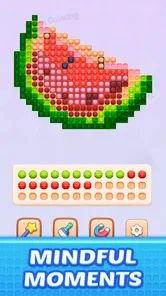
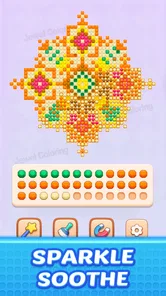
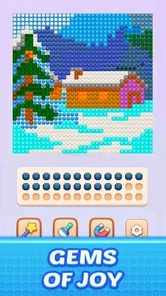
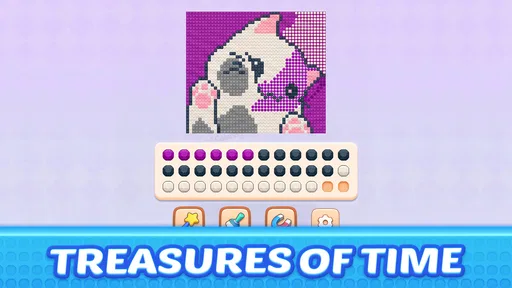
 Analysis by Gamesive
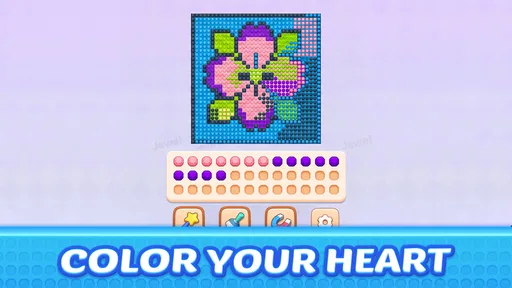
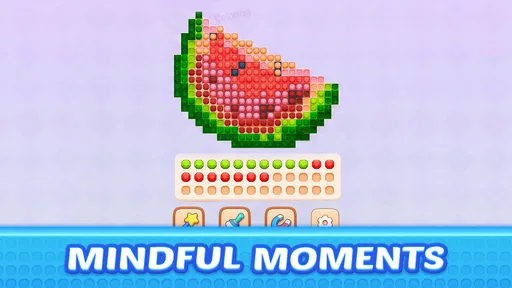
Jewel Coloring makes a simple promise: sort colorful jewels and turn the activity into pixel art. That blend gives this casual puzzle a gentle, creative identity from the outset. Rather than asking for a complicated strategy or a lengthy commitment, it presents an easygoing way to focus on a small task and watch an image take shape. I find that combination appealing for anyone who wants a game that feels more like a quiet break than a high-pressure challenge.
The central idea is easy to understand: match the jewel-sorting puzzle with the visual pleasure of coloring pixel art. The pieces of that idea support one another. Sorting gives each moment a clear purpose, while the artwork offers a visible payoff as progress accumulates. It is a straightforward concept, but that simplicity is part of its charm. You can approach it without a long tutorial or a big learning curve, making it suitable for players who prefer to start playing quickly.
The game’s description emphasizes that it is easy and fun for everyone, and the concept fits that welcoming tone. Jewel Coloring is a casual game from TaTa Game Technology Limited, with a free-to-play listing and an Everyone age rating. Its accessible premise makes it a natural choice for short pauses in the day: the sort of game I might open when I want something pleasant to concentrate on without feeling pulled into a demanding session.
What stands out in the first impression is the relationship between action and result. Sorting is not presented as an isolated chore; it contributes to a colorful picture. That gives a modest task a sense of direction. Even if you are usually more interested in puzzles than art activities, the combination can make the process feel rewarding. And if you enjoy pixel-style visuals, the act of filling in a picture supplies an appealing reason to keep going.
There is a particular satisfaction in games where each action contributes to a clear outcome. Pixel art is well suited to that feeling because the image develops piece by piece. Jewel Coloring’s premise leans on this sense of gradual completion, which helps its puzzle and coloring elements feel like parts of one experience rather than unrelated ideas placed side by side.
That structure also shapes the game’s mood. A sorting puzzle asks for attention, but the art-making aspect softens the impression: the point is not only to solve something, but also to see it become more complete. I like that balance as a design idea. It can make concentration feel relaxing instead of stern, especially for players who want a little mental engagement without the intensity of a competitive game.
The visual concept is the game’s clearest personality marker. Pixel art naturally turns a larger image into a series of small, readable parts, while jewels suggest brightness and color. Together, those ideas give the experience a coherent visual language: sort the pieces, add color, and let the artwork emerge. It is an approachable style that communicates the basic activity without needing elaborate world-building or a complicated story premise.
That focus gives the game a tidy setting of its own. Its appeal lies less in transporting the player to a detailed fictional world and more in creating a small space for orderly, colorful progress. I think that can be a strength for a relaxing puzzle. A busy setting might compete with the simple pleasure of sorting and coloring; a clear visual idea lets the activity remain front and center.
The pixel-art approach can also make completion feel tangible. Each portion of an image reads as a small step toward a whole, so the player has an easy visual cue for progress. This kind of feedback is important in a casual game: you can see why an action matters, and the artwork helps make the result feel more personal than an abstract score. The image is not just decoration around the puzzle; it is the reason the sorting has a creative payoff.
For players searching for a relaxing jewel-sorting pixel art puzzle, this is the core appeal to look for. The game brings together sorting, color, and a gradual visual reveal in a way that is easy to grasp. That does not mean every player will want the same pace or art style, of course, but the concept is clear enough to make the game’s identity immediately understandable.
Because its premise is compact, the art direction has a useful job: it needs to make the activity feel inviting while keeping the puzzle legible. The jewel-and-pixel-art pairing suggests a bright, ordered experience, and the coloring element gives each task a creative slant. I appreciate when a casual game does not overcomplicate its own identity. Here, the broad idea is easy to explain and easy to remember.
That visual clarity can be especially welcome for players who do not want to decode a large set of systems before they can enjoy a game. The point is apparent from the name and concept, and the activity has a natural visual goal. In a market full of games competing for attention with many layers, a focused presentation can feel refreshing. It gives the player room to settle into the basic rhythm rather than constantly switching between different kinds of demands.
A calm puzzle depends on more than its visuals. The pace of interaction matters too: whether each step feels understandable, whether progress arrives in satisfying increments, and whether the player can stay with the activity without feeling rushed. Jewel Coloring’s stated identity points toward an easygoing rhythm, with sorting as the hands-on element and pixel coloring as the longer visual reward. That is a coherent foundation for a relaxed session.
I would describe the intended mood as focused but low-pressure. Sorting gives the mind something specific to do, while the gradual art result offers a softer reason to continue. That contrast is useful. A game that is entirely passive may not hold attention, while a puzzle that constantly demands urgency can undermine the wish to unwind. This concept sits between those extremes: it asks for participation, yet its creative framing keeps the task approachable.
Sound can play an important role in reinforcing that sort of mood, but the strongest thing to consider here is how the overall rhythm supports the game’s simple premise. I do not want to assume particular sound effects or music details; instead, the appeal is in the way the activity itself can provide a calm cadence. A player can focus on one sorting decision at a time and connect those decisions to a visible image. That steady progression is a meaningful part of the experience’s atmosphere.
For me, the best casual games make it easy to pause and return without losing the thread. A clear objective helps with that, and the combination of sorting and coloring gives Jewel Coloring a recognizable loop. You are not being asked to remember a complicated narrative or manage a sprawling set of systems. The appeal is concentrated in the immediate task and the picture it helps create, which suits quick, low-commitment play.
The game’s mechanical identity can be summed up in its pairing of jewel sorting with pixel-art coloring. Sorting provides the puzzle side: it gives the player an activity that calls for attention and choices. Coloring supplies the creative side: it turns those actions into progress toward an image. The two elements fit naturally because the sorting has a visible purpose beyond completing an abstract challenge.
That connection matters for pacing. When mechanics and presentation point in the same direction, the experience can feel coherent even if its rules are simple. Here, a player can understand the broad goal quickly and spend attention on the satisfying process of moving from individual pieces toward a finished-looking result. The emphasis is on steady engagement rather than on a sprawling ruleset, which matches the game’s casual positioning.
The key appeal is the link between puzzle progress and creative progress. It gives the sorting a sense of contribution and helps the coloring feel earned through play. I see that as the game’s most promising design choice. Players who enjoy clear tasks, colorful visuals, and gradual completion may find the combination particularly inviting. Those looking for a deep strategic challenge may be drawn less strongly to a concept built around ease and relaxation.
The game is available free, and its broad age rating reinforces the accessible impression of the premise. It has reached over ten million installs and holds an average rating of 4.8 from around 228,000 ratings. Those figures suggest that a large audience has responded positively to its straightforward casual appeal. They are useful context, though the best reason to try it is still whether the central activity sounds enjoyable to you.
Jewel Coloring is currently at version 1.23.1 and supports Android 6.0 and later. It was released on February 25, 2026. For someone browsing for a casual coloring puzzle, those practical details sit alongside a simple creative hook: a game that asks you to sort jewels while building pixel art. Its short description is simply “Jewel Coloring,” which matches the directness of the concept.
I can see the game appealing to players who like visual progress and prefer a gentle puzzle over an intense challenge. It may also suit people who enjoy pixel-art aesthetics or want an activity that has a clear objective without requiring a large time commitment. The appeal is easy to understand: each sorting task contributes to a colorful result, and the creative framing gives the basic puzzle a softer tone.
If you mainly want complicated strategy, elaborate storytelling, or a competitive edge, the game’s relaxed premise may not be the first thing you reach for. But if you like simple mechanics presented with a creative payoff, its combination feels well matched to that preference. It is the kind of idea that can make a small pocket of downtime feel more engaging without turning it into another demanding obligation.
Jewel Coloring has a clear identity built around calm puzzle play and visual creation. Its strongest idea is the way jewel sorting feeds into pixel-art coloring, allowing a simple action to produce a visible, creative result. That gives the game a coherent mood: focused enough to hold attention, but framed as an easygoing activity for a broad audience. I find that balance more compelling than a puzzle concept that offers only a score or a sequence of abstract tasks.
The art direction and pacing work toward the same goal. Pixel art makes progress readable, while the sorting premise provides a straightforward reason to interact. The game does not need a complicated setting to establish its character; its small world of jewels, colors, and gradually developing images is enough to communicate what it wants to be. That compactness can be a welcome quality when the aim is to relax rather than to lose yourself in a large, demanding game.
Its overall appeal is simple, and that is both the point and the deciding factor. Players who enjoy a clear puzzle loop and the satisfaction of seeing an image take shape have a good reason to give it a look. If you are after a mellow mobile game with a creative twist, this one presents a welcoming option. For me, the most memorable part is not just sorting the jewels or coloring the art, but how those two activities support the same gentle, rewarding rhythm.
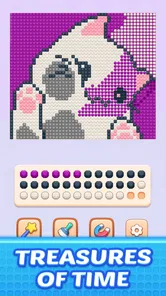
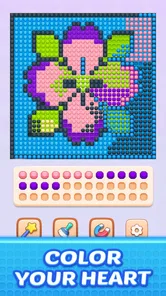
Jewel Coloring is a casual coloring game built around filling numbered or otherwise marked sections of pictures with the matching colors. Its jewel-themed artwork gives the activity a bright, decorative look, while the basic goal is to complete an image one section at a time. Exact picture collections and controls can vary by version, so check the app listing and screenshots to confirm what is currently included.
The simple coloring format can be approachable for beginners and may appeal to children who enjoy pictures, colors, and low-pressure activities. However, suitability depends on the content shown in the available artwork, the difficulty of individual pictures, and any advertising or in-app purchase features. Parents should review the store’s age rating, privacy information, and purchase settings before letting a child install or use the game.
Whether Jewel Coloring works offline can depend on the app version and which features you use. Coloring already available on your device may remain accessible without a connection, while loading new artwork, displaying ads, or using online features may require internet access. If offline play matters to you, check the developer’s description and test the game after installation with your device disconnected rather than assuming every feature works offline.
The price, advertising, and purchase options can differ between the Android and iOS editions and may change over time. A game can be free to install while offering optional purchases or showing ads, for example to unlock content or support continued play. Before downloading, review the current store listing for pricing and in-app purchase disclosures, and check your device’s purchase controls if you want to avoid accidental spending.
Start by confirming that the listing is the intended Jewel Coloring app and that it is compatible with your Android or iOS device. Check the developer name, recent update history, user reviews, age rating, permissions, privacy details, and required storage. These details help you assess whether the app suits your device and expectations; features, availability, and data practices can vary by region and version.
On Android, Jewel Coloring asks for these permissions.
Jewel Coloring is also available in 1 other languages on our site.
4.8 out of 5
227,586 reviews
Casual · TaTa Game Technology Limited

Casual4.2 out of 5

Casual4.3 out of 5

Casual4.6 out of 5

Casual4.8 out of 5

Casual4.6 out of 5
Casual4.7 out of 5
Casual4.7 out of 5
Casual4.6 out of 5

Casual4.2 out of 5

Casual3.2 out of 5

Casual4.7 out of 5

Casual4.7 out of 5

Casual4.3 out of 5

Casual4.7 out of 5
Casual4.5 out of 5

Casual4.6 out of 5

Casual4.9 out of 5

Casual4.7 out of 5



Gamesive reviews games on its own and is not paid by developers for scores. We do not host game files: the download buttons open the official Google Play and App Store pages. Names, icons and screenshots belong to their owners.