
Offline Games No WiFi internet
Casual4.7 out of 5

For Android · Moon Active
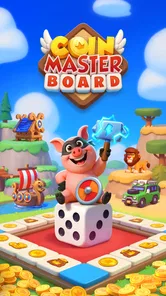
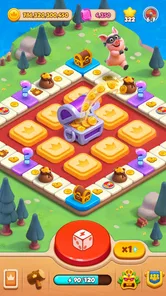
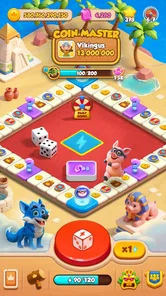

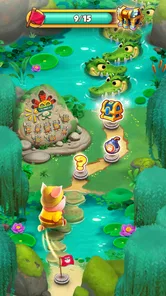

 Analysis by Gamesive
I find Coin Master - Board Adventure easiest to understand as a casual game built around short turns and visible goals. You roll dice, work toward building a town, and try to beat friends’ high scores. That loop makes progress easy to grasp even when you only have a few minutes, but it also means your pace depends on how often you can take another turn. If you enjoy checking off small objectives, the structure can be satisfying; if you want a game that rewards long, uninterrupted sessions with deeper strategy, it may feel limited.
The appeal is that the basic aim is clear without asking you to learn a complicated rule set first. A roll gives the session its next step, while town-building gives those turns a longer-range purpose. I like that pairing: the immediate action is simple, but it points toward something you can see taking shape over time.
That makes the game a natural fit for short breaks. I can imagine opening it while waiting for a kettle to boil, making a few decisions, then putting it down without needing to remember a complicated plan. The town goal helps those brief visits feel connected rather than like isolated taps. At the same time, this is not a substitute for a game where every move involves careful tactical choices. The pleasure is in the rhythm of rolling and progressing, not in mastering a demanding strategy system.
Friends’ high scores give the basic loop a social nudge. They can make an ordinary session feel more purposeful: I am not only advancing my own town but also seeing how my result compares with people I know. That works best if friendly competition is motivating rather than stressful. Anyone who prefers a solitary, self-paced experience can still appreciate the building objective, but the score-chasing angle may be less compelling.
One useful way to approach the opening is to decide what makes a session feel worthwhile before you start. If you are there to move your town forward, focus on that sense of incremental progress. If you are there to compete, treat a high score as a bonus rather than a guarantee. Keeping the goal modest helps the game stay casual instead of turning every visit into a demand to keep playing.
With a loop this simple, progress signals matter. The town is the most tangible one: it gives a visual reason to return beyond the next roll. A score comparison offers a different kind of feedback, but it is less personal. I would pay attention to both, while remembering that they serve different moods—building is about your own gradual advancement, and competing is about how your result stacks up against friends.
That distinction also helps set expectations. A good session does not have to produce a dramatic leap. If the main reward is a small step toward a town goal, the game can still feel worthwhile in a few minutes. Players who need constant novelty or a major unlock at the end of every session may find this kind of incremental feedback too restrained. I would recommend it more readily to someone who enjoys watching a simple project develop little by little.
For a practical routine, I would choose a natural stopping point rather than playing automatically until I feel bored. Check whether the town has moved forward or whether you have reached the score goal you had in mind, then decide whether another short visit is actually appealing. This approach makes the game easier to fit around everyday life and reduces the feeling that progress requires an open-ended session.
As a casual game, its low barrier to entry is a strength. You do not need to prepare for a long campaign or study a complicated set of mechanics before you can enjoy a quick visit. That simplicity is also the central trade-off. Rolling and building provide a recognizable pattern, and players who enjoy that pattern may find it comforting; players who want the challenge to keep changing may soon want more variety than the core loop offers.
I would not mistake simple rules for guaranteed relaxation, though. The score competition can add pressure if you are the sort of person who treats every comparison as something you must win. The best experience, in my view, comes from using competition as a light extra rather than the only reason to play. When friends’ results are motivating, they add a useful target; when they make a casual break feel like an obligation, the town-building side is a better focus.
Compared with many casual alternatives that center on puzzles or matching pieces, Coin Master puts more emphasis on rolls, building, and friendly score-chasing than on solving a board through careful combinations. That makes it a better fit when you want quick, legible actions and a longer-term town objective. If your favorite part of casual games is working out a tricky puzzle or refining a particular strategy, a puzzle-focused option is likely to offer more satisfying decision-making.
There is also a pacing trade-off to keep in mind: because the next action comes from rolling, the experience is not the same as having complete control over every step of progress. If you want a game where planning alone determines what happens next, this may not scratch that itch. I would approach it as a light progression game whose appeal comes from returning to a simple loop, not as a demanding test of skill.
The game is free to download, but it includes in-app purchases priced from twenty-nine cents to two hundred forty-nine dollars and ninety-nine cents per item. That wide range is a reason to think about spending boundaries before you play, especially if you are prone to paying to keep a session going. I would start with the free experience and make any purchase decision slowly, rather than treating a payment as a routine part of progress.
It is suitable for Everyone, which makes its accessible style easy to understand, but an age rating is not a guide to how every household handles purchases or screen time. If a child will be playing, I would make sure the adult responsible is comfortable with in-app spending and set expectations in advance. For adults, the same basic advice applies: the game works best as a small diversion, not as a reason to spend more than intended chasing a better result.
Coin Master is developed by Moon Active. It has an average rating of 4.8 from around seventy-nine thousand ratings, with about six thousand two hundred written reviews and over five million installs. Those figures suggest that many players have tried it, but popularity does not settle whether its particular rhythm is right for you. The deciding question is whether short, repeated rolls and gradual town-building sound enjoyable rather than repetitive.
I would recommend it to someone who likes brief sessions, visible incremental goals, and a bit of friendly competition. It suits a commute break, a quiet wait in a queue, or a few minutes at home when you want something lighter than a story-driven game. The most useful habit is to treat each visit as a small check-in: decide whether you are playing for town progress or a score comparison, and stop when that purpose has been met.
I would skip it if you want deep tactical control, elaborate puzzle-solving, or a game that feels substantially different from one session to the next. It is also a poor match if social score comparisons make you anxious or if you dislike progression that unfolds through repeated simple actions. In those cases, a puzzle game with more direct control or a strategy game with more involved decisions would be a better use of your time.
The version is 3.5.2792, and the minimum operating system is Android 7.0. If your device meets that requirement, the remaining question is less about technical complexity than about taste: does the roll-and-build rhythm sound like a pleasant way to spend short stretches of time? I would try it with a clear spending limit and a relaxed attitude to scores. That gives the game room to be what it is—an easygoing casual experience with a steady goal—without expecting it to become a deeper challenge than its core loop promises.
The strongest part of the progression is how quickly the game gives you a simple reason to act and a broader reason to return. The town provides a personal marker of advancement, while friends’ high scores can add a competitive target when you want one. The limitation is that these goals sit on top of a straightforward loop, so they may not be enough for players who need frequent changes in challenge or more control over the route forward.
My recommendation is to treat it as a snack-sized game, not a long-form strategy project. Coin Master is free to start, belongs to the casual games category, and has enough of a clear progression hook to make short visits appealing. I would keep it installed if I enjoyed the satisfaction of gradual building and occasional friendly score-chasing; I would move on if the repeated rhythm stopped feeling relaxing. That is the fairest test of whether its goals and pacing are working for you.
Coin Master is a casual mobile game that combines spinning a slot machine with building villages and competing with other players. Spins can award coins, attacks, raids, or shields, which shape how you develop and protect your village. The game is designed for short sessions, though collecting cards, completing events, and upgrading villages can encourage longer play.
Coin Master is free to download and play, and it provides opportunities to earn spins and coins through gameplay and timed rewards. However, it also offers optional in-app purchases, including items that can help you progress or keep playing. You do not have to spend money, but spin limits and event timers may make progress slower if you rely only on free rewards.
You spend spins on the in-game slot machine, whose outcomes determine whether you receive coins, attack another village, raid a player’s stash, or gain a shield. Spins are limited, so it is worth checking the result before choosing how to use your rewards. The slot machine uses randomized outcomes, meaning a particular result or reward is never guaranteed.
Coin Master includes social features that let you interact with other players through attacks, raids, card trading, and friend-related activities. Depending on the feature, you may be able to connect through supported social or account options. Review the permissions and account settings before linking a profile, and remember that playing with friends can involve competitive actions against their villages.
Coin Master generally needs an internet connection for its online features, events, account functions, and interactions with other players, so offline play may be limited or unavailable. The game includes randomized slot-machine-style mechanics, social interaction, and optional purchases. Parents should check the current age rating, device controls, and purchase settings, and discuss spending and online interactions with younger players.
On Android, Coin Master - Board Adventure asks for these permissions.
Coin Master - Board Adventure is also available in 2 other languages on our site.
4.8 out of 5
78,681 reviews
Casual · Moon Active

Casual4.2 out of 5

Casual4.3 out of 5

Casual4.6 out of 5

Casual4.8 out of 5

Casual4.6 out of 5

Casual4.7 out of 5

Casual4.7 out of 5

Puzzle4.7 out of 5
Casual4.7 out of 5

Casual4.6 out of 5

Casual4.2 out of 5

Casual3.2 out of 5
Casual4.7 out of 5

Casual4.7 out of 5

Casual4.3 out of 5

Casual4.7 out of 5

Casual4.5 out of 5

Casual4.8 out of 5

Casual4.6 out of 5

Casual4.9 out of 5



Gamesive reviews games on its own and is not paid by developers for scores. We do not host game files: the download buttons open the official Google Play and App Store pages. Names, icons and screenshots belong to their owners.