
Evony: The King's Return
Strategy4.1 out of 5

For Android & iOS · Lessmore GmbH
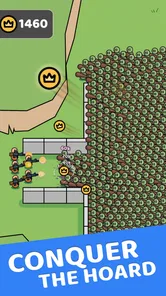
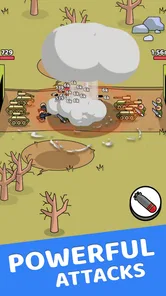
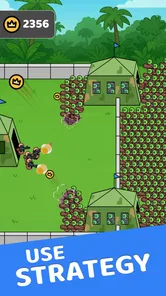
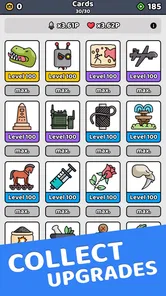
 Analysis by Gamesive
Strategy games often ask for a lot of attention at once: a crowded battlefield, several menus, and decisions that punish a slow response. We Are Warriors! takes a more focused approach, built around sending units into battle and deciding how to spend resources as the action unfolds. I find that simplicity appealing, especially for short play sessions, but it also means the game can feel repetitive or demanding in ways that matter to players with different needs and routines.
The basic idea is easy to grasp: build up your forces, send them against the opposing army, and try to push through successive battles. That direct loop makes it easier to understand what a tap is meant to do than in a strategy game crowded with menus, maps, and layers of management. I like that the main decision is usually visible in the action rather than buried in a long planning screen.
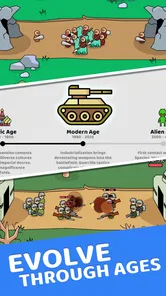
That clarity is useful for newcomers, but it should not be mistaken for a game with no learning curve. Choosing when to spend resources and which units to send can change how a battle goes. As the game moves through different historical ages, the presentation and available choices evolve, so players still need to pay attention and adapt rather than repeat one decision blindly.
Navigation is most comfortable when I approach a battle with a little time to focus. The core loop is straightforward, yet the screen can ask me to track the enemy, my resources, and the flow of units at once. If I am glancing at the game while doing something else, it is easier to miss a useful moment. The uncomplicated premise helps, but it does not remove the need to watch what is happening.
The game comes from Lessmore GmbH and sits in the strategy category. Its current version is 1.67.0, and it is rated 4.5 on average from around 296,000 ratings. Those figures suggest a sizable audience, but what matters more to me is whether the style suits the player: this is a compact battlefield challenge, not a sprawling strategy campaign with extensive control over every detail.
One strength is that I can understand the immediate goal without needing to memorize a complicated set of commands. That makes it a reasonable starting point for someone curious about strategy games but wary of dense interfaces. It also gives experienced players a quick alternative when they want tactical decisions without committing to a long session of map management.
A useful habit is to treat each attempt as a small experiment. Rather than spending resources as soon as they become available, I would watch how the opposing force behaves, then consider whether a different timing or unit choice could improve the next push. This approach turns a loss into information and makes the progression feel less like blind repetition.
There is a trade-off, though. Players who enjoy detailed formations, extensive battlefield controls, or carefully planned multi-stage campaigns may find the interaction too narrow. The game’s appeal comes from keeping the decision-making concentrated. If that concentration feels more like a limit than a relief, a deeper real-time strategy game or a slower turn-based alternative may be a better fit.
Because battles develop on screen rather than waiting indefinitely for a player to finish a turn, the game asks for visual attention and timely input. I would not describe it as a good choice for someone who needs every decision to be fully pause-and-review. It is easier to play when I can keep my eyes on the battle and use the controls without interruption.
For motor comfort, the practical question is whether a player can make the game’s required taps reliably on their device. The uncomplicated structure avoids the feeling of juggling a large command panel, but that does not guarantee that every interaction will suit every hand, grip, or input preference. Anyone who finds repeated tapping tiring should try a short session first and notice whether the action remains comfortable.
Sensory comfort can also vary. The moving units and battle activity provide useful feedback, yet players who are easily distracted by motion or busy screens may find it harder to track the choice they want to make. I recommend playing somewhere with fewer interruptions and checking whether the visual pace feels manageable before settling in for a longer run. I would not assume that a simple strategy loop automatically makes the whole experience calm.
A non-obvious way to make the game easier to follow is to focus on one question at a time: what is the immediate bottleneck, and what resource or unit choice addresses it? That keeps attention on a concrete decision instead of trying to monitor every detail equally. It is also a good way to avoid tapping reflexively, which can lead to spending resources without a clear plan.
For a realistic everyday use case, imagine opening the game during a quiet break between errands. The direct battle format is easier to pick up than a strategy title that expects a long planning session, and I can focus on the immediate confrontation rather than reconstructing a complex campaign state. Still, I would avoid starting a battle when I know I may need to put the phone away at any moment; active play rewards attention, and interruptions can break the rhythm.
That makes it a better match for a deliberate few minutes than for constant background play. If I am waiting somewhere and can keep the phone in hand, the concentrated loop makes sense. If I am walking, working, or caring for someone, the game is less suitable because even a simple action game can demand more attention than the setting allows.
The game is free to download, with in-app purchases ranging from $0.98 to $99.99 per item. I would treat optional spending as a personal boundary to decide in advance, especially if a player is tempted to accelerate progress after a difficult battle. It is perfectly reasonable to begin without paying and see whether the pace is enjoyable; players who dislike purchase prompts or any pressure to spend may prefer a premium game with a single upfront cost.
It is rated Everyone 10+, which gives families a useful starting point when deciding whether it is appropriate. I would still recommend that a parent try the game and review its purchase setup before handing it to a child, since an age rating alone does not explain how a particular player will respond to progression or spending choices. The game has passed 10 million installs, but broad popularity cannot determine whether it fits a child’s patience, attention, or household rules.
The main limitation is that a readable idea and a manageable screen are not the same thing as complete access for every player. The need to observe an active battle can disadvantage someone who needs more time to process visual information, while repeated touch input may not work well for every motor preference. I would test the actual experience on the device and in the conditions the player expects to use, rather than relying on the game’s basic simplicity as a promise.
There is also a difference between a game being easy to start and easy to keep enjoying. The evolving setting gives the battles a sense of forward movement, but players who need strong variation in goals or a wider range of ways to interact may tire of a repeated core loop. If the appeal of strategy for you is deep customization, elaborate planning, or a campaign you can pause at will, this is probably not the right entry point.
Compared with typical strategy games, We Are Warriors! reduces the amount of long-range management and puts the emphasis on immediate battle choices. That is a welcome contrast for someone who wants a lighter commitment, but the same design leaves fewer layers to explore than a full-scale strategy title. For turn-based games, where a player can take as long as needed between moves, I would look elsewhere if response timing or visual pace is a concern.
Version 1.67.0 is the current version, and the game requires Android 8.0 or later. Those details matter when deciding whether an older phone can run it, but the more useful test is practical: check that the screen is comfortable to view and that touch input feels dependable before investing time in progression. A good fit depends as much on the player’s device and play setting as on the game’s rules.
I would suggest giving it a try if you like compact strategy challenges, want a straightforward route into the genre, or enjoy testing small changes in timing and resource use. It is also a plausible choice for someone who has bounced off strategy games with too many menus and wants the battlefield to remain the main event.
I would steer away from it if you want a slow, fully turn-based pace, extensive control over units, or a game that is comfortable to play while your attention is divided. Players with visual or motor needs should make a short trial part of the decision: look for whether the action is easy to track and whether the required taps feel sustainable. A more deliberately paced game may serve them better.
My overall view is that the game’s focused design is both its best feature and its clearest boundary. It gives strategy-minded players an approachable way to think about the next battle without turning every session into a long planning exercise. At the same time, its active presentation and repeated decision loop will not suit everyone.
For a free strategy game from Lessmore GmbH, rated for players aged 10 and up, I think it is worth trying if its quick, battle-centered style sounds appealing. I would begin with a short session, keep spending optional, and judge the experience by whether the pace and controls feel comfortable in your real surroundings. That simple test is more useful than assuming that a popular, accessible-to-start game will automatically be accessible or enjoyable for every player.
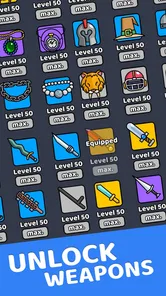
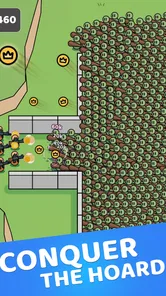
We Are Warriors! is a free-to-play strategy game built around short battles and a simple premise: lead an army from one historical era into the next. You send units onto a lane to fight an opposing force, manage the food needed to deploy them, and try to destroy the enemy base. Progression introduces new eras, units, and upgrades, so the game is easy to pick up but relies on choosing the right timing and mix of troops.
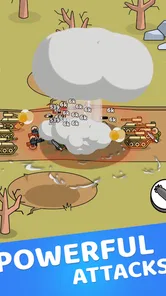
Battles are won by destroying the opposing base before your own falls. Units cost food to deploy, while food replenishes over time, so it is important to balance sending troops with saving resources for stronger or more useful units. The best approach depends on the enemy lineup and the stage: sometimes a quick wave helps, while in other battles it pays to build up food and launch a coordinated push. Upgrades can also make later attempts more manageable.
Connection requirements can vary by game version and by features such as advertising, purchases, or online services. Some basic battle progress may be available without a constant connection, but you should not assume every feature works offline or that progress will sync while disconnected. Check the current store listing and test the game before relying on offline access, especially if you plan to play during travel or want to preserve progress across devices.
We Are Warriors! is generally offered as a free download, but the experience may include advertising and optional in-app purchases. These can be used for bonuses or faster progression, depending on the current version and regional store listing. You can usually try the core game without paying, though progress may feel slower as stages become more demanding. Review the purchase details and parental controls before downloading if spending or ads are a concern.
The game focuses on cartoon-style battles rather than realistic violence, but its suitability depends on a child’s age and sensitivity. The larger practical considerations are screen time, advertisements, and optional purchases. Store age ratings and available features can differ by platform and country, so check the listing for the device you use. Parents may also want to enable purchase restrictions and review privacy information before allowing a child to play.
On Android, We Are Warriors! asks for these permissions.
4.5 out of 5
296,271 reviews
Strategy · Lessmore GmbH

Strategy4.5 out of 5

Strategy4.4 out of 5

Strategy3.7 out of 5

Strategy4.5 out of 5

Strategy4.8 out of 5

Strategy4.1 out of 5

Puzzle4.7 out of 5
Strategy4.1 out of 5

Strategy4.5 out of 5

Strategy4.1 out of 5

Strategy4.5 out of 5

Strategy4.2 out of 5
Strategy4.6 out of 5

Strategy4.6 out of 5

Strategy4.4 out of 5
Strategy4.1 out of 5

Strategy4.6 out of 5

Strategy4.4 out of 5
Strategy4.5 out of 5



Gamesive reviews games on its own and is not paid by developers for scores. We do not host game files: the download buttons open the official Google Play and App Store pages. Names, icons and screenshots belong to their owners.