
Doomsday × FAIRY TAIL
Strategy4.5 out of 5

For Android & iOS · Supercell
 Analysis by Gamesive
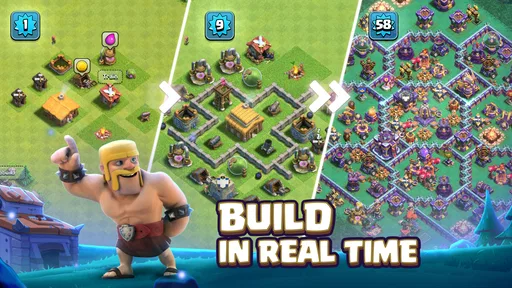
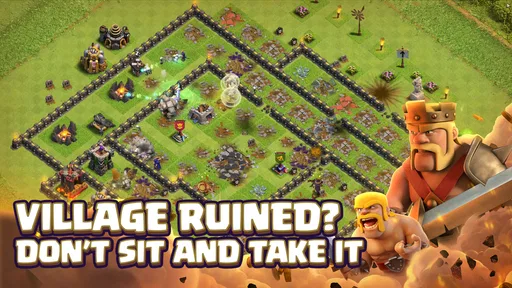
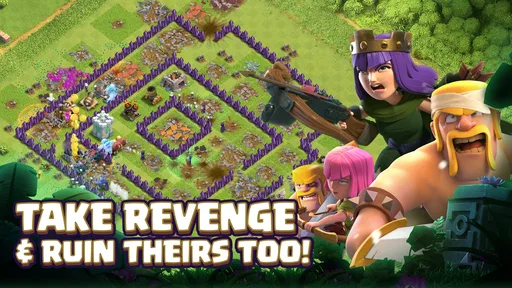
I think Clash of Clans is at its best when you enjoy making small strategic decisions that build toward a larger plan. It is a mobile strategy game from Supercell, released in 2013, and its appeal is less about nonstop action than about shaping a village, preparing an attack, and deciding how to spend the time and resources you have. If you want a game you can check in on between other parts of the day, it is an easy one to consider. If you want every session to be a fast, self-contained battle, its longer-term village management may feel like homework.
The first question I would ask a friend is whether they like planning between battles as much as the battles themselves. Here, your base is not just decoration: its layout and defenses affect how it holds up when other players attack. You also make choices about what to improve and how to prepare your own forces. That creates a satisfying loop, but it means progress is tied to decisions made over many sessions rather than a single match.
That distinction helps when comparing it with other strategy games. A quick tactical game is usually a better fit if you want to open an app, play one short round, and feel finished. A broad empire or city-building game may suit you more if you want the building side to be the main attraction. This game sits between those tastes: base development matters because it supports competitive attacks, and combat gives your building choices a practical test.
I would also think about how you feel about waiting and gradual upgrades. There is plenty to do in the long run, but not every improvement arrives at the pace you might want. The game is free to download, with in-app purchases priced from $0.29 to $239.99 per item. You can start without paying, but the purchase range is worth knowing before you get invested. I would treat spending as optional convenience, not as a requirement for deciding whether the core loop is fun.
The most useful way to approach the game is to give each visit a purpose. Instead of logging in, tapping through every available action, and leaving without a plan, decide whether you are focusing on your base, preparing for an attack, or checking how your defenses are arranged. That simple routine makes short visits feel more deliberate and reduces the sense that the game is asking you to manage everything at once.
A practical everyday scenario: you have a few minutes during a break and want something more involved than a puzzle, but you cannot commit to a long gaming session. You can check your village, make a considered upgrade choice, and prepare for your next attack. Later, when you have more time, you can focus on the battle itself. I like that the game can fit around a day in this way, though players who want a complete, polished match every time they open an app may find the stop-and-return rhythm less satisfying.
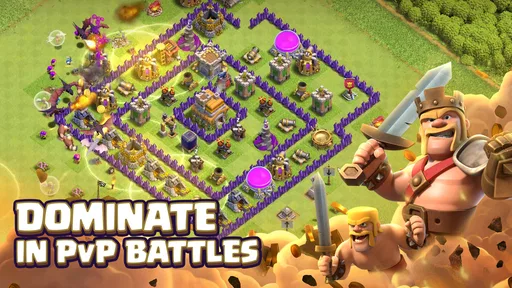
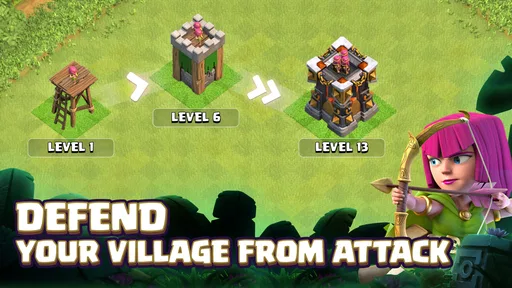
What gives the base-building a point is the connection between defense and offense. A layout is a set of trade-offs: protecting one part of your village can leave another more exposed, and a design that looks orderly is not automatically a good defense. I recommend treating each attack against your base as feedback. Rather than changing everything after one loss, look for a pattern in what was vulnerable and make one or two targeted adjustments. That makes the building side feel like strategy rather than decoration.
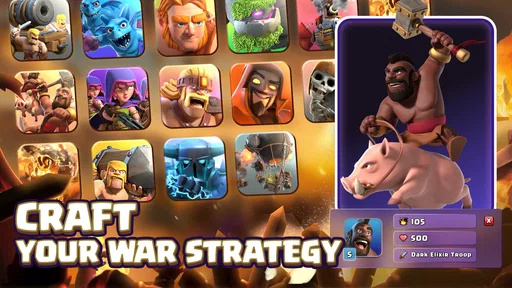
The same principle applies when attacking. It is tempting to choose units based only on what looks powerful, but a better habit is to think about what the target’s layout asks you to overcome. Before committing, take a moment to identify the approach you want to use and whether the base seems to make that approach awkward. Even without turning every battle into a lengthy analysis, this pause can make victories feel earned and losses more informative.
One non-obvious strength is how the game encourages learning from repeated attempts. Your own base shows you the defensive side of a problem, while attacking other villages gives you examples of how layouts can channel or frustrate an assault. I find this more engaging than a strategy game where the best move is simply to repeat the same build order. The details of each decision matter, and small changes can give you a clearer sense of why a plan worked or failed.
Another useful habit is to avoid upgrading or arranging things purely because they are available. Think about what kind of player you want your village to support: one who values a more resilient defense, one who prioritizes preparing for offense, or someone who wants a balanced approach. There is no universal layout that makes every choice right. Being clear about your own priority helps prevent scattered decisions and makes progression feel more personal.
Compared with games centered mainly on quick combat, Clash of Clans gives your battles a longer context. You are not only trying to win the current encounter; you are also developing a village that will face future attacks. That ongoing connection is its biggest draw for me. It is especially appealing if you like seeing a plan mature over time and enjoy the contrast between careful preparation and the uncertainty of taking on another player’s base.
It also has a strong social angle through multiplayer play, though I would not recommend it on the assumption that you need to be constantly online or have a fixed group of friends. The core appeal is understandable even if you prefer to make your own strategic choices. If you do enjoy coordinating with other players, that can add a shared goal to the personal cycle of building and attacking. If you would rather play entirely alone and avoid competitive interaction, a single-player strategy game may be a more comfortable choice.
The game’s broad reach is reflected in its average rating of 4.5 from around 61 million ratings, with over 500 million installs. Those figures suggest that it has found a very large audience, but popularity by itself does not guarantee that its pacing will suit you. Its category is strategy, and it is rated Everyone 10+, so I would still judge it by whether you enjoy its particular mix of village management and multiplayer battles rather than by its scale.
I would skip it if you dislike waiting for long-term progress, feel pressured by games that ask you to return regularly, or simply do not enjoy managing a base. The game’s central loop depends on caring about what happens to your village. If you only want a round-based tactical challenge with a clean beginning and end, a compact battle game is likely a better match. If you want deep narrative choices or a campaign that can be completed at your own pace, a story-led strategy title may serve you better.
It may also be the wrong pick if you are sensitive to optional purchases. The free entry point makes it easy to try, but the existence of in-app purchases means you should decide your own spending limits before playing. I would not buy anything just to hurry through a moment of impatience. If the ordinary pace already feels frustrating, spending may not solve the underlying mismatch: you may simply prefer a game designed around faster, self-contained progress.
For parents choosing a game, the Everyone 10+ rating is a useful starting point, not a substitute for considering the child’s habits. The competitive structure and long-running progression can make it tempting to check in often. I would suggest agreeing on sensible play and spending boundaries in advance, especially if a child is likely to treat every upgrade or battle as urgent.
When I begin a new village, I avoid trying to perfect every decision immediately. Early choices are easier to understand when you watch what happens, then adjust. Make a note of which parts of your base seem exposed, and change the layout with a specific weakness in mind. This is more useful than copying a design without understanding why it is arranged that way, because a layout that suits another player’s priorities may not suit yours.
I would also separate “progress” from “activity.” A session does not have to involve doing everything available to count as worthwhile. Sometimes the best use of a short visit is to make one deliberate improvement or prepare for a later attack. That approach keeps the game from taking over spare moments, and it is especially helpful if you are playing alongside work, school, or other commitments.
There is a trade-off in this advice: slow, thoughtful play is more satisfying, but it can also make the game feel less immediately rewarding than a fast arcade title. If you need a strong payoff in every brief session, the village’s gradual development may not provide it. If you like checking back on a project and seeing how several small choices combine, the slower rhythm is part of the attraction.
If you are moving from another base-building strategy game, expect to adjust to this game’s emphasis on the relationship between village defense and attacks. Do not assume that habits from a different title will transfer directly; instead, use your first sessions to understand what your own layout is protecting and how attacking patterns interact with it. The game is currently at version 19.32.4 and supports Android 7.0 or later, so it is worth checking that your device meets that minimum before planning a move to it.
If you leave for a faster or more self-contained game, the main thing you give up is the ongoing connection between your village’s development and its multiplayer encounters. That connection is rewarding if you care about long-term improvement, but it is also the source of the game’s most noticeable friction. You are not simply choosing a different combat system; you are choosing a different pace and relationship with the game.
I recommend Clash of Clans to players who like strategic planning, enjoy tuning a base after seeing how it performs, and are happy for progress to unfold over many visits. It is also a good choice if you want multiplayer strategy with a personal project at its center, rather than a sequence of unrelated matches. Supercell has built a game with a clear identity: your village gives each attack a reason to matter, and each attack gives you something to think about when you return to building.
I would choose something else if you want an uninterrupted campaign, instant results, or a game that feels complete after a single short session. I would also pass if optional purchases and gradual progression are likely to bother you, even when you can begin for free. For everyone else, the best way to decide is to try a measured routine: make a few deliberate village choices, pay attention to what happens in battles, and see whether you enjoy adapting your plan. If that cycle feels satisfying rather than like a chore, this is a strategy game you can keep returning to.
Yes. Clash of Clans is free to download on supported Android and iOS devices, and you can build a village, train troops, and take part in battles without paying. The game offers optional in-app purchases for items such as gems and resource bundles, which can speed up progress. Purchases are not required to enjoy the main gameplay, but it is sensible to review your device’s payment settings, especially if children can access the game.
No. Clash of Clans requires an internet connection for its core features, including loading your village, attacking other players, joining a clan, and receiving game updates. A stable connection helps prevent interruptions during battles and other online activities. You may be able to view parts of the game while briefly disconnected, but you should not expect reliable offline play or progress that synchronizes until you reconnect.
Yes. Multiplayer is a major part of Clash of Clans. You can attack other players’ villages, join a clan, chat with clan members, and participate in cooperative or competitive activities such as Clan Wars, depending on availability and eligibility. You can search for a friend’s clan or coordinate with them to join the same one. Some features have level or progression requirements, so they may not be available immediately after starting.
Usually, yes. Link your village to the account or platform service supported by the game, such as Supercell ID, before changing devices. Then sign in with the same account on the new phone and follow the in-game prompts to load your saved village. Avoid starting a replacement village or overwriting existing data until you have confirmed the correct one is linked. Account recovery options and available sign-in services can vary by device and region.
Clash of Clans is a strategy game with cartoon-style combat, online interactions, and optional in-app purchases. Its suitability depends on a child’s age, maturity, and ability to use online chat responsibly. Clan chat may involve communication with other players, so parents should review the game’s current safety and privacy options. To prevent accidental spending, use the device’s parental controls or purchase authentication, and discuss that purchases are optional before play.
On Android, Clash of Clans asks for these permissions.
Clash of Clans is also available in 2 other languages on our site.
4.5 out of 5
61,201,578 reviews
Strategy · Supercell

Strategy4.4 out of 5

Strategy3.7 out of 5

Strategy4.5 out of 5

Strategy4.8 out of 5

Strategy4.1 out of 5

Strategy4.1 out of 5
Strategy4.4 out of 5

Action4.2 out of 5
Strategy4.5 out of 5

Strategy4.1 out of 5

Strategy4.5 out of 5

Strategy4.2 out of 5
Strategy4.6 out of 5

Strategy4.6 out of 5

Strategy4.4 out of 5
Strategy4.1 out of 5

Strategy4.6 out of 5

Strategy4.4 out of 5
Strategy4.5 out of 5

Strategy4.4 out of 5



Gamesive reviews games on its own and is not paid by developers for scores. We do not host game files: the download buttons open the official Google Play and App Store pages. Names, icons and screenshots belong to their owners.