
Doomsday × FAIRY TAIL
Strategy4.5 out of 5

For Android & iOS · CASUAL AZUR GAMES



 Analysis by Gamesive
I like strategy games that make me choose quickly without asking me to clear a whole evening, and State.io is built around that kind of compact contest. It turns a map into a contest for territory: I need to decide where pressure matters, how much to commit, and when to stop expanding long enough to defend what I have. The appeal is immediate, but the better question is whether those small decisions stay interesting after the novelty wears off. In my view, they do for players who enjoy brisk map control and can accept a degree of repetition.
This is a strategy game from CASUAL AZUR GAMES, and its central pleasure is reading the board rather than managing a long list of units or resources. A match asks me to react to a changing territorial picture. Expanding can create useful access and put an opponent under pressure, but spreading attention too widely can also leave my position exposed. That push and pull gives even a simple-looking map a decision space: a move can be locally attractive while making the next few moments harder.
The key habit I recommend is to look beyond the nearest open area. Before committing, I try to spot which direction could become a threat and whether taking a stretch of territory will actually improve my position. That small pause helps avoid the common trap of treating every unclaimed patch as equally valuable. The game rewards quick reactions, but quick does not have to mean thoughtless; a brief scan can make a much better move than sending attention in every direction at once.
There is a useful planning horizon here. I am not mapping out a complicated campaign several turns ahead, but I do need to think one move beyond the immediate gain: if I expand there, what becomes harder to protect? If I hold back, am I giving another side room to build momentum? That middle distance is where the strategy sits. Players who want detailed long-term planning may find it thin, while people who enjoy rapid decisions with visible consequences can settle into its rhythm.
Territory is tempting because it makes progress easy to see. Yet growth is not automatically safety. My more reliable approach is to make expansion purposeful: take ground that helps shape the next contest, then reassess instead of continuing simply because there is room. This is especially useful when several borders compete for attention. A broad reach can look powerful, but if it forces me to respond in too many places, the extra territory may cost more focus than it gives back.
That creates a straightforward risk-and-reward loop. A bold move can win space and disrupt a rival’s plans, but it can also expose a weak edge or leave me reacting rather than choosing. A conservative move may preserve control, yet allow opponents to claim the initiative. I would not call either style universally correct. The sensible choice depends on the map in front of me and on whether I can follow through after the first push.
One practical tip is to avoid changing plans just because a rival makes a move that looks dramatic. I try to distinguish a genuine threat from a distraction by checking what the move changes: does it threaten territory I need, block a useful route, or merely pull my attention away from a better opportunity? That check keeps me from spending every decision answering the most recent action. It is a small form of counterplay, and it makes the match feel less like reflex alone.
The game’s quick pace is a strength when I have a short break, but it can also make mistakes feel self-inflicted. If I react to every change instantly, I may abandon a sensible position for a move that looks urgent only because it is new. I get better results by keeping one priority in mind—protect a key area, press a vulnerable side, or avoid being stretched—and judging each move against it. That gives the match a thread without turning it into a slow exercise.
For everyday use, I can see this fitting into a few spare minutes when I want something more interactive than a casual puzzle but less involved than a full strategy campaign. It is easy to understand the broad objective, so a new player can start making decisions without studying a manual first. The tradeoff is that a brief session may not satisfy someone looking for a story, a carefully developed cast, or a world that unfolds over many hours. This is about the contest on the map, not a narrative journey.
Another useful adjustment is to change my approach when an aggressive opening stops producing gains. Continuing the same push can turn an early advantage into overextension. I try to pause, protect what matters, and look for a less obvious angle rather than treating aggression as the only way to stay active. Conversely, when a cautious start leaves me with no meaningful options, I need to accept some risk and make a commitment. The game’s best moments come from noticing when the balance has shifted.
State.io is rated 4.1 on average, from around 665,000 ratings, and has passed 100 million installs. Those figures suggest that its direct, easy-to-grasp format has reached a large audience, though popularity alone does not tell me whether its pace suits a particular player. Its Everyone age rating reflects an accessible audience, while the strategy itself still asks for attention and judgment. I would recommend trying it for the style of play, not assuming that broad reach means it will suit every strategy fan.
The game is free to download, with in-app purchases ranging from $0.49 to $24.99 per item. I can see the appeal of starting without an upfront cost, especially if I am unsure whether short territory contests will hold my interest. I would treat purchases as optional rather than necessary to the basic appeal: the main question is whether I enjoy making map decisions. Players who prefer a fully paid game with a clearly defined, one-time price may be more comfortable with a different model.
It was released on November 27, 2020, and its current version is 4.5.1. The minimum operating system listed is 7.1. Those details make it easier to check basic device compatibility before installing, but the bigger practical consideration is how well I handle a fast, visually focused game on my own screen. If I find it hard to track several areas at once, I would slow down my decisions where possible and focus on a single priority rather than trying to monitor everything equally.
Compared with turn-based strategy games, State.io puts more weight on immediate awareness and less on building a detailed plan between turns. Compared with deeper real-time strategy games, it strips away much of the management overhead and gets to the map contest quickly. That makes it easier to pick up in a short session, but it also means there is less room for elaborate economy planning, long tactical sequences, or a layered campaign. The distinction matters: it is a compact strategy diversion, not a substitute for a full-scale war game.
It is also different from a pure puzzle game. There may be a tempting-looking move, but the board is not simply a fixed problem with one obvious solution; pressure and competition make adaptation part of the experience. Still, anyone who wants every match to offer a radically different set of tools or a large range of strategic systems should look elsewhere. The pleasure here is in refining judgment inside a focused format, rather than constantly learning new mechanics.
In practical terms, I would suggest it to someone who enjoys territorial competition, quick reactions, and experimenting with when to push or hold. I would steer away from it for a friend who dislikes repeated map-based contests, wants a rich single-player narrative, or would rather think through a complex plan at a leisurely pace. A slower turn-based title is a better fit for deliberate planning; a larger real-time game is better for players who want more systems to manage.
Over time, the depth comes less from unlocking a totally different style of play and more from improving the decisions I already make: spotting overextension earlier, refusing distractions, and choosing whether an opening is worth the risk. That can be satisfying if I enjoy polishing a skill. It can feel repetitive if I need frequent surprises or a strong sense of progression to stay interested. I would give it a few sessions before deciding, because the first impression captures the simplicity but not necessarily the pleasure of making more disciplined choices.
My overall take is that State.io works best as a quick strategy game with a narrow, readable focus. I like that a match can make me weigh expansion against defense without burying the basic idea under layers of menus. I also recognize the limits: repeated territorial decisions may blur together, and players seeking substantial long-term planning will probably want something broader. If a brisk contest of map awareness sounds appealing, I think it is worth trying; if you want a deep campaign or a slower pace, another strategy game will serve you better.
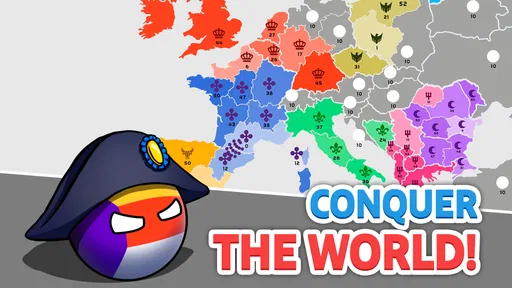
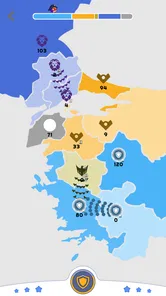
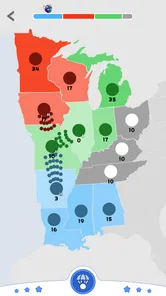
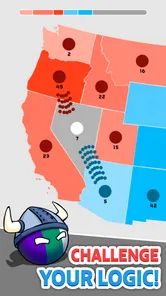
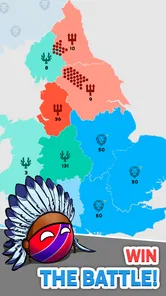
State.io — Conquer the World is a strategy game built around capturing territory on a simplified map. You send units from your states to neutral areas and rival states, aiming to expand while preventing opponents from taking your own. Its rules are easy to grasp, but success depends on timing, choosing targets, and managing how many forces to send. The exact modes and features may vary by version.
You select one of your territories and direct its available units toward another area. Neutral territories can be captured, while enemy states require you to overcome their defending forces. The challenge is deciding where to expand and when to attack: sending too many units away can leave your borders exposed, while waiting too long may let rivals grow stronger. The game is designed for quick, accessible strategy sessions.
Offline availability can depend on the app version and the particular mode you want to play. Some portions of mobile strategy games may work without a connection, while online features, ads, or other services generally require internet access. Check the game’s current store listing and test the relevant mode before relying on offline play, especially if you plan to play while traveling or have limited connectivity.
The game may be offered as a free download, but that does not necessarily mean every part of the experience is free of interruptions or optional spending. Mobile games can include advertisements and in-app purchases, and availability or pricing may differ by platform and region. Review the current Google Play or App Store listing for the latest details, and check your device’s purchase settings if you want to prevent accidental spending.
Before installing, confirm that your phone or tablet meets the app’s current operating-system and storage requirements, and download it from the official Google Play Store or Apple App Store. Read the listing for recent updates, permissions, ads, and in-app purchases, since these details can change. If you are choosing it for a child, review the age rating and available parental controls as well.
On Android, State.io — Conquer the World asks for these permissions.
State.io — Conquer the World is also available in 1 other languages on our site.
4.1 out of 5
664,901 reviews
Strategy · CASUAL AZUR GAMES

Strategy4.5 out of 5

Strategy4.4 out of 5

Strategy3.7 out of 5

Strategy4.5 out of 5

Strategy4.8 out of 5

Strategy4.1 out of 5

Racing4.5 out of 5

Arcade4.4 out of 5

Arcade4.4 out of 5

Action4.2 out of 5
Strategy4.5 out of 5

Strategy4.1 out of 5

Strategy4.5 out of 5

Strategy4.2 out of 5

Strategy4.6 out of 5

Strategy4.6 out of 5

Strategy4.4 out of 5

Strategy4.1 out of 5

Strategy4.6 out of 5

Strategy4.4 out of 5

Strategy4.5 out of 5

Strategy4.4 out of 5



Gamesive reviews games on its own and is not paid by developers for scores. We do not host game files: the download buttons open the official Google Play and App Store pages. Names, icons and screenshots belong to their owners.