
Doomsday × FAIRY TAIL
Strategy4.5 out of 5
For Android & iOS · Max Games Studios
 Analysis by Gamesive
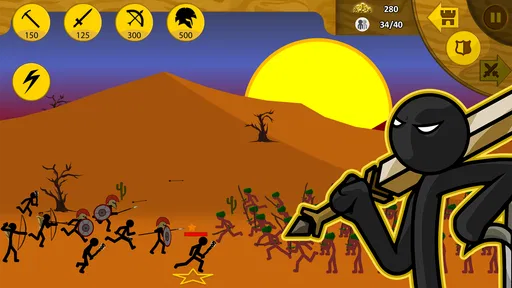
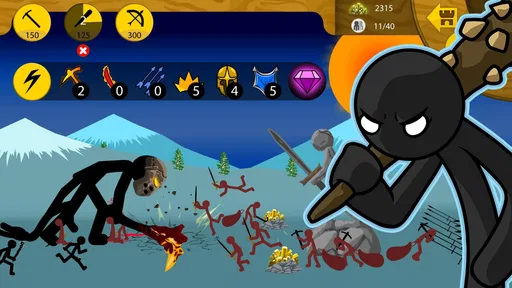
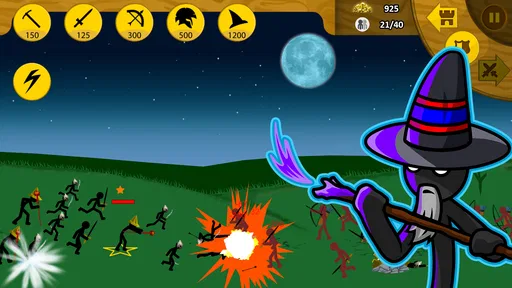
The first few battles in Stick War: Legacy make a clear promise: every unit you send into the fight has a job, and a mistake in timing can turn a comfortable push into a messy retreat. I found its simple stick-figure look easy to read, but the decisions beneath it take more attention than the presentation suggests. It is a free strategy game from Max Games Studios, and its appeal rests on a satisfying loop of building an army, choosing when to act, and trying to protect Inamorta.
The basic idea is quick to grasp: gather resources, train fighters, and lead your force against the other side. The Sword, Spear, Archer, and Mage roles create recognizable choices rather than a roster that feels like a pile of interchangeable units. I had to think about what my army needed next, not just keep tapping the same option. That gives early encounters a pleasing rhythm: prepare, assess, commit, then react when the battlefield changes.
The most useful early habit is to avoid spending every resource as soon as it becomes available. A larger force can feel reassuring, but a balanced one gives you options when the opponent's approach demands a different response. I like that the game makes this trade-off legible without burying it under elaborate menus. New players can learn by trying things, while experienced strategy fans can look for more efficient choices.
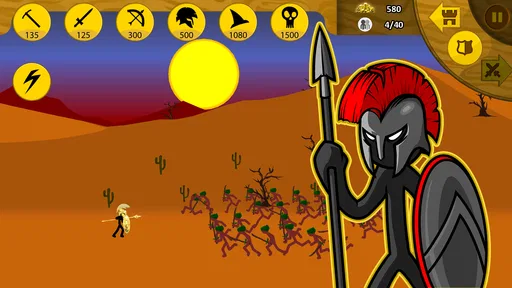
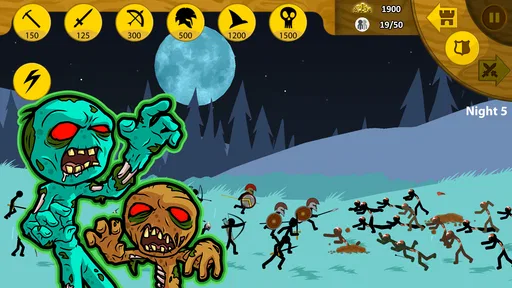
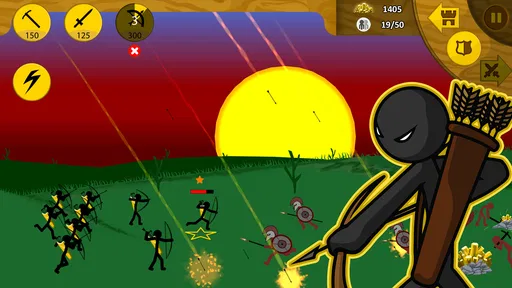
Its presentation also helps during short sessions. Stick figures and uncluttered combat make it easier to follow where pressure is building than in strategy games that cover the screen with effects and interface panels. That does not make every decision trivial: when several units are involved, attention can shift from the economy to positioning and back again. The visual simplicity is a convenience, not a substitute for planning.
One insight that made my early attempts more consistent was to treat training as a sequence, not a shopping spree. I would ask what threat I was trying to answer before committing to the next unit. If I needed a sturdier front line, adding more ranged damage alone would not solve the problem; if I was already holding ground, blindly expanding the front could waste resources. This small pause turns the game from frantic production into actual strategy.
Another practical tip is to watch the shape of the battle before deciding that a losing moment is unrecoverable. A unit that looks vulnerable may be buying time for the rest of the force, while a seemingly strong push can become exposed if you stop paying attention to the rear. I found that resisting the urge to issue a new command every second helped me read the consequences of earlier choices. It is a modest change in approach, but it makes each fight easier to understand.
For a commute, a waiting room, or a brief break between tasks, the compact battles are a natural fit. I could begin with a clear goal and leave after a round without needing a long setup or a deep session of account management. The game is less suitable when you want a purely passive distraction: its best moments come when you are watching, adjusting, and accepting that a poor decision may cost you momentum.
After the novelty of the first battles fades, the main question is whether the decisions continue to hold up. For me, the answer depends on whether I enjoy refining a familiar approach. The different combat roles create room to reconsider how I spend resources and when I make a move, so returning can feel like testing a better plan rather than simply repeating the same taps. The strategy genre is full of games built around sprawling maps, long campaigns, or layers of systems; this one is more direct, and that focus is its advantage when I have limited time.
It is also a useful choice for someone who wants strategy without a demanding commitment to a long multiplayer schedule. I can play on my own terms and focus on the immediate battle rather than coordinating with a group. If your favorite part of the genre is negotiating alliances, managing a huge empire, or competing against human opponents over extended sessions, a larger strategy game will probably give you more of what you want. Stick War: Legacy is strongest when you value tactical decisions that arrive quickly.
Its longevity has a visible audience behind it: the game has more than 100 million installs, and its average rating is 4.8 from around 3.2 million ratings. Those figures suggest broad reach, but they do not mean every player will find endless variety. I would treat them as context, not a promise that the game will suit your tastes. The deciding factor is whether you like revisiting compact battles and improving your choices within a clear set of unit roles.
The maintenance burden feels light compared with strategy games that ask me to check in constantly or keep up with a sprawling collection of systems. I can return after a break and focus on the fight rather than first relearning a complicated web of menus. That makes the game easy to keep installed for occasional sessions. The current version is 2026.1.1761, and it supports Android 7.0 or later; on iOS, I would check the app store's device requirements before downloading.
The game is free to start, which makes trying it a low-commitment decision. It also includes in-app purchases ranging from $0.49 to $104.99 per item, so I would keep that in mind if younger players use the device or if you prefer to avoid optional spending. Its Teen age rating is another useful consideration for families. I do not think a purchase is the reason to try it; the core appeal is whether the battles themselves hold your attention.
One source of fatigue is that a focused formula can become familiar. If you want each return to introduce a radically different strategic world, the repeated emphasis on army composition and battle timing may eventually feel narrow. Another friction point is attention: a fight is short, but it is not always relaxing to play while distracted. I would not recommend it as background entertainment if you expect to glance down only occasionally and still make every decision well.
A sensible way to judge its staying power is to play in small, deliberate sessions rather than forcing a long run. Try changing one decision at a time: the balance of your force, the point when you commit to an attack, or whether you hold back resources for a response. That makes losses more informative and helps prevent repetition from turning into button-mashing. If experimenting does not make the battles more interesting, that is a fair sign that the game has delivered what it can for you.
Stick War: Legacy earns lasting space on my device if I want a straightforward strategy game that still rewards attention. It suits players who enjoy weighing unit roles, making resource choices, and learning from a battle without needing to devote an evening to it. I would also recommend it to someone who wants a gentler entry into strategy than a sprawling empire simulator, while still expecting more than reflex tapping.
I would steer away from it if your priority is a constant stream of new systems, deep social competition, or a game that stays engaging when played half-asleep. Those are not flaws so much as a mismatch with its focused design. And if you do not enjoy repeating a tactical loop to improve your decisions, high popularity will not change that experience.
Released on January 31, 2016, and still represented by a current version, the game has had a long life without needing to abandon its basic identity. Max Games Studios built it around quick-to-read battles and familiar troop roles, and I think that remains a sensible use of a short break. My verdict is positive but measured: it is worth keeping around if you enjoy its particular rhythm, not because every session promises something entirely new. When I want a compact tactical challenge, it is an easy game to return to; when I want a larger, more social or more varied strategy experience, I would choose something else.
Stick War: Legacy is a real-time strategy game in which you command an army of stick-figure units and try to defeat opposing forces. You gather resources, train different types of troops, and decide when to defend or attack. The main campaign introduces its world and mechanics through a series of battles, while additional modes offer other challenges. Expect a mix of resource management, unit control, and tactical decision-making rather than a simple tap-to-win experience.
The game can be downloaded and played for free, but it may include advertisements and optional in-app purchases, depending on the current version and platform. You can enjoy its core battles offline, which makes it suitable for playing without a reliable connection. Some features or promotional content may still require internet access, and availability, pricing, and purchase options can differ between the Google Play Store and Apple App Store. Check the store listing before downloading.
Stick War: Legacy includes a campaign built around successive battles, alongside other modes and challenges that provide alternatives to the main progression. Players can experiment with different units, upgrades, and tactical approaches as they advance. The exact selection and availability of content may vary with the installed version, so review the in-game menus and current store description for details. The campaign is a good place to learn the basics before taking on tougher encounters.
New players can learn the basics through the game’s early battles, which introduce resource gathering, unit training, and combat. However, success involves more than producing troops: you must balance your economy, choose units thoughtfully, and respond to enemy attacks. Later stages can require retries and adjustments to your strategy. If you are new to real-time strategy games, take time to understand each unit’s role and avoid spending all your resources on a single type of troop.
Stick War: Legacy is available on Android and iOS, but supported operating-system versions and device requirements can change over time. Before installing, check the game’s listing in the Google Play Store or Apple App Store for compatibility, download size, age guidance, and any disclosed advertising or in-app purchases. Make sure your device has enough storage and is running a supported system version. Using the official store listing also helps ensure you download the correct release.
On Android, Stick War: Legacy asks for these permissions.
Stick War: Legacy is also available in 1 other languages on our site.
4.8 out of 5
3,239,060 reviews
Strategy · Max Games Studios

Strategy4.5 out of 5

Strategy4.4 out of 5

Strategy3.7 out of 5

Strategy4.5 out of 5

Strategy4.1 out of 5

Strategy4.1 out of 5
Strategy4.5 out of 5

Strategy4.1 out of 5

Strategy4.5 out of 5

Strategy4.2 out of 5
Strategy4.6 out of 5

Strategy4.6 out of 5

Strategy4.4 out of 5

Strategy4.1 out of 5

Strategy4.6 out of 5

Strategy4.4 out of 5
Strategy4.5 out of 5

Strategy4.4 out of 5



Gamesive reviews games on its own and is not paid by developers for scores. We do not host game files: the download buttons open the official Google Play and App Store pages. Names, icons and screenshots belong to their owners.