
Evony: The King's Return
Strategy4.1 out of 5
For Android & iOS · LilithGames
 Analysis by Gamesive
I found that Rise of Kingdoms: Lost Crusade is easiest to judge by separating what it costs to start from what it may cost to pursue faster progress. You can download and play it for free, but optional in-app purchases range from $0.29 to $499.99 per item. That makes the entry price appealing while leaving a very wide range of paid options in the game. My advice is to decide what you want from it before spending: the strategy experience can be worth exploring without treating purchases as necessary.
This is a strategy game from LilithGames, released on May 24, 2018, and rated Everyone 10+. It has a 4.5 average from around 2.6 million ratings, with over 50 million installs. Those figures suggest a large audience, but they don’t tell you whether its pace or spending model will suit you personally. I’d use the free access as a chance to test that fit rather than as a reason to assume every part of the experience will remain equally comfortable without purchases.
The purchase range deserves a little thought. The low end is inexpensive, while the upper end is a substantial outlay; those are not interchangeable kinds of value. I wouldn’t regard the biggest purchase as a sensible starting point or assume that paying will automatically make the game more enjoyable. First see whether you like returning to a developing civilization, making strategic choices, and engaging with the game at its own pace. If you do spend, set a limit that feels comfortable before a tempting offer appears.
That distinction matters because “free” can describe access without describing the whole experience. You can begin without paying, but a player who wants to accelerate progress may view the optional purchases differently from someone content to play gradually. I can’t give a universal recommendation about what any individual purchase is worth: that depends on what it offers at the moment you see it and how much you value the time it might save. The useful rule is simple: judge each offer on its own, not by the excitement of a limited moment or by what other players choose to spend.
The appeal is the sense of guiding a civilization rather than solving one isolated puzzle and moving on. That gives the game a longer horizon: decisions feel connected to continued progress, so returning can be satisfying when you enjoy seeing a plan develop over time. The premise is a natural fit for people who like strategic games with an ongoing commitment, rather than short sessions that wrap up neatly after a single match.
For me, the best way to approach a game like this is to keep a clear priority. Pick one goal to focus on during a session, such as making progress on a particular part of your civilization, instead of trying to optimize every available choice at once. This is a practical way to avoid the familiar strategy-game trap of spending a lot of time reacting to prompts without feeling that you moved toward anything you care about. It also makes it easier to tell whether your progress feels rewarding or merely busy.
A useful everyday scenario is a quick check-in between other tasks. I’d open the game with a specific intention, make the decisions that support it, and leave rather than letting a casual visit turn into an open-ended session. That approach suits someone who likes ongoing progress but needs clear boundaries around gaming time. If you prefer a game that asks for no attention between tightly contained rounds, this format may feel like an obligation rather than a hobby.
Another non-obvious trade-off is that long-term strategy rewards consistency more than a burst of enthusiasm. A player who dips in regularly may enjoy watching a plan take shape, while someone who expects a big payoff from one short visit could find the pace unsatisfying. I’d treat each session as one contribution to a larger project, not as a test of whether the whole civilization can be perfected immediately. That mindset helps keep ordinary progress from feeling underwhelming.
Long-running strategy games can ask for patience, and this one is not the choice I’d make when I want instant resolution or a campaign that ends after a handful of decisions. The same continuity that makes a growing civilization appealing also means the game may occupy more of your attention than a self-contained strategy puzzle. If you dislike revisiting the same world or keeping track of a longer plan, that is a meaningful reason to choose something else.
The purchase range is another real consideration, even though the game is free to start. Seeing optional offers can make it harder to judge progress on its own terms, especially if you compare your pace with players who choose to pay. I recommend setting a personal spending boundary in advance and checking whether you still enjoy the game when you ignore offers. If that makes the experience feel frustrating, paying more may not fix the underlying mismatch; a shorter, fixed-price strategy game could be a better fit.
It also helps to separate strategic interest from completionism. If your enjoyment depends on unlocking or advancing everything as quickly as possible, the broad purchase range could make restraint difficult. I’d skip it if you know that optional purchases tend to push you beyond a budget you intended to keep. By contrast, if you can treat purchases as genuinely optional and are happy to progress at a measured pace, the free entry gives you room to decide without committing money upfront.
Compared with a typical turn-based strategy game built around discrete matches, this is better suited to someone who wants an ongoing world and a continuing project. A match-based alternative is usually easier to pick up for a short, complete contest; this game’s stronger draw is the feeling of returning to the same civilization and advancing it over time. Neither structure is inherently better. The right choice depends on whether you want a persistent strategic commitment or a more compact session with a clear finish.
I’d recommend giving it a try if you enjoy thinking in stages, keeping a longer goal in view, and returning to a game as your plans evolve. Its free starting point makes that trial low-risk financially, and its strategy focus is a better match for deliberate players than for people looking for a quick reflex challenge. The game has also attracted a substantial audience: it has around 79,000 written reviews alongside its rating total, which gives prospective players plenty of public feedback to consult if they want more perspectives before installing.
It may also suit someone who likes to fit a continuing game around a routine, as long as that routine leaves room for the game’s ongoing nature. Before settling in, I’d choose a reasonable session boundary and a spending limit, then see whether the game remains enjoyable under those terms. That little test answers two practical questions at once: whether its pace works for you and whether you feel pressure to pay to make progress satisfying.
I would steer away from it if you want a strategy game with a fixed finish, dislike ongoing engagement, or need a fully predictable total cost before you start. The game is free to access, but its purchase options span a wide range, so it is not the same proposition as paying one known amount for a complete game. Someone who values a clear, self-contained experience may get better value from a title with a single upfront price, even if that means paying before playing.
Rise of Kingdoms: Lost Crusade is worth trying for the right kind of strategy fan: someone who enjoys building toward a longer goal and can keep optional spending in perspective. I like that you can begin without paying, but I would not confuse that with a guarantee that every route to progress will feel equally appealing at no cost. The best value comes from enjoying the core routine on your own terms, not from chasing every possible shortcut.
My practical verdict is to install it if you’re curious about an ongoing civilization strategy game, give it enough time to decide whether its pace suits you, and avoid spending until you can name what you want a purchase to improve. Skip it if you prefer brief, self-contained matches, want a fixed total price, or find broad in-app purchase ranges stressful. On Android, the minimum operating system is 6.0; that is the compatibility detail I’d check before downloading. For a patient player with a firm budget, the free entry is a reasonable invitation to see whether the long-term strategy is genuinely enjoyable.
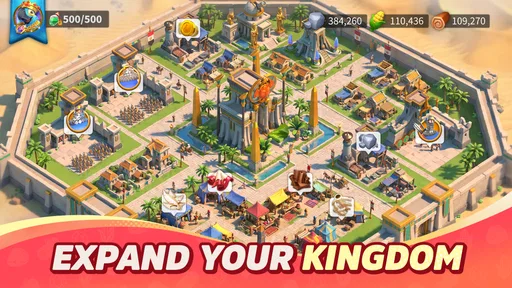
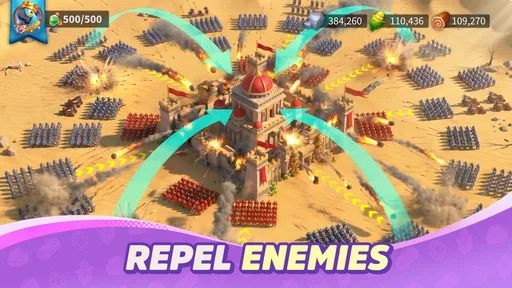
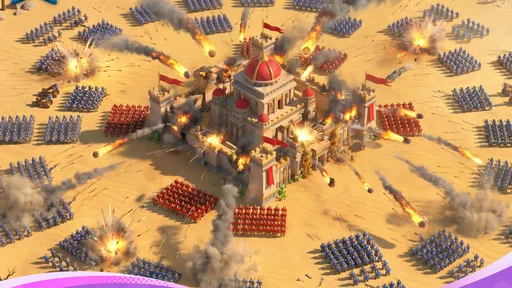
Rise of Kingdoms: Lost Crusade is a free-to-play real-time strategy game focused on building a civilization, gathering resources, training troops, and competing on a shared map. You choose a civilization with its own starting commander and bonuses, then develop your city while exploring, fighting barbarians, and joining alliances. Progress involves both peaceful city management and large-scale conflicts, so it suits players who enjoy ongoing strategy rather than a short, self-contained campaign.
You can begin on your own and complete early objectives without joining an alliance, but alliance play is a major part of the experience. Members can receive help with construction and research, share rewards, and coordinate defense or attacks. Many later activities and competitive events are easier, or designed, for groups. If you prefer strictly solo play, you can still explore and develop your city, but you may miss much of the game’s social and strategic content.
The game can be downloaded and played for free, but it offers optional in-app purchases. These may provide gems, resource bundles, speed-ups, or other progression items. You can develop a city without paying, though construction, research, and troop training take time, and purchases can help players progress faster. The game also includes limited-time offers and events, so check the store and your device’s purchase settings if you want to manage spending.
Yes. Rise of Kingdoms: Lost Crusade is an online multiplayer game, so you need an internet connection to access your city, interact with the shared world, take part in events, and communicate with alliance members. It is not designed as an offline strategy game. Connection quality can affect map activity and battles, and availability may also depend on the game’s servers, maintenance, and your device’s ability to run the app.
Rise of Kingdoms is built around long-term progression: buildings, research, and training can take increasingly longer as your city develops. Timers continue to shape the pace, while events and alliance activity may encourage frequent check-ins. The game is available on mobile platforms, but performance and storage needs can vary by device and updates. Check the current store listing for supported operating-system versions and free space, and consider notifications or screen time if you prefer less frequent play.
On Android, Rise of Kingdoms: Lost Crusade asks for these permissions.
Rise of Kingdoms: Lost Crusade is also available in 2 other languages on our site.
4.5 out of 5
2,552,337 reviews
Strategy · LilithGames

Strategy4.5 out of 5

Strategy4.4 out of 5

Strategy3.7 out of 5

Strategy4.5 out of 5

Strategy4.8 out of 5

Strategy4.1 out of 5
Strategy4.1 out of 5

Strategy4.5 out of 5

Strategy4.1 out of 5

Strategy4.2 out of 5

Strategy4.6 out of 5

Strategy4.6 out of 5

Strategy4.4 out of 5
Strategy4.1 out of 5

Strategy4.6 out of 5

Strategy4.4 out of 5
Strategy4.5 out of 5

Strategy4.4 out of 5



Gamesive reviews games on its own and is not paid by developers for scores. We do not host game files: the download buttons open the official Google Play and App Store pages. Names, icons and screenshots belong to their owners.