
Evony: The King's Return
Strategy4.1 out of 5
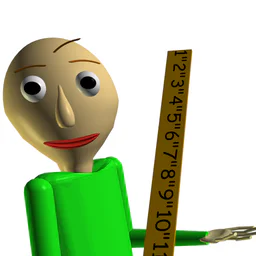
For Android & iOS · Basically, Games!
 Analysis by Gamesive
I see Baldi’s Basics® Classic as a strategy game that gets much of its appeal from making a familiar school setting feel unpredictable and unnerving. It is free to play, which makes it easy to try without weighing a purchase against the experience. What matters more is whether you enjoy its unusual blend of crude comedy, horror tension, and puzzle-like decision-making. I find it memorable, but its deliberately awkward presentation and pressure-heavy play will not suit everyone.
The game is made by Basically, Games! and sits in the strategy category, though it does not feel like a conventional planning game. You are not building an empire or managing a long list of resources. Instead, the challenge is to pay attention, make choices under pressure, and learn how the school’s strange environment can turn against you. That unusual mix is the main reason I would recommend it to someone who wants something offbeat rather than polished and predictable.
There is no purchase price to consider for access to the game, so the value question is straightforward: does its distinctive experience appeal to you? I would not judge it by the production style alone. The rough, intentionally odd presentation is part of the joke and the discomfort, and the contrast between a school-themed setting and horror elements gives the game its identity. If you expect sleek visuals or a soothing experience, free access will not make it a good fit.
The game has an average rating of 4.2 from around 208,000 ratings, alongside about 9,700 written reviews. It has passed 50 million installs, which suggests that its unusual premise has reached a broad audience. Those figures can help establish that it is widely played, but they do not tell you whether you will enjoy its specific brand of tension; the deciding factor is whether you find its odd humor engaging or simply irritating.
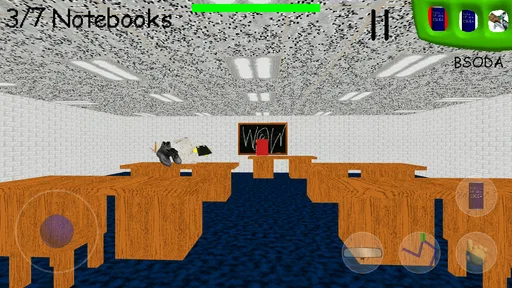
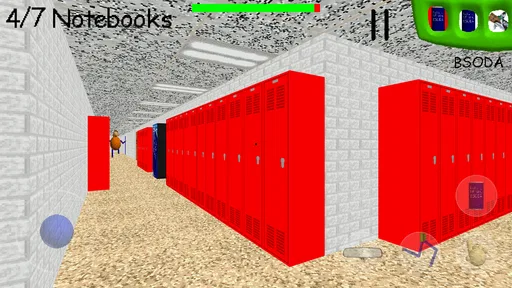
Baldi’s Basics uses the visual language of an educational game as a setup for unease. That mismatch is more effective than a straightforward horror presentation would be for me: ordinary school imagery gives the strange moments a deliberately silly edge, while the threat keeps the experience from becoming just a visual gag. The result is a parody that plays with expectations rather than trying to look like a serious horror adventure.
That tone also shapes how I approach it. I do not treat each moment as an invitation to relax and explore at my own pace. I pay attention to what is happening, think about where I should go, and avoid assuming that the school is a safe place simply because it looks familiar. The game’s tension comes from the pressure to make decisions while the atmosphere keeps me on edge.
Calling it a strategy game can create the wrong expectation if you associate strategy with slow turns, elaborate planning screens, or detailed unit management. Here, the useful skill is situational awareness. I get more out of a session when I take a moment to notice how the environment is behaving instead of rushing forward and reacting only after something goes wrong. That makes the game feel more like a compact test of judgement than a traditional tactics title.
One practical approach is to treat each attempt as information gathering, not just a pass-or-fail run. If a choice leads to trouble, I can remember the circumstance and adjust how I respond next time. That small mental loop—notice, decide, learn—gives the experience more staying power than its intentionally simple look might suggest. It is also a useful way to handle frustration: a failed attempt can still teach me what to watch for, provided I am in the mood to try again.
A second tip is to resist playing on autopilot. The parody style can make the game seem unserious, but that does not mean every decision is disposable. I find that paying attention to the odd details and pacing my choices makes the tension more enjoyable. If I barrel through without observing anything, I am more likely to experience the game as random annoyance rather than a strange little challenge.
The presentation is intentionally crude, and that is a genuine tradeoff. Some players will enjoy the contrast between its simple, school-like look and its horror-comedy premise. Others may see the same roughness as an obstacle, especially if they prefer games that communicate their world through refined animation and a more serious visual style. I would not recommend it as a showcase for high-end presentation; I would recommend it for its deliberately awkward character.
The tension can also be tiring. A game that keeps me alert is entertaining in short bursts, but it is not what I choose when I want something gentle to play while half-focused on another task. If I am looking for a calm puzzle session, a slower strategy game is a better match. If I want atmospheric horror without the joke-driven tone, a more conventional horror game is likely to satisfy me more.
Another tradeoff is that its appeal depends heavily on tone. The educational parody is not a decorative wrapper around a standard strategy experience; it is central to why the game stands out. Someone who dislikes deliberately absurd humor may not warm to it, even if they enjoy horror or strategy games separately. I would suggest deciding whether that clash of silly and unsettling sounds appealing before installing it.
Compared with the usual alternatives in strategy, this is a much more immediate and mood-driven experience. A conventional strategy game often rewards extended planning, careful optimization, or managing several systems at once. Baldi’s Basics is better approached as a focused challenge in which observation and quick judgement matter more than constructing a long-term plan. That makes it easier to sample, but less suitable for players seeking deep, methodical campaign management.
Compared with a typical horror game, its parody framing gives it a lighter, stranger personality. It can still make me uneasy, but it does not rely on presenting itself as a serious cinematic story. That difference is useful if I want horror with a comedic twist; it is a limitation if I want sustained realism or a solemn narrative. I would choose it for an unusual mood rather than as a replacement for every other kind of horror game.
It also works well as a conversation starter or a quick recommendation to a friend who likes games that refuse to fit neatly into one genre. I would explain the mismatch in tone before handing it over: the educational look is part of the parody, not a promise that the game is an ordinary classroom activity. Setting expectations this way helps avoid the common disappointment of expecting either a standard strategy title or a conventional horror adventure.
I think it is a good choice for players who enjoy strange premises, horror-comedy, and learning through repeated attempts. It may also suit someone who wants a free game to sample in a short break, as long as they are comfortable giving the experience their attention rather than treating it as background entertainment. Since the content rating is Everyone, it is broadly classified for all ages, though the comic horror tone still makes personal preference an important part of deciding whether it is appropriate for a particular player.
A realistic use case is a spare few minutes when I want something more engaging than scrolling, but do not want to commit to a long session of a sprawling strategy game. I can focus on what is happening, make decisions, and stop when I have had enough of the tension. It is also a reasonable pick for a player curious about how a parody can turn a familiar setting into something unsettling without adopting the style of a serious horror production.
I would steer away from it if I want relaxing play, a polished visual presentation, or a strategy game built around deep planning. I would also skip it if the very idea of mixing school imagery, silly humor, and horror sounds more irritating than intriguing. Free access lowers the cost of trying it, but it does not remove the time or attention required to get past a tone that may not click.
The Android release is currently version 1.4.5 and requires Android 5.1 or later. Its age rating is Everyone, and it was released on December 16, 2019. Those details make it easier to judge basic compatibility and suitability before installing, especially if you are setting it up on an older device or choosing a game for a mixed-age household.
Because the game depends on observing a strange environment and reacting to its pressure, I would try it when I can give it a little attention rather than in the middle of a busy commute or conversation. That is not a demand for a long uninterrupted session; it is simply the best way to notice what makes the experience work. If I lose track of what is happening, the tension can feel like frustration instead of a deliberate challenge.
The game’s scale is another reason it can be worth sampling: it does not ask me to buy into a familiar genre formula before I know whether I like it. I can judge the central appeal directly—the school setting, the uncomfortable comedy, and the need to make choices while alert. For someone browsing a crowded strategy category, that distinct identity is more useful than a promise that it does everything better than its competitors.
I would recommend Baldi’s Basics Classic to a friend who likes experimental, oddball games and does not mind rough presentation. Its free access makes it a low-commitment way to see whether the parody and pressure work for them, and the strategy element gives the experience more to do than simply admire its premise. I would not describe it as a universal pick, because its appeal is tied so closely to a particular comic-horror mood.
Basically, Games! has built a game that stands apart by leaning into an awkward, unsettling school parody rather than following the standard look of strategy or horror releases. The strongest reason to try it is that combination; the clearest reason to skip it is that the same combination may not be your taste. If I wanted a calm, polished, deeply methodical strategy game, I would choose another option. If I wanted a free, memorable change of pace with a strange sense of humor, I would give this one a try.
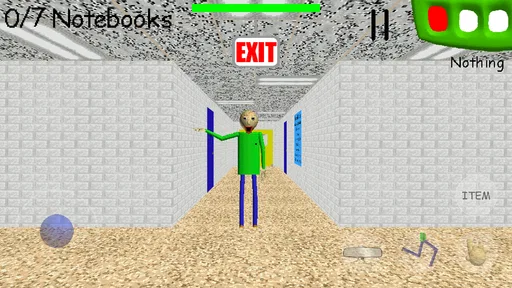
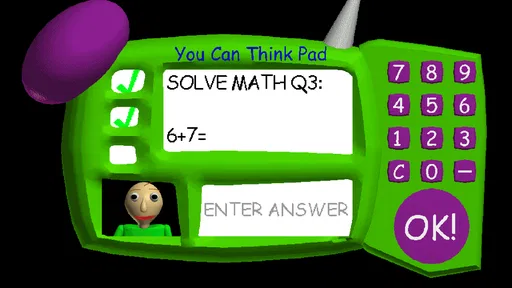
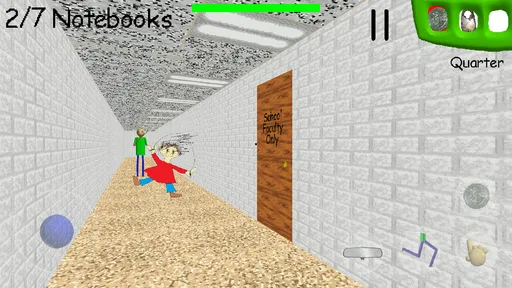
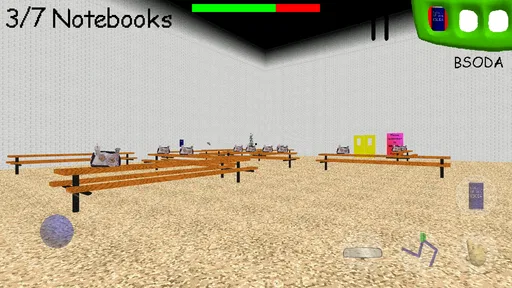
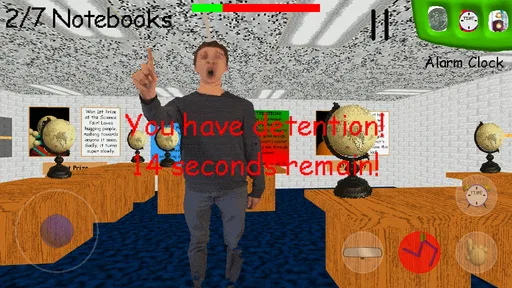
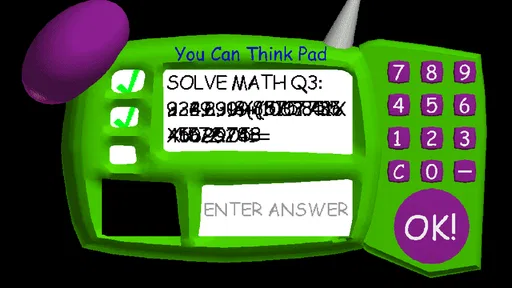
Baldi's Basics® Classic is a horror-themed game presented in the style of an old educational title. You explore a school, collect seven notebooks, and try to reach the exit while avoiding Baldi and other characters. The contrast between simple visuals, basic arithmetic questions, and sudden chase sequences is central to the experience, so expect quirky suspense rather than a conventional classroom game.
The main goal is to find and collect seven notebooks scattered around the school, then make your way to the exit without getting caught. You navigate corridors, answer the questions in each notebook, and use items you find to deal with obstacles or gain a little breathing room. Baldi reacts to your mistakes and movements, so planning routes and listening for clues can help.
Despite its school setting and simple-looking graphics, Baldi's Basics® Classic is designed as a horror-comedy game. It includes tense pursuit scenes, startling moments, and unsettling character behavior, which may be frightening for younger players. Parents should consider a child’s sensitivity to suspense and jump scares before downloading it, and check the store listing for the current age rating in their region.
The core single-player experience is generally designed to be played without an ongoing internet connection, making it suitable for playing on the go. However, an internet connection may still be needed for the initial download, updates, or store-related features, depending on the device and platform. Check the current Google Play or App Store listing for the latest requirements before installing.
Availability, pricing, advertisements, and in-app purchase options can vary between Android and iOS, as well as by region and over time. Review the current store page before downloading to confirm the price and see whether purchases or ads are listed. Also check the developer and app details carefully, since similarly named titles may not be the official release.
4.2 out of 5
208,147 reviews
Strategy · Basically, Games!

Strategy4.5 out of 5

Strategy4.4 out of 5

Strategy3.7 out of 5

Strategy4.5 out of 5

Strategy4.8 out of 5

Strategy4.1 out of 5
Strategy4.1 out of 5

Strategy4.5 out of 5

Strategy4.1 out of 5

Strategy4.5 out of 5
Strategy4.6 out of 5
Strategy4.6 out of 5

Strategy4.4 out of 5

Strategy4.1 out of 5

Strategy4.6 out of 5

Strategy4.4 out of 5
Strategy4.5 out of 5

Strategy4.4 out of 5



Gamesive reviews games on its own and is not paid by developers for scores. We do not host game files: the download buttons open the official Google Play and App Store pages. Names, icons and screenshots belong to their owners.