
Car Wash: Auto Repair Garage
Role Playing4.7 out of 5
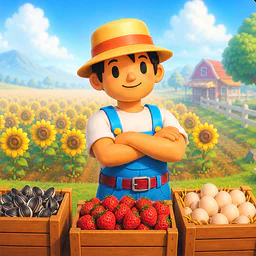
For Android & iOS · SayGames Ltd

 Analysis by Gamesive
I approached Little Farm Story: Idle Tycoon as a light role-playing game for players who like the idea of building a farm and turning its harvest into a business. Its appeal is easy to grasp: tend crops, develop your operation, and watch a small enterprise grow. That makes it a natural fit for short, casual sessions, though anyone expecting a story-heavy role-playing adventure or a demanding farm simulator should set their expectations differently.
Made by SayGames Ltd, this is a free game in the role-playing category. Its central promise is progression through farm work and business management rather than a deep narrative. I found that framing useful when deciding whether to try it: you can come for the pleasure of building something up, but it is not the same proposition as a traditional role-playing game focused on characters, quests, or combat.
The game has an average rating of 4.3 from around 251,000 ratings, alongside roughly 3,400 written reviews. It has been installed over 10 million times, so it has reached a broad audience. Those figures suggest plenty of people have given it a chance, but they cannot tell you whether its particular pace or style will suit you. The important question is whether you enjoy incremental farm progress enough to return to it.
Its release date was March 22, 2024, and the current version is 1.21.0. It is rated Everyone and requires Android 8.0 or later. That makes it an accessible option for a broad age range and for compatible older Android devices, though an age rating should not be mistaken for a promise that every player will enjoy the same amount of progression or spending prompts.
The game is free to download, which lets you try its basic appeal without paying upfront. That is the clearest value fact for a cautious player: you can decide whether the farm-building loop holds your attention before spending anything. In-app purchases are available, with items priced from $0.99 to $199.99 each, a wide range that makes it especially sensible to treat optional purchases as a separate decision rather than assume the whole experience has one fixed cost.
I would not read “free” as meaning that every part of the experience is equally accessible at no cost, nor would I assume that a purchase is necessary. The useful approach is to begin without buying, notice whether any paid option solves a problem you actually have, and check the item details before confirming. The listed price range alone does not explain what each purchase contains, so I would avoid spending based only on a price or a tempting prompt.
For families, the Everyone content rating is reassuring in a broad sense, while the availability of in-app purchases is worth discussing with younger players. If a child uses the device, I would make sure purchases require the account holder’s approval. That is practical caution, not a claim about a particular payment or parental-control system in the game.
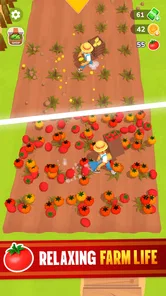
The strongest value here is the simple satisfaction of seeing farm activity contribute to a larger business. Crops are not just decoration in the premise: growing them is tied to managing a thriving operation. That connection gives the farming theme a clear purpose and makes the game easier to pick up than a more elaborate simulation with many systems to learn at once.
That kind of progression suits small pockets of free time. I can imagine opening it during a quiet break, deciding what to focus on next, then putting it away rather than needing to reserve a long uninterrupted session. The best use case is not a packed commute where you cannot look at the screen, but a relaxed pause when you have a moment to check in and enjoy gradual progress.
A useful way to keep the experience satisfying is to choose a modest goal before each session: improve the farm, make progress with crops, or simply see how the business is developing. This prevents casual play from turning into aimless tapping. It also helps you judge whether the game’s pace feels rewarding to you rather than relying on the general promise that a larger farm is always better.
There is a trade-off in that focus. Players who enjoy steady growth may find the farm-and-business theme comfortably legible, while those who want intricate crop planning, realistic agricultural detail, or substantial character-driven storytelling may find the premise too light. I would think of it as a casual progression game with role-playing elements, not as a replacement for a detailed farming sim or a quest-led RPG.
The main limitation is inherent in the game’s central loop: if the pleasure of growing a farm and expanding a business does not appeal, there is not an obvious separate hook in the basic premise to compensate. Someone who prefers direct competition, tightly written stories, or hands-on simulation should look elsewhere. The role-playing label may attract those players, but the farm-building description is a better guide to the kind of activity to expect.
Another consideration is how you feel about optional spending in a free game. The range of in-app purchase prices extends from $0.99 to $199.99 per item. I would set a personal spending limit before exploring purchases, especially if the game becomes part of a daily routine. A free starting point is valuable, but a very high top-end item price is a reason to pause and assess rather than buy impulsively.
For a concrete everyday scenario, imagine you have ten minutes after lunch and want something gentler than a competitive match. This game may fit if checking on crops and nudging a farm business forward feels relaxing. If you need a complete, self-contained session with a clear ending every time, or you cannot stand waiting for gradual progress in a game, that same short break may be better spent on a puzzle or a story chapter instead.
Compared with familiar alternatives in the farming genre, the emphasis here is the combination of growing crops and managing a business, rather than an expectation of realistic farm operations. Compared with more conventional role-playing games, it puts the farm at the center instead of promising a character-led adventure. That distinction is its useful niche: it can bridge casual management and light role-playing, but it should not be judged by the depth of either a specialist simulator or a full-scale RPG.
I would recommend giving it a try if you like visible, gradual development and prefer a clear theme to a complicated collection of mechanics. It is also a reasonable candidate for players who want to explore a game before paying, since the download is free. The Everyone rating makes its content broadly accessible, while the purchase range is a reminder that families should keep spending decisions deliberate.
It is less likely to satisfy players who want a demanding strategy challenge, detailed agricultural realism, or a strong story. It may also be a poor fit if you know that optional purchases make free-to-play games frustrating for you, or if you are looking for a game that offers a fixed price and a clearly bounded cost. Those are preferences, not faults in the farm concept, but they matter more than the popularity figures.
If you install it, I suggest trying the farm loop without spending first. Pay attention to whether crop growth and business development feel rewarding on their own, and whether you naturally want to return after a break. If the answer is yes, the free entry has done its job; if you find yourself only continuing because of purchase prompts or a sense of obligation, that is a good cue to move on.
Little Farm Story: Idle Tycoon is easiest to recommend as a free first try for anyone drawn to casual farm growth and light business management. Its value comes from a straightforward theme and the possibility of enjoying gradual progress in short sessions, not from verified promises of depth or a specific amount of content. I would approach it with modest expectations, keep purchases optional, and decide based on whether the farm itself is enjoyable.
For me, the sensible buy-or-skip answer is simple: try it free if tending crops and building a small business sounds relaxing, then spend only if a clearly understood purchase genuinely improves your own experience. Skip it if you want a traditional story-driven RPG, a detailed farming simulation, or certainty about total cost before starting. That leaves the game in a useful middle ground—easy to sample, potentially satisfying for the right kind of player, but not a universal recommendation just because it is free to begin.
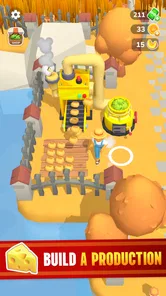
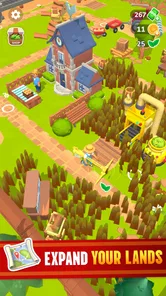
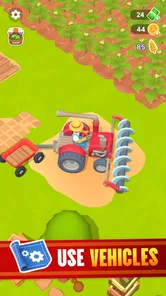
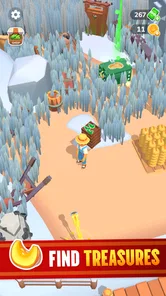
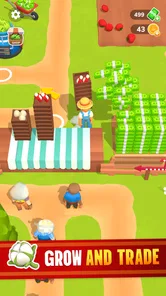
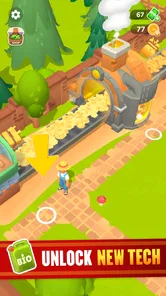
Little Farm Story: Idle Tycoon is a farming and management game built around developing a small farm into a thriving business. You typically grow crops, collect or sell produce, improve facilities, and use earnings to expand your operation. Its idle mechanics are intended to let progress continue over time, so it suits players who enjoy gradual upgrades and short check-ins as well as those who prefer to spend longer actively managing a farm.
The game is designed around idle tycoon progression, meaning that some farm activity can keep generating progress while you are not actively playing. The exact amount of offline production, any storage limits, and whether rewards need to be collected can depend on the game’s current version and mechanics. Check the in-game instructions and settings after starting, and remember that returning regularly may help you collect earnings and decide which upgrades to purchase.
The download may be free, but that does not necessarily mean every feature is free or that the experience has no advertising. Mobile idle games commonly offer optional purchases, rewarded ads, or other ways to speed up progress, and what is available can vary by platform, region, and version. Review the store listing and the game’s purchase prompts before downloading or spending, and use device-level purchase controls if children may play.
Some parts of an idle farming game may work without a constant connection, but online services such as advertisements, purchases, cloud saves, or event features may require internet access. Offline progress can also be handled differently depending on the version, so it is best not to assume that every function will be available without a connection. Check the app’s store description and test the features you need before relying on it while travelling or offline.
The farming and tycoon theme is generally approachable, but suitability depends on the game’s current content, advertising, and purchase options, not just its artwork. Before downloading, check the age rating, privacy information, permissions, and recent reviews in the official app store. If a child will play, consider enabling parental controls and restricting in-app purchases. Also confirm that your device meets the listed requirements and has enough available storage.
On Android, Little Farm Story: Idle Tycoon asks for these permissions.
Little Farm Story: Idle Tycoon is also available in 2 other languages on our site.
4.3 out of 5
250,627 reviews
Role Playing · SayGames Ltd

Role Playing4.5 out of 5

Role Playing4.6 out of 5

Role Playing4.7 out of 5

Role Playing4.6 out of 5

Role Playing4.0 out of 5

Role Playing4.7 out of 5

Arcade4.2 out of 5

Arcade4.5 out of 5

Simulation4.5 out of 5

Racing4.6 out of 5
Role Playing4.7 out of 5

Role Playing4.6 out of 5

Role Playing4.4 out of 5

Role Playing4.3 out of 5

Role Playing4.3 out of 5

Role Playing3.9 out of 5

Role Playing3.9 out of 5

Role Playing4.6 out of 5

Role Playing4.5 out of 5

Role Playing4.2 out of 5

Role Playing4.2 out of 5

Role Playing3.9 out of 5



Gamesive reviews games on its own and is not paid by developers for scores. We do not host game files: the download buttons open the official Google Play and App Store pages. Names, icons and screenshots belong to their owners.