
RAID: Shadow Legends
Role Playing4.6 out of 5
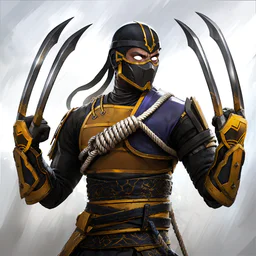
For Android & iOS · NEKKI
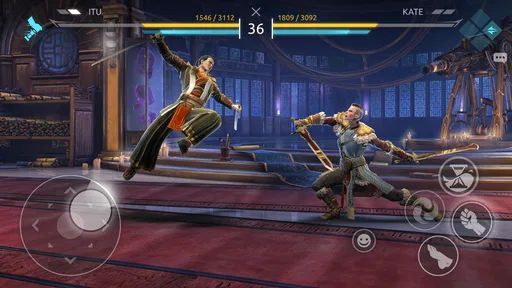
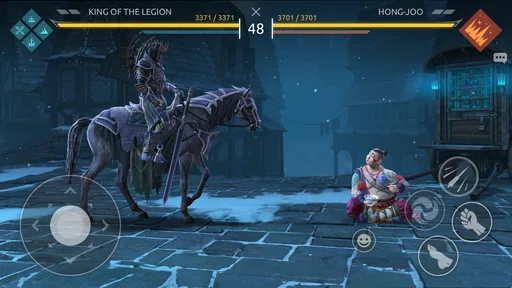
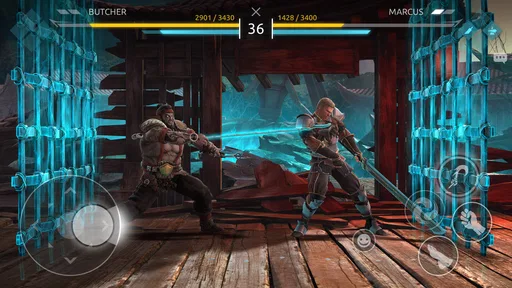
 Analysis by Gamesive
When a phone is passed around at home, a competitive game can be a surprisingly good shared activity—as long as everyone knows whose progress and purchases they are using. Shadow Fight 4: Arena is a role-playing fighting game from NEKKI, built around duels rather than a long, solo adventure. I find that focus makes it easy to pick up for a quick match, but it also means the game suits people who enjoy learning opponents and improving through repeat battles more than those looking for a relaxed story-driven experience.
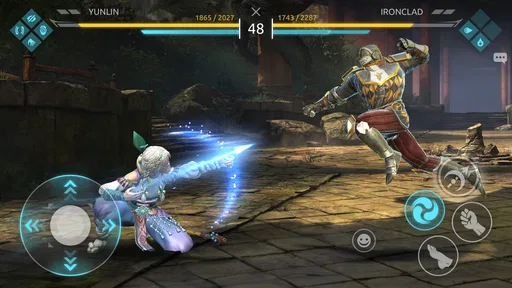
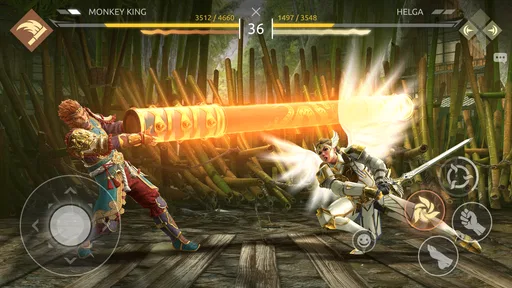
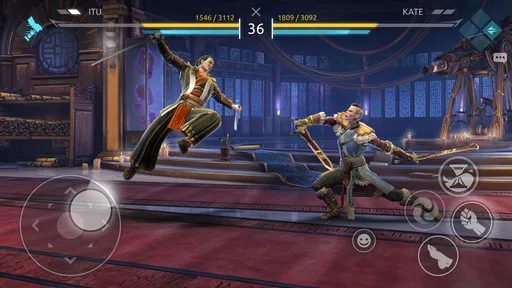
The core appeal is the directness of a fight: choose a team, enter a match, and pay attention to timing, distance, and the opponent’s habits. That makes it easy for someone watching nearby to follow what is happening, even if they are not holding the phone. A household can take turns playing and talk through decisions—whether to wait, attack, or change approach—without needing to understand a complicated plot first.
It is still a game designed around individual play, not a family activity with shared household tools. I would treat passing the device around as an informal arrangement: agree on who is playing and avoid assuming that each person has a separate profile or private progress. If one person cares about their collection or competitive standing, letting others use the same session can create confusion. For casual turn-taking, that may be fine; for carefully managed individual progress, separate devices and accounts are the safer assumption to investigate before committing.
The match format is convenient for a spare moment, such as waiting for dinner or taking a break between chores. Yet a short round can still demand attention. I would not hand the phone to someone expecting a passive, tap-through game: the satisfying part is noticing how an opponent behaves and adjusting, not simply pressing an attack repeatedly.
A useful household routine is to let one person play a match, then give the next player a turn rather than swapping the phone mid-session. That keeps decisions and progress easier to follow. It also makes conversation more useful: a spectator can suggest a different tactic between matches, while the person playing stays in control of the fight.
Because this is a competitive game with ongoing progression, I would set expectations before a shared session. Decide whether the phone’s usual player is comfortable with others using the same game, and make clear that purchases are not part of casual turn-taking. The game is free to download, but it offers in-app purchases ranging from $0.49 to $149.99 per item. That wide range makes it sensible to keep purchase decisions with the device owner, particularly if a child is playing.
I would also avoid treating the game as a collection of interchangeable turns if players care about winning. A newcomer may still be learning, while a regular player may be focused on competition. Taking turns in friendly matches can be enjoyable, but comparing results without accounting for experience can turn a light activity into a source of friction. A better approach is to use early sessions for learning and keep serious play for the person who wants that challenge.
For anyone wondering whether progress will be neatly separated between household members, I would not assume so. Before sharing, check how the current game handles accounts and saved progress on the device you plan to use. That is a practical step, not a reason to avoid the game: it simply prevents one person’s play from being mistaken for another’s.
The game’s strongest shared-use quality is that its action is easy to watch and discuss. It does not require a second person to understand a complicated campaign before joining the conversation. A parent, partner, or sibling can notice a repeated habit in an opponent and offer a suggestion, while the player decides whether to try it. That makes it better for taking turns and spectating than for everyone trying to play at once on one phone.
That same focus has a trade-off: the game’s excitement depends on active engagement. If the household wants a game where people can cooperate side by side through a shared story, this is not the obvious choice. It is more naturally a series of individual contests. Compared with many role-playing games that emphasize exploration, quests, or collecting a story’s events, Arena puts the immediate contest first. Compared with a simple party game, it asks for more practice and attention.
My practical tip is to keep a shared session small and intentional. Take a few turns, discuss what worked, then stop rather than leaving the phone available for unplanned play. This helps prevent a casual shared activity from becoming a dispute over whose turn it is or who changed a preferred setup. It is especially useful when one player is much more experienced than the others.
The game carries a Teen content rating, so I would consider the age and maturity of the person playing rather than treating “free” as a sign that it is automatically suitable for every child. It is a fighting game, and its competitive framing may appeal most to players comfortable with repeated bouts and the possibility of losing. For a younger player, I would review the experience together and keep purchase boundaries clear.
In a household, trust is less about assuming everyone will use the phone carefully and more about making the rules plain. If the device belongs to an adult, that person should retain control of spending decisions and explain whether others may use the game. If a teenager has their own device, the same conversation can cover how much time they want to spend on repeated matches and what they consider a fair way to handle losses. I would not rely on the game itself to establish those boundaries.
The title is free, which lowers the barrier to trying it, but optional purchases mean “free to start” is not the same as “no spending choices.” I would not buy anything simply to make a first shared session work. Try the basic experience first and see whether the household actually enjoys the combat and competitive rhythm. If the appeal fades after a few matches, there is little reason to spend.
The first few fights are best treated as practice in reading an opponent, not as a verdict on whether the game is fair or enjoyable. When someone loses repeatedly, it can be tempting to assume that success depends only on choosing the strongest option. I find it more useful to pause and identify one pattern at a time: are they attacking too early, standing too close, or repeating a move the other player has learned to anticipate? A small adjustment gives a newcomer a clearer path than trying to change everything at once.
This is also where the game differs from a role-playing title that steadily rewards progress through a long sequence of tasks. Here, improvement comes from understanding the fight itself. Players who enjoy that kind of learning can find rematches motivating; players who prefer predictable advancement may find repeated competition tiring. If someone in the household gets frustrated by losing, keep the first session brief and end on a planned stopping point rather than turning it into an endless attempt to recover a win.
The game’s wider reach suggests it has found a substantial audience: it has more than 50 million installs and a 4.7 average from around 1.9 million ratings. Those figures are useful context, but they do not predict whether a particular household will enjoy its competitive style. I would put more weight on whether the people sharing the device like learning through direct matches than on popularity alone.
Among role-playing games, Arena is a better match for someone who wants combat to be the main event than for someone seeking a large world to explore. Many games in the category encourage long sessions and steady progress through missions; this one is easier to approach in bursts, but its battles ask for attention each time. If you want a game to fill a quiet evening with a narrative, a story-focused role-playing game is likely a better fit.
It also differs from casual fighting games that are mostly about quick novelty. The repeated-match structure gives a player a reason to refine decisions, but it can feel repetitive if the player is not interested in improving. I would recommend it to a competitive friend who enjoys learning matchups and to households happy to watch and discuss turns. I would skip it for a group that wants equal participation without practice, or for someone who dislikes fighting themes and competitive losses.
NEKKI’s game has been available since November 3, 2020, and version 1.9.85 is the current version. It requires Android 8.0 or later. Those details matter when choosing a device to share: check compatibility before planning a household session, especially if the phone is older. Its Teen rating is another reason to make an intentional decision about who plays rather than passing it around by default.
My overall view is that Shadow Fight 4: Arena can work well as a turn-taking game in a home where players enjoy competition and can agree on device boundaries. It is most rewarding when a person wants to learn from each fight, and it is easy for others to follow from the sidelines. Its limitations are just as clear: it does not naturally solve separate-account needs, it is not a cooperative story game, and its purchase options call for adult oversight when younger players use a shared device.
If I were recommending it to a friend, I would say to try it free, keep the first session casual, and decide in advance who owns the progress and spending choices. Choose it for focused duels and a little friendly analysis between turns. Choose something else if your household wants a relaxed game everyone can join without a learning curve or if shared-device account separation is essential. That distinction is what makes it a good fit for some homes rather than an automatic recommendation for every player.
Shadow Fight 4: Arena is a free-to-play fighting game focused on real-time battles between teams of three heroes. You choose a fighter, learn their attacks and abilities, then switch between your team members during matches. Its shadow-powered effects add special moves to the combat, while progression, events, and competitive modes give you reasons to keep playing. It is best suited to players who enjoy action games that reward timing and learning character matchups.
The game is designed primarily for online play, especially its competitive battles, which require an internet connection. Connection quality can affect matchmaking and how responsive a fight feels, so a stable network is helpful. Some menus or training features may be available without entering a live match, but you should not expect the full game to work offline. Check the current store listing and in-game notices for any changes to offline features.
Shadow Fight 4: Arena is generally free to download, with optional in-app purchases. Purchases may offer currencies, progression items, or other game-related content, while rewards and progression can also be earned through play. The exact offers and prices may vary by platform, region, and promotion. Review the store listing and your device’s purchase settings before downloading, particularly if children may use the device or you want to avoid accidental spending.
The game uses detailed character animations and visual effects, so performance depends on your device’s hardware, operating system, and available storage. It may run on many recent Android and iOS devices, but older or entry-level models can experience slower loading, reduced smoothness, or heat during extended sessions. Before installing, check the minimum requirements on the relevant app store and make sure you have enough free space for the download and future updates.
Beginners can learn the basics through practice and early matches, but competitive fights may feel challenging because success depends on timing, defense, hero abilities, and understanding opponents. Playing with friends may be possible through the game’s available social or matchmaking features, though specific options can change with updates and region. Expect to spend time learning your fighters rather than relying on rapid attacks, and check the current in-game menus for friend-match options.
On Android, Shadow Fight 4: Arena asks for these permissions.
Shadow Fight 4: Arena is also available in 2 other languages on our site.
4.7 out of 5
1,891,240 reviews
Role Playing · NEKKI

Role Playing4.5 out of 5

Role Playing4.6 out of 5

Role Playing4.7 out of 5

Role Playing4.6 out of 5

Role Playing4.0 out of 5

Role Playing4.7 out of 5
Role Playing4.6 out of 5

Role Playing4.4 out of 5

Role Playing4.3 out of 5

Role Playing4.3 out of 5

Role Playing3.9 out of 5

Role Playing3.9 out of 5

Role Playing4.6 out of 5

Role Playing4.5 out of 5

Role Playing4.2 out of 5

Role Playing4.2 out of 5

Role Playing3.9 out of 5

Role Playing4.6 out of 5



Gamesive reviews games on its own and is not paid by developers for scores. We do not host game files: the download buttons open the official Google Play and App Store pages. Names, icons and screenshots belong to their owners.