
Car Wash: Auto Repair Garage
Role Playing4.7 out of 5

For Android & iOS · SayGames Ltd

 Analysis by Gamesive
I found Wasteland Life: Survival Idle easiest to judge as a game for the in-between moments: a short break when someone else is using the television, a quiet stretch on a commute, or a few minutes while dinner is in the oven. Its role-playing setting gives the rebuilding premise a sense of purpose, while the idle angle makes it less demanding than a game that expects constant attention. I enjoyed the contrast between a devastated landscape and the small, practical satisfaction of making a place feel more livable.
The appeal is not just surviving in a harsh setting; it is watching a settlement take shape. That makes this a more approachable choice than many role-playing games built around long missions, dense dialogue, or elaborate character management. I can pick it up without needing to remember a complicated story thread, then leave when real life interrupts. The trade-off is that players looking for a deep, tightly authored adventure may find the rebuilding loop comparatively light.
SayGames Ltd has made a free game, and that lowers the barrier to trying it, though optional in-app purchases range from $0.99 to $99.99 per item. I would treat spending as a choice to consider rather than a requirement implied by the premise. If you are sharing a phone or tablet, it is sensible to agree in advance about purchases and who is allowed to approve them. That is especially useful when the device is used by more than one person, because a quick game session can otherwise become a surprise spending discussion.
The game is rated Everyone 10+, so I would regard it as a reasonable candidate for older children to explore with an adult’s awareness, rather than assume every household will make the same call. Its post-apocalyptic theme is more bleak than a cheerful town builder, even if the basic activity of improving a settlement is easy to understand. I would let a younger player see the game first and decide whether the setting suits them. The age label is a starting point for that judgment, not a substitute for knowing the person using the device.
When several people use one device, the key question is whether each person is comfortable with the same game state and spending decisions. Before handing it over, I would make clear who is playing and whether they should make purchases or change the settlement. This is a practical boundary, not a claim that the game offers household profiles or parental controls. If everyone treats the session as a shared save, choices can feel collaborative; if one person wants a private progression path, a shared device may not be the best fit.
A useful household routine is to let one person take responsibility for the next upgrade decision, then explain what they changed to the others. That keeps a casual game from turning into a tug-of-war over the same settlement. It also gives children a chance to talk through why they want to spend or save, without making the game itself responsible for managing family rules. For adults sharing a tablet, the same simple agreement avoids confusion over whether a change was intentional or made by someone else.
One non-obvious benefit of the idle format is that it can suit a shared room better than a game that demands uninterrupted concentration. Someone can play while others chat or watch something, then put the device down without asking everyone nearby to wait. The limitation goes the other way too: if a player wants a rich session that rewards careful planning every minute, an idle rhythm may feel passive. I would choose it for low-pressure progress, not as a substitute for a more involved strategy or role-playing experience.
For a household, coordination matters less as a formal schedule and more as a way to avoid mismatched expectations. I would agree on whether the game is a solo pastime or a shared project before several people start making decisions. That is particularly useful when one player likes to check in briefly and another prefers to spend longer thinking through what to build. The same game can work for both, but a little conversation prevents one person from feeling that the other has taken over.
My practical tip is to use a natural stopping point rather than promising a fixed amount of progress. An idle game can invite the thought that one more check will make the settlement feel finished, while an everyday interruption rarely waits for that moment. I find it better to treat a session as a small check-in: see how the place is doing, make a considered choice, and stop when attention is needed elsewhere. That makes the game easier to fit around chores, waiting, or a break between tasks.
It is also worth deciding whether a child may play alone or only when an adult is nearby. I would not base that decision on the post-apocalyptic theme alone; the relevant questions are whether the player understands purchase boundaries and whether the game’s mood feels comfortable to them. Adults can keep the conversation straightforward: free to try does not mean every optional purchase is automatically approved. That simple distinction is more useful than assuming a game’s age label settles every household concern.
The game has an average rating of 3.9 from around 88,000 ratings, with roughly 7,100 written reviews, and it has passed 10 million installs. I read that as evidence that it has reached a broad audience, not as a guarantee that its pace will suit every player. A popular, accessible premise can still divide people who want more direct control from those who enjoy checking in on gradual progress. My own recommendation depends more on that preference than on its reach.
The store age guidance is Everyone 10+, and that gives parents a useful first reference when deciding whether to introduce it. I would still pay attention to tone and context: a child who enjoys rebuilding settings may find the premise engaging, while someone sensitive to deserted-world imagery may prefer a lighter city game. For shared use, I would also keep adult approval of purchases separate from whether the child is allowed to play. Those are different decisions, and treating them separately makes the boundaries clearer.
Compared with a traditional role-playing game, this one appears better suited to short visits than to long stretches built around quests and character-driven storytelling. Compared with a standard city builder, its survival setting gives the rebuilding a harsher frame, rather than presenting expansion as purely decorative or economic. That mixture is its specific appeal: it lets a player enjoy the feeling of restoring a place without asking for the full commitment of a sprawling RPG. If your priority is tactical depth, complex settlement systems, or an unfolding narrative, another game in either category may be a better use of your time.
I would also avoid choosing it for a household that expects each person to have a clearly separate experience on one device. Shared play can be a nice way to talk about decisions, but it is not the same as having distinct accounts or personal saves. I would not assume the game provides those boundaries. If separate progress is essential, a game with an explicitly documented multi-profile setup—or simply separate devices—would be a more dependable choice.
Wasteland Life is free to download, runs on Android starting with version 8.0, and its current version is 3.3.5. Those details make it straightforward to check basic device compatibility before trying it. On a household tablet, I would still consider who has access to the app store and who can authorize purchases; that is a device-level decision rather than something I would expect the game to settle for you. Its free entry point makes a trial easy, while the wide optional-purchase range is a reason to set spending expectations early.
For anyone deciding whether to install it, I would start with three questions. Do you like the idea of gradually improving a settlement more than following a tightly written story? Are you comfortable with a game that can be approached in brief visits? And, if others use your device, have you agreed on shared progress and purchase approval? A yes to those questions points toward a good fit. If you answer no to the first two, a more story-led RPG or a hands-on strategy game may satisfy you better.
I would recommend this game to someone who wants a low-pressure role-playing setting to dip into, especially if rebuilding a battered place sounds more appealing than managing a demanding campaign. Its strongest household use is as a casual shared topic: one person can make a choice, another can suggest what to improve next, and neither has to turn the session into a major event. The game is free to try, but I would be clear about purchase approval and whether everyone is sharing one progression experience.
For a family, I would introduce it with an adult nearby, explain the spending boundary, and see how the age-appropriate post-apocalyptic mood lands with the child. For adults sharing a device, I would agree on whether the settlement belongs to everyone or to one player. Those small decisions do more to make the experience comfortable than trying to impose a strict schedule on a casual game.
My final take is positive, with a clear limit: this is a better match for relaxed, incremental play than for players who want intricate RPG choices or a deep city-planning challenge. If you want an approachable way to revisit a wasteland settlement between everyday tasks, it is worth considering. If you need separate household accounts, strong strategic complexity, or a story that carries every session, I would look elsewhere.
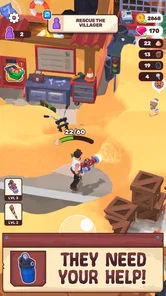
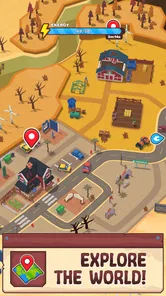
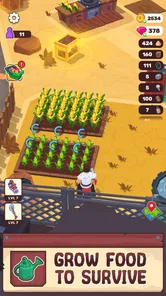
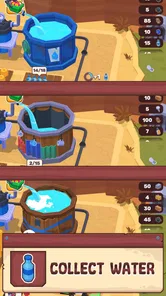
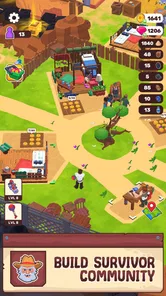
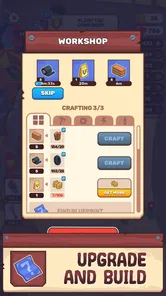
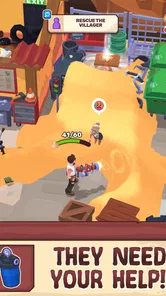
Wasteland Life: Survival Idle is a casual survival and settlement-building game set in a post-apocalyptic wasteland. You gather resources, expand your camp, and help survivors make use of the surrounding ruins. Its idle systems allow parts of your settlement to keep producing while you are away, while your active play focuses on collecting supplies and deciding what to upgrade next. It combines light survival themes with straightforward management rather than demanding action gameplay.
Some idle and resource-management progress may be available without constant interaction, but offline play and how much progress is credited can depend on the current version and its settings. The game may also need an internet connection for features such as ads, purchases, cloud-related services, or updates. Check the store listing and in-game prompts before relying on offline access, particularly if you plan to play while traveling or without a stable connection.
The game is generally offered as a free download, but that does not necessarily mean every feature is free of charge. Mobile games in this category may include optional in-app purchases and advertisements, sometimes offering rewards or faster progress. The available options can vary by platform, region, and version. Review the Google Play or App Store listing for current pricing details, and check purchase settings if children use the device.
No. Wasteland Life: Survival Idle is designed around accessible taps, collecting resources, and upgrading your settlement, so it does not rely on precise movement or fast reflexes in the way an action game might. The main challenge is managing progress and choosing which improvements to prioritize. This makes it approachable for short play sessions, though players who prefer deep strategy or hands-on survival combat may find its management-focused gameplay relatively simple.
Before downloading, confirm that your phone or tablet meets the current minimum requirements and has enough free storage. Check the official store page for supported operating-system versions, recent updates, age guidance, and any listed data-safety information. Also consider whether you are comfortable with the game's advertising, optional purchases, and possible internet requirements. Installing through Google Play or the Apple App Store is the safest way to get the authentic app and its updates.
On Android, Wasteland Life: Survival Idle asks for these permissions.
3.9 out of 5
87,607 reviews
Role Playing · SayGames Ltd

Role Playing4.5 out of 5

Role Playing4.6 out of 5

Role Playing4.7 out of 5

Role Playing4.6 out of 5

Role Playing4.0 out of 5

Role Playing4.7 out of 5

Arcade4.2 out of 5

Arcade4.5 out of 5

Simulation4.5 out of 5

Racing4.6 out of 5
Role Playing4.7 out of 5

Role Playing4.6 out of 5

Role Playing4.4 out of 5

Role Playing4.3 out of 5

Role Playing4.3 out of 5

Role Playing3.9 out of 5

Role Playing4.6 out of 5

Role Playing4.5 out of 5

Role Playing4.2 out of 5

Role Playing4.2 out of 5

Role Playing3.9 out of 5

Role Playing4.6 out of 5



Gamesive reviews games on its own and is not paid by developers for scores. We do not host game files: the download buttons open the official Google Play and App Store pages. Names, icons and screenshots belong to their owners.