
RAID: Shadow Legends
Role Playing4.6 out of 5
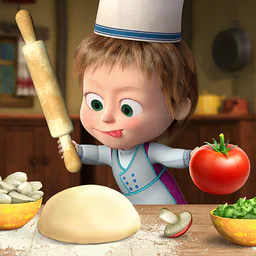
For Android & iOS · DEVGAME KIDS games
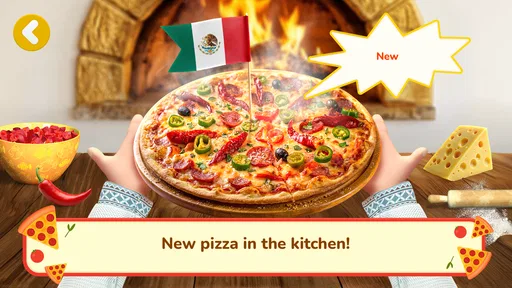
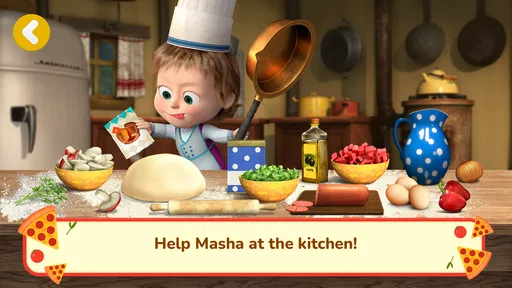
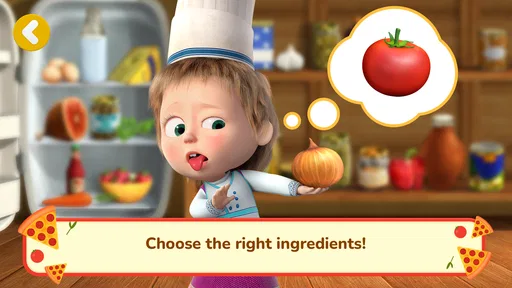

 Analysis by Gamesive
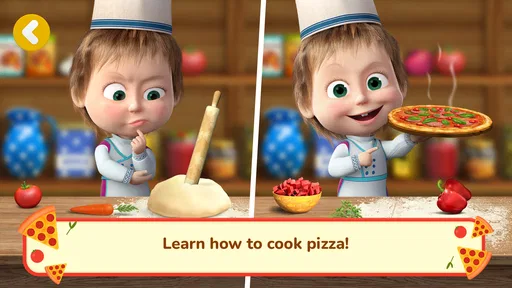
I went into Masha and the Bear Pizza Maker expecting a simple children’s game, and that is the right way to approach it: it turns making pizza into a playful, hands-on routine rather than a deep role-playing adventure. You take on the pizzaiolo’s job, work through the food-preparation theme, and get the pleasure of seeing a task come together. Its appeal is less about mastering a complicated system and more about giving a child a clear activity they can pick up without much explanation.
The game is listed as a role-playing title, though its kitchen focus makes it feel closer to a light pretend-play experience than to the combat, character-building, or lengthy quests many people associate with the genre. That distinction matters when deciding whether it fits your household. I’d consider it for a young player who enjoys Masha and the Bear and likes make-believe cooking; I would not choose it for someone looking for a challenging role-playing game with a long-term story.
The central idea is easy to understand: step into the pizza-making role and take part in preparing food. That direct premise is useful for younger children because it gives them an immediate imaginative frame. Rather than asking them to learn a complicated menu of systems first, the game invites them to play at running a little kitchen.
For a parent or older sibling, a good first session is to sit nearby and let the child lead. Ask what they think should happen next, then give them time to explore the activity themselves. This makes the game feel less like an adult-directed tutorial and more like shared pretend play. It also helps you see whether the child enjoys following the task or would rather invent their own story around the pizza-making theme.
The Masha and the Bear identity is a meaningful part of the appeal, not just a label. Children who already recognize the characters may be more willing to settle into the activity, while those unfamiliar with them can still understand the basic food-making premise. I would treat familiarity with the show as a bonus, not a requirement.
One practical point is to think of this as a short activity for a particular mood, not as a substitute for a broad collection of games. It suits a quiet moment when a child wants to do something playful on a phone or tablet. If you are hoping for a game that keeps an older child engaged through strategic choices and a demanding progression system, the lightweight kitchen concept is likely to feel limited.
In children’s games, a clear action is often more valuable than a large number of menus. Here, the pizza-making premise gives the play a familiar anchor: food is something children recognize, and pretending to prepare it is easy to understand. That helps make the first few moments approachable even if a child has not played many games before.
I also like the possibility of using the activity as a small conversation starter. A child can talk about what they are doing, describe the pizza they are imagining, or connect the pretend kitchen to food they know at home. The game does not need to teach a formal cooking lesson to support that kind of play. Its value can simply be that it gives a child a theme to act out and discuss.
The satisfaction in this kind of game comes from the relationship between action and visible progress: a child takes part in making something, sees the result, and gets a small sense of completion. That rhythm is a better fit for short, casual play than for someone who wants a demanding challenge. I would describe the draw as the pleasure of doing the activity and reaching its payoff, rather than a complex reward system.
That distinction also helps set expectations. A child who enjoys repeating a familiar activity may be happy to return to the kitchen, while a player who needs new mechanics, tougher goals, or a substantial narrative may lose interest sooner. The loop is intentionally approachable in spirit; its simplicity is part of the attraction, but it also puts a ceiling on how much depth a more experienced player should expect.
A useful everyday scenario is a brief wait at home while dinner is being prepared. A child can play for a little while, then move on when the family is ready to eat. I would keep the session bounded and treat the game as entertainment, rather than using it to promise a realistic cooking simulation. The pretend-play setting is the point; it is not a guide to making food in an actual kitchen.
Another helpful approach is to let the child narrate the steps rather than tapping through the activity for them. That turns a simple screen session into a more social moment, and it gives the adult a chance to notice whether the child is engaged by the making itself or mainly by the characters. If the child’s interest fades, there is little reason to push them through another round. A short, enjoyable session is a better outcome than stretching play past its natural stopping point.
Traditional role-playing games usually reward players with ongoing character development, long-form objectives, or a world to explore. This title’s kitchen theme points in a different direction: the central pleasure is the activity itself. That makes it easier to dip into, but it means I would not recommend it to someone choosing a game for narrative depth or a strong sense of progression.
Compared with other casual cooking games, the character-led presentation is likely to matter most to a child who already likes Masha and the Bear. A more simulation-focused cooking game would be a better alternative for an older player who wants to manage several tasks or refine technique. Conversely, a free-form pretend-play app may suit a child who prefers inventing their own scenes instead of completing a defined food-making activity.
The trade-off is straightforward: this is a focused, accessible idea rather than a kitchen packed with every possible activity. That focus can be a strength for a younger player who might find a busier game overwhelming. It can also be a limitation for a child who quickly asks for more variety. I’d base the choice on the child’s patience for repeating a familiar style of play, not just on whether they like pizza.
DEVGAME KIDS games developed the title, and it is free to download. Its average rating is 4.6 from around 247,000 ratings, with about 1,300 written reviews, and it has passed 100 million installs. Those figures suggest that it has reached a large audience, but they do not tell me whether its particular play style will suit your child. The useful question is still whether a simple, character-themed pizza activity sounds appealing to them.
The game is rated Everyone and was released on November 15, 2020. Its current version is 1.6.18, and it requires Android 7.0 or later. It is therefore worth checking the device’s operating-system version before installing, especially if you are setting it up on an older phone or tablet. The free starting point makes it easy to try, but in-app purchases range from $0.49 to $39.99 per item, so I would review purchase controls before handing a device to a child.
That purchase range is the main practical detail I would handle in advance. A child can tap around without understanding that some games offer optional paid items, so I recommend using the device’s purchase protections and explaining the rule clearly. The game’s free price should not be taken to mean that every available item is free. If you want a strictly no-purchase environment, set that expectation through the device’s settings before the first session.
For a parent choosing between this and a more involved cooking game, I would ask whether the child wants to play a character-themed activity or learn a more intricate system. If the answer is “I want to make pretend pizza with Masha and the Bear,” this is a natural match. If the child wants precise recipes, restaurant management, or extended challenges, another title designed around those goals will likely hold attention better.
I would also skip it for anyone looking for a conventional role-playing adventure. The category label may attract players expecting exploration and character progression, but the pizza-making premise is the more useful guide to what the experience is about. It is best approached as a themed children’s game with a light role-playing flavor, not as an epic adventure in miniature.
What works for me is the clarity of the activity: the child steps into a pretend kitchen, takes part in making pizza, reaches a sense of completion, and can decide whether they want to return to that familiar routine. That action-and-payoff pattern makes the game easy to introduce during a short break. Its character connection can add extra warmth for children who already enjoy Masha and the Bear.
The limitation is the same simplicity that makes it accessible. This is unlikely to satisfy a player who wants a deep story, demanding challenges, or a steady stream of new systems. I would also keep the optional purchases in mind and set device protections before a child plays independently. Those are sensible precautions for a free game aimed at a young audience.
Overall, I’d recommend Masha and the Bear Pizza Maker to families looking for a straightforward, character-led activity for a young child who likes pretend cooking. I would not recommend it as a replacement for a more substantial role-playing game or a detailed cooking simulator. If the child enjoys completing a small pizza-making routine and is happy to play in short bursts, the loop has a clear reason to begin again; if they need constant novelty, they may be ready for something with more depth.
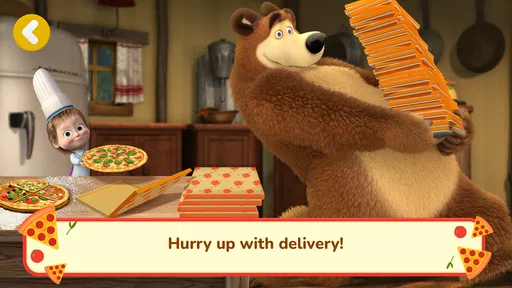
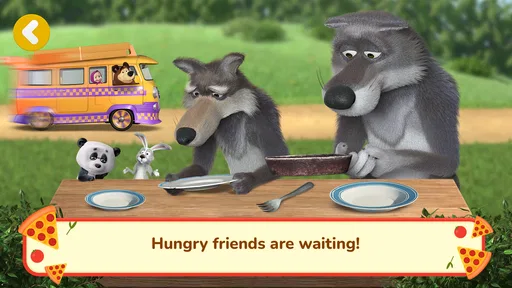
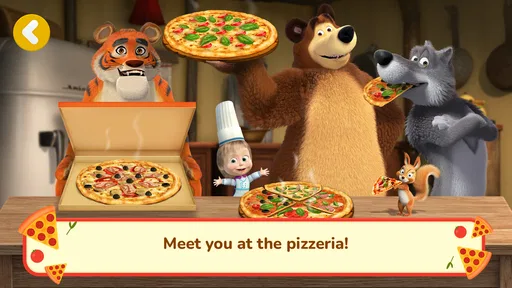
Masha and the Bear Pizza Maker is a casual cooking game centered on preparing pizzas. You can choose ingredients, add toppings, and follow the steps involved in making a pizza, with the characters and bright presentation aimed at younger players. It is designed for light, hands-on play rather than a demanding restaurant simulation, so expectations about complex recipes or extensive progression should be modest.
The game is intended primarily for children and offers simple, approachable cooking activities featuring familiar characters from Masha and the Bear. Its straightforward interactions can make it easy for younger players to explore, though suitability also depends on the child and the version available in their region. Parents should check the store listing, age rating, and any in-app purchase or advertising details before installing.
Availability and pricing can vary depending on the platform, country, and current store listing. Even when the game is free to install, it may include advertisements, optional purchases, or other features that affect the experience. Check the Google Play or Apple App Store page for the latest price and payment information, and review purchase settings if a child will be playing on the device.
Whether the game works without an internet connection can depend on its version and how it is distributed. Some basic gameplay may be available offline after installation, while advertisements, store functions, updates, or other online features may require connectivity. For a reliable answer, check the app’s current store description and test it in offline mode before relying on it during travel or away from Wi-Fi.
The game may be offered for Android, iPhone, or iPad depending on the current release and regional availability. Before downloading, check the official store page for supported operating-system versions, device compatibility, app size, age rating, and recent update information. Download from Google Play or Apple’s App Store where available, since compatibility and features can differ between platforms or versions.
On Android, Masha and the Bear Pizza Maker asks for these permissions.
Masha and the Bear Pizza Maker is also available in 2 other languages on our site.
4.6 out of 5
247,086 reviews
Role Playing · DEVGAME KIDS games

Role Playing4.5 out of 5

Role Playing4.6 out of 5

Role Playing4.7 out of 5

Role Playing4.0 out of 5

Role Playing4.7 out of 5

Role Playing4.7 out of 5
Role Playing4.6 out of 5

Role Playing4.4 out of 5

Role Playing4.3 out of 5

Role Playing4.3 out of 5

Role Playing3.9 out of 5

Role Playing3.9 out of 5

Role Playing4.6 out of 5

Role Playing4.5 out of 5

Role Playing4.2 out of 5

Role Playing4.2 out of 5

Role Playing3.9 out of 5

Role Playing4.6 out of 5



Gamesive reviews games on its own and is not paid by developers for scores. We do not host game files: the download buttons open the official Google Play and App Store pages. Names, icons and screenshots belong to their owners.