
RAID: Shadow Legends
Role Playing4.6 out of 5
For Android & iOS · NEXTERS GLOBAL LTD
 Analysis by Gamesive
I enjoy role-playing games most when they give me a clear reason to come back without demanding that every session turn into a long commitment. Hero Wars: Alliance RPG Legend aims for that balance through hero collection, battles, and an idle-RPG structure. It is a free game from NEXTERS GLOBAL LTD, and its appeal is easy to understand: build a roster, push through increasingly demanding fights, and look for ways to make a stronger team. My main reservation is that progress can feel less relaxed when advancement starts competing with the temptation to spend.
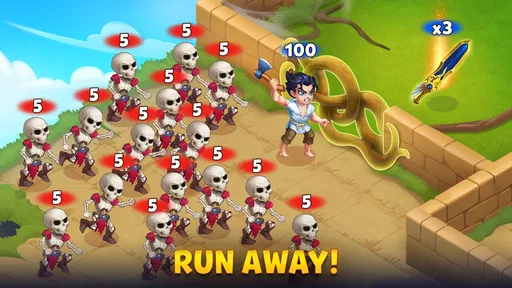
The first useful question with a hero-collecting RPG is whether it gives me something concrete to work toward. Here, the basic loop is straightforward: collect heroes and use them in battles. That makes the game approachable even if I am not looking for a complicated role-playing system to study. I can focus on assembling a team and seeing how far it gets, rather than needing to understand a dense set of rules before play becomes rewarding.
The idle-RPG framing also suits short visits. If I have a few minutes between other tasks, I can check on my progress and decide what to work on next instead of expecting every play session to be a lengthy, uninterrupted adventure. That convenience is a real strength for casual players, though it does not automatically mean every part of the game moves quickly. A brief check-in can still leave me thinking about what to improve before the next difficult fight.
Hero collection gives early progress a personal angle. I am not only trying to move forward; I am also deciding which characters are worth investing in and how my roster should develop. That choice is more engaging than watching a single number rise, but it can create a trade-off: resources spent strengthening one hero are resources I cannot use elsewhere. I would avoid upgrading every character just because they are available. A focused team is a more sensible starting point than spreading effort across the whole collection.
The game is free to download, which makes it easy to try without an initial purchase. It is rated Teen, so I would still check whether that age guidance fits the person who will be playing. The important practical distinction is that free entry does not mean every route through progression is free of friction. In-app purchases range from $0.99 to $479.99 per item, so I would treat spending as optional and set a firm personal limit before starting, particularly if collecting and upgrading heroes becomes compelling.
For me, the best early goal in a game like this is not simply “get more heroes.” It is to build a roster that can handle the fights I am actually facing. That means paying attention to where progress slows down, then making a deliberate improvement rather than changing everything at once. If a battle suddenly becomes a wall, I would first reassess the team I have been using and the investment I have already made before spending money or resources on a new direction.
That approach also helps keep the collection side from becoming a distraction. A growing roster can make every new option feel urgent, but owning more characters is not the same as having a stronger team. The more useful question is whether a new hero fills a need or gives me a reason to rethink my current setup. This is a practical way to avoid wasting effort on upgrades that look exciting but do not solve the problem in front of me.
Hero Wars has been available since March 15, 2017, and its scale suggests that the formula has found a substantial audience: it has over 100 million installs, with a 4.6 average from around 1.8 million ratings and roughly 67,000 written reviews. Those figures do not tell me whether I will enjoy its progression, but they do show that this is a well-established game rather than a short-lived experiment. Its current version is 1.294.501, and it supports devices running Android 7.1 or later.
One satisfying signal of progress is seeing a team that once struggled become reliable against familiar challenges. That kind of improvement is easy to understand: my previous choices matter, and strengthening the roster can turn a frustrating encounter into a manageable one. It gives me a reason to pay attention to what is working instead of treating every loss as a cue to grind without a plan.
A useful habit is to treat a failed fight as information. I would note which part of my team seems to be holding back the result, make one meaningful change, and test again. Changing several heroes or investments all at once makes it harder to tell what helped. This small bit of discipline can make progression feel more like strategy and less like guessing, especially when the game’s pace slows and a new upgrade is not immediately available.
There is a trade-off between convenience and control in the idle-RPG approach. It can make the game more accommodating than a role-playing title that expects long sessions and constant attention. At the same time, players who want every gain to come from hands-on play may find an idle structure less satisfying. I would recommend it to someone who likes checking in and making gradual roster decisions, but not to someone who wants every minute to involve active exploration or a tightly directed story.
The challenge is most interesting when it encourages me to reconsider how I am using the heroes I already have. If I respond to every slowdown by chasing a new character, collection can crowd out strategy. Instead, I would look for a smaller adjustment: concentrate investment, revisit the team’s balance, and give a change enough time to show whether it works. This is not a guarantee that every obstacle will disappear quickly, but it makes the process more deliberate and helps me understand why progress has stalled.
The limitation is that gradual improvement can become repetitive. If the next step feels like waiting or repeating familiar actions rather than making an interesting choice, the idle structure may stop feeling convenient and start feeling like a speed bump. Players who prefer a clear sequence of story missions, exploration, and hands-on combat may find a more traditional RPG a better fit. Hero Wars is a stronger match for people who enjoy team building and incremental improvement than for those who need constant novelty.
Compared with many role-playing games, its collection-and-progression focus gives it a different rhythm from an adventure built around a continuous campaign. I would choose this game when I want to manage a roster in short sessions; I would choose a more story-led RPG when I want a sustained narrative, active exploration, or a world to move through at my own pace. Neither preference is wrong, but knowing which kind of satisfaction I am looking for makes the choice clearer.
The game’s long-running popularity and large player base make it an easy title to consider if I want a mainstream hero-collecting RPG. Still, a large audience is not a substitute for a good personal fit. The collection loop can encourage me to keep checking for progress, and the prospect of improving a team gives those visits a purpose. The question is whether I enjoy gradual advancement enough to accept that it may not always deliver an immediate payoff.
The purchase range deserves particular care. With individual in-app items priced from $0.99 up to $479.99, I would not browse purchase options casually when I am frustrated by a difficult fight. That is exactly when spending can feel like an easy shortcut. My practical advice is to decide in advance whether I am playing as a no-spend user, set a budget if I do choose to buy anything, and judge progress by how I am managing my roster rather than by how quickly I can pay to move past a hurdle.
This is also where the game may not suit everyone. If I dislike games that connect collection and advancement with purchasable items, even the possibility of those offers may make the experience less comfortable. Someone looking for a purely self-contained, one-time purchase may be happier with a different kind of role-playing game. On the other hand, if I am content to progress at a measured pace and keep spending under control, free access provides a low-risk way to see whether the central loop holds my attention.
For an everyday example, I can imagine opening it during a short break, checking how my team is doing, and choosing one sensible improvement to pursue before I return later. That works better for me than treating each visit as a demand to clear every obstacle immediately. It also gives the collection a purpose: I am building toward a team that can handle the next challenge, not simply trying to accumulate characters without a plan.
Hero Wars is a good pick if I want a free, accessible role-playing game built around collecting heroes, improving a team, and making progress in shorter sessions. The game’s strongest progression moments come when I can identify why a battle is difficult and make a focused adjustment that helps. Its weaker moments arrive when advancement feels slow or when the pull toward purchases turns a challenge into pressure. I would approach it patiently and avoid treating every delay as a problem that needs a paid solution.
It is best for players who enjoy gradual roster-building and do not mind returning to the same overall loop. It is less suitable for anyone who expects a deeply directed narrative, constant hands-on action, or rapid progress without repetition. My recommendation is to try it free, pick a small number of heroes to focus on, and give the team-building decisions a fair chance before deciding whether the pace works for you. The key is to enjoy improving your lineup, not to confuse faster progress with better progress.
Overall, I see it as a capable idle-style RPG whose appeal depends on how much satisfaction I get from incremental gains. Its established following and 4.6 average are encouraging, but the deciding factor is personal: do I enjoy collecting heroes and thinking about how to develop a team over time? If yes, it can make a convenient companion for brief play sessions. If I want a tightly authored adventure with a faster, more hands-on rhythm, I would look elsewhere.
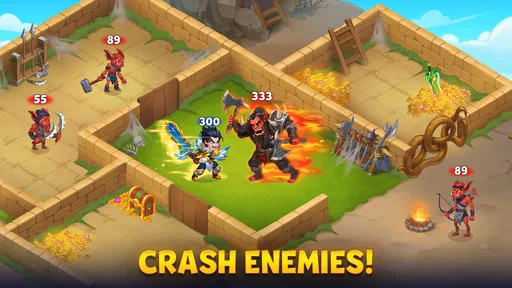
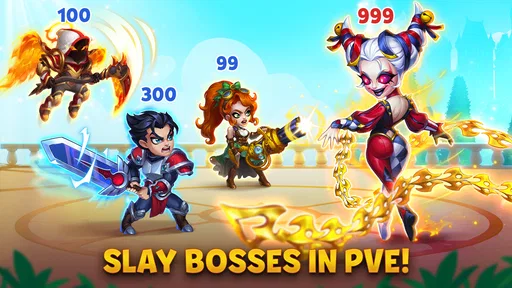
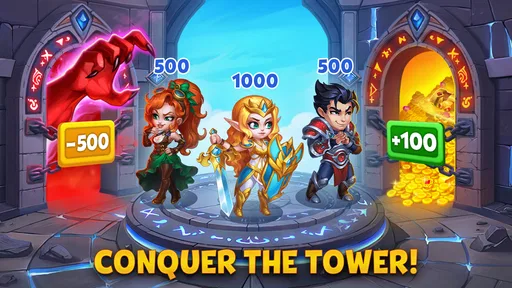
Hero Wars: Alliance RPG Legend is a fantasy role-playing game built around collecting heroes, improving their abilities, and assembling a team for battles. It combines story-driven stages with other activities, which may include player-versus-player matches, events, and guild features. The exact range of modes can change with updates, so check the current game listing and in-game menus to see what is available in your version.
The game is generally available as a free download, but it may offer optional in-app purchases, such as currency, upgrade resources, or bundles. Progress can involve waiting for resources or repeating activities, so purchases may speed things up without necessarily being required to play. Before downloading, review the purchase details in your app store, and use parental controls if children may access the device.
You should expect to need an internet connection for at least some parts of Hero Wars: Alliance RPG Legend. Online access may be needed to load content, participate in events, synchronize progress, or use social and competitive features. Availability of offline play can vary by mode and version, so do not assume the full game works without a connection. Check the current store description and test the modes you intend to play.
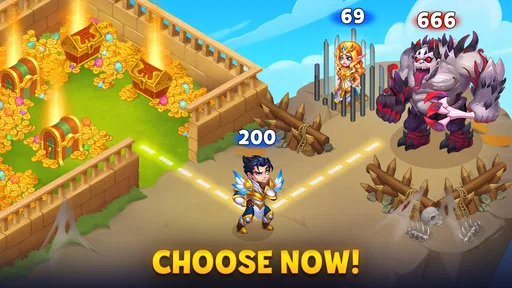
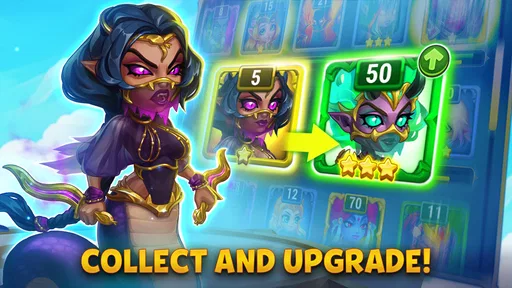
You collect different heroes and develop them by earning or using resources to improve their levels, equipment, skills, or other progression systems. Battles reward teams that complement one another, so choosing heroes only by their individual power may not be the best approach. Since upgrades can consume limited resources, it is useful to compare roles and abilities before investing heavily. Game balance and progression systems may change through updates.
Suitability depends on the child’s age, comfort with fantasy combat, and ability to handle optional purchases or online interactions. Read the age rating, content notes, privacy information, and permissions shown on the official Google Play or Apple App Store listing. Also check whether the game includes chat or other social features, and configure purchase restrictions where appropriate. Requirements and policies can differ by region and may change over time.
On Android, Hero Wars: Alliance RPG Legend asks for these permissions.
Hero Wars: Alliance RPG Legend is also available in 2 other languages on our site.
4.6 out of 5
1,810,694 reviews
Role Playing · NEXTERS GLOBAL LTD

Role Playing4.5 out of 5

Role Playing4.7 out of 5

Role Playing4.6 out of 5

Role Playing4.0 out of 5

Role Playing4.7 out of 5

Role Playing4.7 out of 5
Role Playing4.6 out of 5

Role Playing4.4 out of 5

Role Playing4.3 out of 5

Role Playing4.3 out of 5

Role Playing3.9 out of 5

Role Playing3.9 out of 5

Role Playing4.6 out of 5

Role Playing4.5 out of 5

Role Playing4.2 out of 5

Role Playing4.2 out of 5

Role Playing3.9 out of 5

Role Playing4.6 out of 5



Gamesive reviews games on its own and is not paid by developers for scores. We do not host game files: the download buttons open the official Google Play and App Store pages. Names, icons and screenshots belong to their owners.