
Car Wash: Auto Repair Garage
Role Playing4.7 out of 5
For Android & iOS · Plarium Global Ltd
 Analysis by Gamesive
The first thing I notice in RAID: Shadow Legends is how quickly it puts the basic appeal of a turn-based role-playing game in front of me: choose a team, pick an action, and watch the fight resolve. The fun comes from more than collecting heroes. I’m weighing which abilities to use, seeing how a battle changes, and deciding what I want to improve before the next attempt. That action-to-feedback rhythm is the game’s strongest hook—and also why a short visit can turn into a longer session.
Developed by Plarium Global Ltd, this free role-playing game has a 4.6 average from around 2.3 million ratings, with more than 50 million installs. Its current version is 11.95.1, and it is rated Teen. The large hero roster gives team-building plenty of room, but the experience suits players who enjoy gradual progression and repeated battles more than those looking for a compact story that ends after a few evenings.
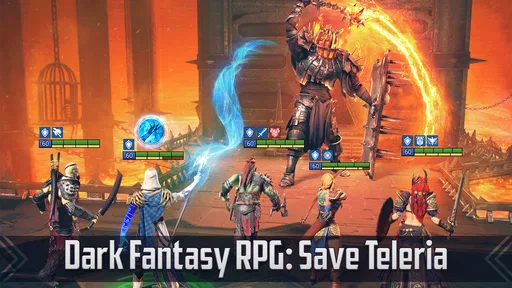
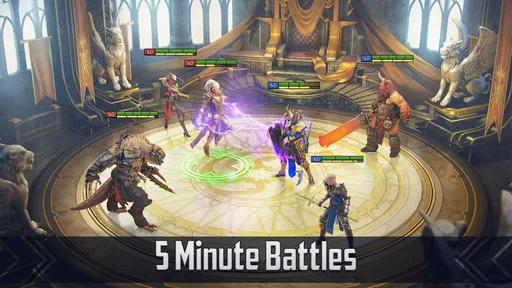
The central action is straightforward: I bring heroes into turn-based battles and choose how to use their abilities. That makes each encounter easier to follow than a real-time action game, because I can focus on the order and effect of decisions rather than quick reflexes. The tactical interest comes from considering how the team works together and whether a particular approach is worth repeating.
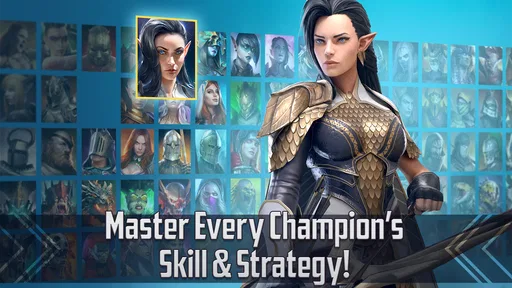
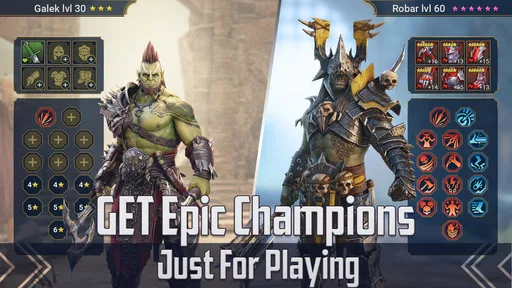
The game’s scale is part of the attraction. There are more than 800 heroes to summon, so collecting is not just a side activity; it gives the long-term loop a steady sense of possibility. A new hero can make me reconsider my lineup, while a familiar team gives me a baseline for judging whether changing a choice actually helped. I would not assume that a larger collection automatically means a stronger team, though. The useful question is whether a hero gives me a reason to adjust how I approach a fight.
That distinction matters if you are used to role-playing games where the main reward is simply reaching the next story chapter. Here, I get more out of thinking about party composition and battle decisions. If your favorite part of the genre is building a roster and testing it against difficult encounters, the setup is appealing. If you mainly want direct character control or constant action, the turn-based pace may feel too deliberate.
A battle gives me immediate feedback: an ability works, a target remains standing, or the team needs another approach. This makes experimentation more legible than in games where an outcome is difficult to connect to a particular choice. I can make a change and pay attention to whether it improves the next run, rather than treating every defeat as an unexplained setback.
One practical habit is to change one thing at a time when a fight goes badly. Swapping several heroes or changing the whole plan at once may win the next attempt, but it leaves me unsure which adjustment mattered. By keeping most of the team steady, I can learn more from the result. This is especially useful in a game built around a broad roster: collecting is satisfying, but learning how to use what I have is what makes collection meaningful.
There is a trade-off. Repeating a battle can make progress feel satisfying when I’m testing a better setup, but less interesting when I’m simply trying to get past a hurdle. Players who want every encounter to introduce a completely new mechanic may find the repetition wearing. I see it as a game to return to in measured bursts, not one that needs to deliver a major surprise every few minutes.
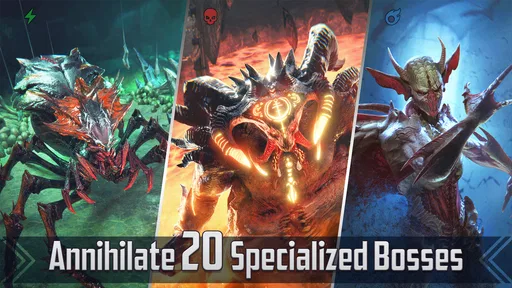
Epic bosses are an important part of the game’s appeal, and they make team decisions feel purposeful. A boss is a more convincing test of preparation than an easy fight that ends before I have to think. When I meet a wall, I can treat it as a prompt to reconsider my roster and choices instead of expecting a quick button-mashing solution.
My useful rule is to avoid spending resources impulsively just because a single encounter is frustrating. First, I would review whether the team’s roles and abilities make sense together, then try a modest adjustment. That approach is less exciting than an instant power jump, but it helps keep progression deliberate. The game works best when I’m interested in solving the encounter, not merely rushing through it.
For a realistic everyday session, imagine having a few minutes while waiting for a ride. I can open the game, take on a battle, see whether a lineup change helps, and stop with a clear idea of what I might try next. On a longer evening, I can spend more time exploring the roster and working toward a tougher fight. The same basic loop accommodates both, though the game’s appeal depends on whether you enjoy returning to familiar combat rather than demanding a fresh set piece each time.
The reward feels most useful when it gives me a reason to revisit my strategy: a hero to consider, progress that makes another attempt more promising, or a new way to think about the team. That is more engaging than collecting things simply because a counter goes up. The large roster creates anticipation, but the payoff is strongest when I can imagine how a new addition might fit into an actual battle.
There is a sensible way to approach summoning: think of it as expanding options, not as a guarantee that the next result will solve every problem. With so many heroes in the game, I would focus on the team I can use now rather than letting the size of the collection become a reason to chase every possible addition. That keeps the strategic part in view and makes ordinary progress feel worthwhile.
Because the game is free to download but includes in-app purchases ranging from $0.59 to $199.99 per item, spending deserves a deliberate boundary. I would recommend starting without paying and deciding whether the loop itself is enjoyable before considering a purchase. The presence of high-priced items can make the temptation to speed things up more noticeable, so anyone who prefers a game with no purchase prompts or spending decisions should take that into account.
After a fight, the natural next step is to use what I learned: keep a successful team, adjust a weak point, or put a newly obtained hero to the test. That is the reset that brings me back. The game does not need every session to end with a dramatic twist; a small improvement in the next attempt can be enough. For me, the loop works when I’m curious about whether a different choice will make a tangible difference.
It can also become repetitive. If I’m playing only to clear battles as quickly as possible, repeated encounters may feel like work rather than strategy. I find it helps to set a small goal before opening the game—test a team change, make progress against a boss, or spend a short session collecting experience from battles—then stop once that purpose is met. This turns a potentially open-ended loop into something easier to fit around a normal day.
There is a useful contrast with other role-playing games. A story-led RPG is usually the better choice if you want a tightly paced plot and a clear ending. An action RPG is a better fit if movement, timing, and direct control are the main pleasures. RAID: Shadow Legends is more compelling for someone who likes assembling a roster, choosing actions carefully, and returning to improve a result. That focus is specific and rewarding, but it is not a universal substitute for the rest of the genre.
I’d recommend it to players who enjoy turn-based combat, collecting characters, and gradually refining a team. It is also a reasonable pick if you want a role-playing game you can approach in short sessions, provided you are comfortable with a loop that asks you to revisit battles and make incremental progress. Teen players should note its Teen content rating, and anyone sharing a device or setting spending limits may want to consider the in-app purchase range before starting.
I’d steer away from it if you dislike roster management, repeated fights, or games where optional purchases sit alongside free play. It may also disappoint if you expect every new hero to transform the experience or want a short, self-contained campaign. Its large collection is an invitation to experiment, not a promise that every summon will change your plans.
What keeps me interested is the sequence: choose a team, make a turn-based decision, see the result, earn a reason to adjust, and return with a better-informed plan. The most satisfying sessions are not necessarily the longest ones; they are the ones where I understand why a fight went differently and have a concrete idea for the next attempt. That gives the game a practical rhythm rather than relying only on spectacle.
With version 11.95.1, a free entry point, and a Teen rating, it is easy to see why this role-playing game has attracted a large audience. I would still approach its collection and purchase options thoughtfully, and I would not recommend it to someone who needs constant novelty. But if building a team and learning through repeated battles sounds satisfying, RAID: Shadow Legends offers a clear reason to come back: there is always another lineup to test and another result to improve.
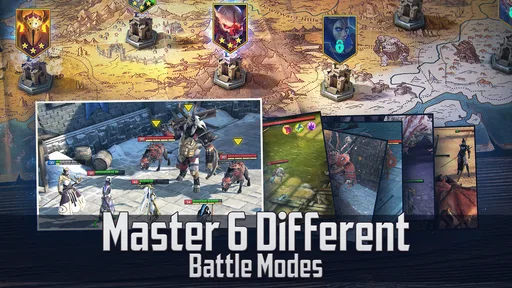
RAID: Shadow Legends is a free-to-play fantasy role-playing game focused on collecting champions, building teams, and taking them into turn-based battles. Its activities include a campaign, dungeons, arena matches, clan content, and limited-time events. The game is designed for ongoing play, so progress involves improving champions and equipment over time rather than completing a single, short story campaign.
Yes. You can download and play RAID: Shadow Legends without making a purchase, and the game provides ways to earn champions and resources through play. However, it includes optional in-app purchases and recurring offers, and progression can require considerable time, especially when improving a large roster or pursuing particular champions. Spending is not required to try the main modes, but patience and resource planning help.
Plan to play RAID: Shadow Legends online. The game connects to its services for account access, events, battles, and progress synchronization, so it is not a dependable choice for offline play. A stable connection can make loading and playing more reliable. Before installing, check the current store listing and your device’s available storage, since requirements and download size can change with updates.
Combat is turn-based: you select a team of champions, choose abilities, and consider factors such as skills, equipment, and team roles. Some battles can be automated, which is useful when repeating stages, while harder encounters reward careful team building. The game has many systems to learn, including champion upgrades and gear, so newcomers may find the early experience busy but can explore its modes gradually.
RAID: Shadow Legends is a fantasy combat game with battles and character designs that may not suit every child. It also contains in-app purchases and promotional offers, so parents should review the game’s current age rating and store details, and use device-level purchase controls where appropriate. Ratings and available features can vary by region and platform; check the listing for the relevant Android or iOS device before downloading.
On Android, RAID: Shadow Legends asks for these permissions.
RAID: Shadow Legends is also available in 2 other languages on our site.
4.6 out of 5
2,275,422 reviews
Role Playing · Plarium Global Ltd

Role Playing4.5 out of 5

Role Playing4.6 out of 5

Role Playing4.7 out of 5

Role Playing4.6 out of 5

Role Playing4.0 out of 5

Role Playing4.7 out of 5
Role Playing4.7 out of 5

Role Playing4.4 out of 5

Role Playing4.3 out of 5

Role Playing4.3 out of 5

Role Playing3.9 out of 5

Role Playing3.9 out of 5

Role Playing4.6 out of 5

Role Playing4.5 out of 5

Role Playing4.2 out of 5

Role Playing4.2 out of 5

Role Playing3.9 out of 5

Role Playing4.6 out of 5



Gamesive reviews games on its own and is not paid by developers for scores. We do not host game files: the download buttons open the official Google Play and App Store pages. Names, icons and screenshots belong to their owners.