
Dream League Soccer 2026
Sports4.5 out of 5
For Android & iOS · ELECTRONIC ARTS

 Analysis by Gamesive
I like golf games that make every shot feel deliberate rather than turning a round into a slow, full-length simulation. Golf Clash is built around that quick, competitive rhythm: it puts the focus on judging a shot, choosing how to play it, and seeing whether that decision holds up against another player. It is a sports game from ELECTRONIC ARTS, and its simple premise makes it easy to understand, though getting reliably good takes more patience than the first few matches suggest.
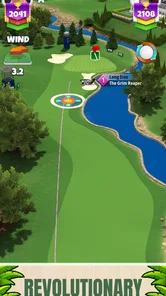
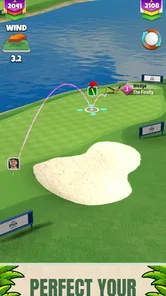
The appeal is the contrast between a short session and a meaningful decision. A match can fit into a spare moment, but a shot is not simply a matter of aiming at the hole and tapping once. Wind, distance, the terrain, and the way a shot is set up all ask for attention. I found that the game feels best when I slow down enough to read the situation instead of treating each turn as a reflex test.
That makes it a good fit for brief breaks: I can play a match while waiting for a coffee or winding down after work without committing to a long golf round. It also gives the game a clear learning loop. I can see when a shot drifted off course, think about what I misjudged, and try a different approach next time. The compact format is convenient, but the consequences of a poor decision can still be noticeable.
The title is free to play and rated for Everyone. It has a 4.3 average from around 2.1 million ratings, with over 10 million installs. Those figures suggest broad appeal, but they do not tell me whether its competitive style will suit you. If you want a quiet golf game where you can take your time without an opponent waiting on the result, this is not the same kind of experience.
My most useful habit was to treat the aiming step as a small routine rather than a quick gesture. First I look at where the ball needs to land, then consider the wind and the available route, and only then settle on a target. That order helps prevent a common mistake: focusing on the pin so intently that I overlook the shot needed to reach a safe position first.
When the direct line looks risky, a controlled approach can be smarter than trying to force a spectacular shot. On a narrow or awkward-looking route, I would rather leave myself a manageable next shot than gamble on a perfect landing. This is one of the game’s more interesting trade-offs: an aggressive attempt can save time or create a chance, but a conservative placement can protect a lead. The best choice depends on the match, not on a single universal technique.
I also recommend using early matches to learn what different shot choices feel like, rather than judging progress only by wins. A result can hinge on one small aiming error, and a lucky outcome may hide a bad decision. If I make a note of whether I misread wind, rushed the setup, or chose an overambitious route, the next match becomes more useful even when I lose.
Golf Clash can give a player a reason to return: improving shot judgment is satisfying, and competing against another person makes each result feel immediate. The downside is that competition can also create pressure to keep playing after a frustrating loss. I find it healthier to set a small goal for a session, such as practicing steadier aim or making fewer rushed decisions, instead of chasing a winning streak.
That approach is especially useful for newcomers. The game may look straightforward at first, but a clean-looking shot is not necessarily a sound one. New players can benefit from pausing before each attempt and asking what a safe miss would look like. If the ideal line fails, will the ball still land somewhere useful? Thinking about the fallback outcome makes the play feel less like guesswork and helps avoid repeating the same risky choice.
There is also a practical difference between playing for a few minutes and settling in for a longer run. A short session is convenient, but repeated matches can make small mistakes feel more aggravating, especially if I am trying to recover immediately from a loss. Taking a break after a couple of frustrating outcomes is not just sensible; it keeps the game’s shot-by-shot challenge from becoming a compulsion to win back what I just lost.
The game includes in-app purchases, with listed items ranging from $0.49 to $129.99 per item. That is a wide span, so I would check the item and its price carefully before confirming anything. The store summary also says the game includes random items. For a player who prefers predictable spending, that is worth considering before deciding to make any purchase.
I would not treat spending as a requirement simply because purchases are available. The verified purchase details establish that optional items exist and that some are random; they do not establish how a particular purchase changes a match or whether it guarantees a competitive advantage. I would therefore make the decision based on the exact item shown in the game, the displayed cost, and whether I am comfortable with the random-item element—not on an assumption that paying is necessary to enjoy the core competition.
A useful personal rule is to decide on a spending limit before opening a purchase screen, then stick to it. If you are choosing the game for a younger player, it is also sensible to talk about purchases and random items in advance. The Everyone content rating describes the age suitability of the game’s content; it should not be confused with a promise that all spending decisions are straightforward or suitable for every household.
The one-on-one competitive format is the game’s main draw, but competition naturally makes fairness matter. I can judge my own play by whether I understand the shot, make a considered choice, and learn from the outcome. I cannot turn the listed purchase facts into a reliable claim about matchmaking, the effect of items, or how evenly every contest is balanced. Those details are not established by the information available here, so I would not promise that a paying and non-paying player always face identical conditions—or claim the opposite.
For a fair-minded way to approach it, I would begin without spending and see whether the match loop itself is enjoyable. Pay attention to whether wins and losses feel connected to decisions you can understand, and read the full description of any item before buying. If the competitive side stops feeling fun or the purchase prompts make you uncomfortable, there is no reason to force it; a solo golf game or a less purchase-focused sports title may be a better match.
This is an important distinction between fairness and preference. Some players enjoy a competitive game even when progress involves repeated matches; others want every session to be relaxed and self-paced. Golf Clash is better suited to the first group. For the second, the pressure of an opponent and the presence of in-app purchases may be distractions rather than motivation.
I would recommend it to someone who likes compact sports competitions, enjoys adjusting a plan from shot to shot, and can take a loss without immediately trying to erase it. It is also a reasonable choice for golf fans who want a more immediate, game-like version of the sport rather than a detailed recreation of a full round. The most satisfying moments come from making a thoughtful choice and seeing it work, not from simply tapping through a course.
I would steer away from it if your priority is offline, solitary play, a slow simulation, or a competition-free way to relax. It may also be a poor fit if random-item purchases are a deal-breaker for you, or if you find head-to-head results stressful. In those cases, a conventional single-player golf game is likely to offer a calmer experience, while another casual sports game may avoid the particular mix of shot judgment and direct competition that defines this one.
The game is listed as version 3.4.10 and requires Android 7.0 or later. ELECTRONIC ARTS released it on January 18, 2017, and it has accumulated around 345,000 written reviews. I mention the version and system requirement because they are practical checks before installing, while the game’s long-running presence and large audience are useful context—not a guarantee that every player will enjoy its style.
Golf Clash works best when I treat it as a compact skill game rather than a miniature substitute for playing a real round. Its strongest quality is the way a quick match can still reward patience, judgement, and a willingness to choose a safe shot over a flashy one. That makes it easy to return to, and it gives each match a clear point of focus.
Its main friction is also part of that design: competitive results can make mistakes feel personal, and the presence of paid items—including random items—means spending deserves attention. I would install it for the short, tactical matches and begin by learning the shot choices without buying anything. If the competition feels rewarding on its own, it is worth keeping around; if you want a relaxed golf experience with no purchase uncertainty, I would choose a different kind of game instead.
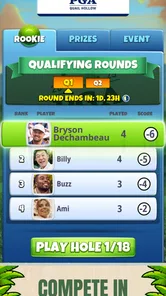
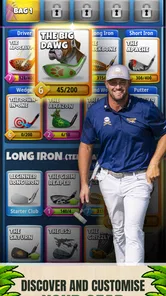
Golf Clash is a mobile golf game built around short, head-to-head matches rather than full-length rounds. You take turns aiming and hitting shots, adjusting for factors such as wind, distance, terrain, and club choice. Its simple controls make it easy to start playing, while learning how to judge shots and manage equipment adds depth over time. The exact features and available modes may vary by version.
Golf Clash is generally offered as a free-to-download game, with optional in-app purchases. You can play without paying, but purchases may be offered for items such as currency, chests, or other progression resources. Check the store listing for current pricing and details before downloading, and consider setting purchase restrictions if children use your device. Availability and offers can differ by country and platform.
Because Golf Clash centers on live matches against other players and online progression, you should expect to need an internet connection for its main features. Connection quality can affect matchmaking and the smoothness of a game, so a stable Wi-Fi or mobile data signal is recommended. Some menus or previously loaded content may behave differently, but the game should not be treated as a fully offline golf simulator.
Golf Clash is approachable for newcomers: aiming and shooting rely on touch controls, and early matches introduce the basic rhythm of play. However, accurate shots require practice, especially when wind, elevation, rough, or bunkers affect the ball. New players may also encounter opponents with more experience or upgraded clubs. Taking time to learn the shot mechanics and improve gradually can make matches more enjoyable.
The game includes ways to challenge friends as well as compete in online matches, though the available options can depend on the current version and account setup. Before downloading, check that your device meets the app store’s requirements and that you have enough storage and reliable internet access. Review the listing’s age guidance, privacy information, and in-app purchase details, particularly if a child will be playing.
On Android, Golf Clash - Golfing Simulator asks for these permissions.
4.3 out of 5
2,144,618 reviews
Sports · ELECTRONIC ARTS
Sports4.8 out of 5
Sports4.4 out of 5

Sports4.6 out of 5

Sports4.6 out of 5

Sports4.5 out of 5

Sports4.6 out of 5

Strategy3.7 out of 5
Sports4.6 out of 5

Racing4.4 out of 5

Sports4.6 out of 5
Sports4.5 out of 5

Sports4.4 out of 5

Sports4.1 out of 5

Sports4.7 out of 5

Sports4.5 out of 5

Sports4.6 out of 5

Sports4.2 out of 5

Sports4.5 out of 5
Sports3.0 out of 5

Sports4.7 out of 5

Sports4.7 out of 5
Sports4.6 out of 5



Gamesive reviews games on its own and is not paid by developers for scores. We do not host game files: the download buttons open the official Google Play and App Store pages. Names, icons and screenshots belong to their owners.