
Dream League Soccer 2026
Sports4.5 out of 5
For Android & iOS · Viva Games Studios


 Analysis by Gamesive
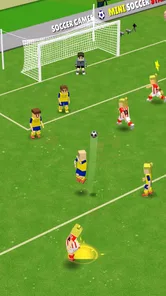
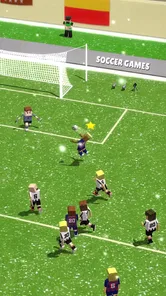
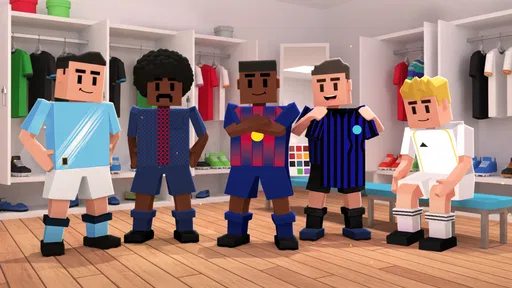
Mini Soccer Star makes soccer feel approachable by focusing on the most satisfying part of the sport: trying to put the ball in the net. I like that its career framing gives each short session a sense of direction, while the mini-game format suits moments when I want a quick challenge rather than a full match. It is a free sports game from Viva Games Studios, and its strong player response—an average rating of 4.7 from around 532,000 ratings—suggests that this compact take on soccer has found a sizeable audience.
The appeal is immediate: I can think about the next attempt, not learn the tactics and controls of a full simulation before having fun. That makes Mini Soccer Star a natural choice for a short break, a commute, or a few minutes between other activities. Its soccer mini-games keep the premise focused, while career mode gives those individual moments a wider purpose: building toward the feeling of becoming a soccer star.
That focus is useful if you enjoy scoring more than managing an entire team. A traditional soccer game can ask for attention to formations, passing options, and the flow of a full fixture. This one is better suited to someone who wants a quick, goal-oriented challenge. I would not treat it as a substitute for a deep football simulation; I would choose it when I want a lighter, more direct version of the sport.
The game’s stated audience is broad: it is rated Everyone, and the basic entry cost is free. That lowers the barrier to trying it, especially for younger players or anyone who is curious but not ready to pay upfront. In-app purchases are available, with items priced from $0.99 to $109.99, so I would keep that range in mind if a child will be playing or if you prefer to avoid optional spending. Free to start does not mean every purchase is free.
Mini-games are most compelling when they feel connected rather than disposable. Career mode is the hook that turns scoring into a longer-term goal, giving a player a reason to return after a brief session. I find that framing more motivating than a collection of unrelated challenges: even when I only have time for a little play, the career idea makes the next goal feel like part of a larger journey.
There is also a useful difference between a game that offers a quick task and one that gives you a reason to care about doing it well. Here, the promise of becoming a soccer star sets the direction, while the mini-game format keeps the immediate effort manageable. That is a good balance for casual play. It is less likely to satisfy someone whose main pleasure comes from controlling every player and shaping a match from kickoff to final whistle.
The most important progress signal is the career structure itself. Instead of relying only on the satisfaction of one successful shot, the game asks me to see individual scoring moments as steps toward a bigger sporting ambition. That can make repetition feel purposeful, particularly for players who enjoy improving through repeated attempts and seeing a character’s journey take shape.
My practical advice is to treat each session as a small target rather than expecting a long, complicated campaign to unfold at once. If a challenge is not going your way, a short pause can help more than pushing through frustrated attempts. Returning with a clear head makes the next try feel like practice instead of a chore. This approach works especially well in games built around focused actions, where concentration on one opportunity matters more than playing for a long stretch.
The game has reached over 10 million installs, which points to broad interest, but popularity alone does not tell me whether its style will suit you. The more useful question is whether you like a simple loop organized around scoring and career progress. If you want the drama of a full-length match, that streamlined approach may seem thin. If you want a quick soccer-themed challenge with a clear ambition attached, it is a more sensible fit.
A scoring-focused game naturally depends on the challenge remaining interesting after the first few successes. The career premise helps provide a reason to keep going, but players should still expect a more concentrated experience than a full sports game. The appeal is not in mastering every aspect of soccer; it is in engaging with the particular opportunities the mini-games present and working toward the next stage of the career fantasy.
That distinction matters when deciding whether to stick with it. I would recommend it to a casual player who likes short goals, repeated attempts, and a clear theme. I would be more cautious about recommending it to someone who quickly tires of doing similar kinds of actions or expects extensive control over team strategy. A compact game can feel refreshing precisely because it leaves out complexity, but that same simplicity can become a limitation for players who want more variety and depth.
When a challenge feels difficult, I would focus on making each attempt deliberate rather than tapping through quickly. In a goal-centered game, rushing can make a missed opportunity feel random, while slowing down helps you pay attention to what the current attempt asks of you. This is a small but useful way to get more from short sessions: play to understand the challenge, not just to clear it as fast as possible.
Progression games often keep players engaged by combining immediate wins with longer-term rewards. Here, the career goal is the clearest reason to return, and the mini-game structure makes it easy to fit another attempt into spare time. I would judge the pacing by whether the next step feels worth pursuing, rather than by how long I can play in one sitting. That is a healthier way to approach a free game with optional purchases: enjoy the core experience at your own pace and do not treat spending as a requirement for having fun.
Because optional purchases range widely in price, I recommend checking each purchase carefully before confirming it. If you are setting up the game for a younger player, agree on spending rules first and use the device’s purchase controls as appropriate. That is practical advice rather than a reason to avoid the game: the free starting point makes it easy to sample, while a little attention to purchases keeps the experience within your comfort zone.
For everyday use, I can picture opening it during a short wait, playing a few attempts, and putting the phone away without needing to reserve a large block of time. It is a better fit for that habit than a simulation built around complete matches. On the other hand, if you want a game to occupy a long evening with tactical decisions and a broad range of match situations, a more substantial soccer title will probably serve you better.
I would point casual players toward it if they want a direct route into soccer-themed play, especially those who enjoy scoring challenges and a career-shaped sense of progress. It is also a reasonable option for someone who is new to mobile sports games and would rather start with a focused idea than take on the demands of a full simulation. The Everyone rating makes its intended audience broad, though families should still consider the availability of in-app purchases.
I would steer away from it if your favorite part of soccer games is controlling the whole team, planning tactics, or playing complete fixtures. Those expectations belong more naturally to traditional football simulations. Likewise, players who need a deep range of modes or highly detailed management may find the mini-game focus too narrow. The right choice depends less on whether you like soccer in general and more on whether you enjoy a concise, goal-first interpretation of it.
The game is free, runs on Android version 8.0 or later, and its current version is 2.03. It was released on May 21, 2022, and has accumulated around 2,500 written reviews alongside its much larger rating count. Those details make it easy to identify and check compatibility before installing, but I would still suggest trying the core play for yourself before deciding whether its rhythm holds your attention.
What works best is the connection between quick soccer mini-games and the larger ambition of career mode. The game gives a short session a purpose without asking me to commit to a full match, and that is exactly the kind of pacing I want when I only have a few spare minutes. Its strongest use case is clear: a casual player wants a simple scoring challenge with a longer-term theme to pull them back in.
The trade-off is just as clear. A focused scoring loop cannot offer the same strategic breadth as a full soccer simulation, and the career framing may not be enough for someone who wants a lot of different activities. Optional purchases also call for sensible boundaries, particularly on a device shared with a child. Those are real considerations, not deal-breakers for everyone.
Overall, I would recommend Mini Soccer Star to someone who wants soccer in compact, goal-driven bursts and likes having a career goal to work toward. I would skip it in favor of a more complete football game if team control and match strategy are essential. For the right player, its simple progression is the point: one small challenge at a time, with a reason to come back for the next one.
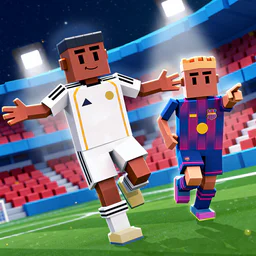
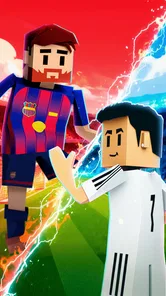
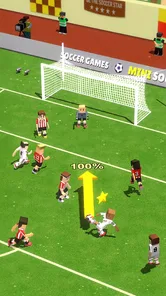
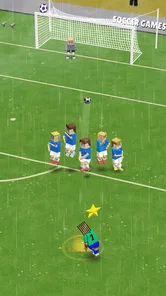
Mini Soccer Star is a casual soccer game focused on guiding a player through a football career. You take part in match situations, aim and shoot, and try to score while progressing through stages. Its straightforward controls make it approachable for players who do not want a full team-management simulation, although the timing and direction of your shots still matter.
Most of the action centers on controlling your player during key moments rather than directing every teammate throughout an entire match. You aim your shots and choose when to take them, with success depending on placement and timing. The game introduces objectives and challenges as you advance, so it helps to pay attention to each situation instead of simply shooting as quickly as possible.
Some parts of Mini Soccer Star may be playable without a continuous internet connection, but offline availability can depend on the version, device, and specific features you want to use. Online connectivity may be needed for advertisements, purchases, events, or other connected services. If offline play is important to you, check the current store listing and test the game before relying on it during travel.
Mini Soccer Star is generally offered as a free download, but free access does not necessarily mean every feature is free of charge. The game may include advertisements and optional in-app purchases, and availability or pricing can vary by region and platform. Review the store listing before downloading, and check purchase settings if a child will be playing on the device.
The game’s soccer theme and simple, touch-based play may appeal to younger players, but suitability depends on the child and the content shown in the particular version. Parents should review the age rating, privacy information, advertising practices, and in-app purchase options on the relevant app store. Consider enabling purchase restrictions and supervising play, especially if the device is shared.
On Android, Mini Soccer Star asks for these permissions.
Mini Soccer Star is also available in 2 other languages on our site.
4.7 out of 5
532,067 reviews
Sports · Viva Games Studios

Sports4.8 out of 5
Sports4.4 out of 5

Sports4.6 out of 5

Sports4.6 out of 5

Sports4.5 out of 5

Sports4.6 out of 5
Sports4.5 out of 5

Sports4.4 out of 5

Sports4.1 out of 5

Sports4.7 out of 5

Sports4.5 out of 5

Sports4.6 out of 5

Sports4.2 out of 5
Sports4.5 out of 5
Sports3.0 out of 5

Sports4.3 out of 5

Sports4.7 out of 5
Sports4.6 out of 5



Gamesive reviews games on its own and is not paid by developers for scores. We do not host game files: the download buttons open the official Google Play and App Store pages. Names, icons and screenshots belong to their owners.