
Dream League Soccer 2026
Sports4.5 out of 5

For Android & iOS · playus soft
 Analysis by Gamesive
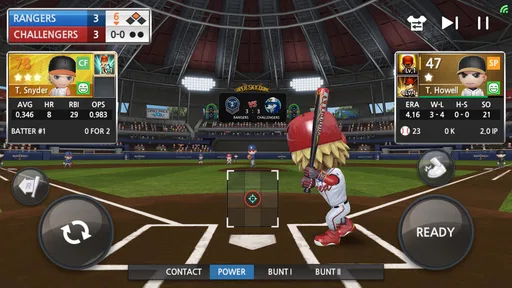
I found BASEBALL 9 easiest to enjoy once I stopped treating it like a full simulation of every detail of professional baseball. It is a mobile sports game built around assembling a team and playing baseball in short, approachable bursts. The appeal is the combination of on-field decisions and the longer-running satisfaction of improving a club, rather than a promise of exhaustive realism. If you are new to baseball games, that makes the first outing less intimidating; if you already know the sport, you can focus on reading the play and making timely choices.
Developed by playus soft, this free game has an Everyone age rating and is available on Android from OS 6.0 onward. Its version is 3.9.6, and optional in-app purchases range from $1.99 to $99.99 per item, so it is worth knowing that purchases are part of the app even if you simply want to try playing. The game has a 4.6 average from around 476,000 ratings, with more than 50 million installs. Those figures suggest broad appeal, but the more useful question is whether its particular blend of batting, pitching, and team building suits the way you like to play.
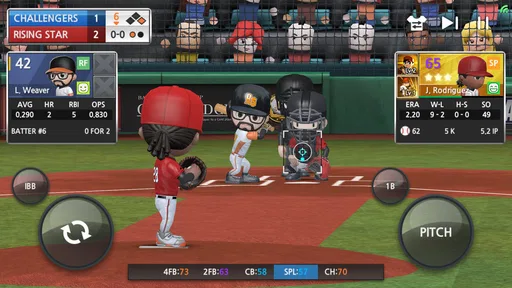
The basic loop is easy to understand: take the field, make baseball decisions, then use what you learn to guide the team you are building. That gives each match two layers. In the moment, you are trying to produce a good result at the plate or prevent one in the field. Across sessions, the team-building side gives you a reason to return and think about how to improve your roster. For me, that combination gives the game more staying power than a simple batting challenge, without demanding the commitment of a detailed management simulator.
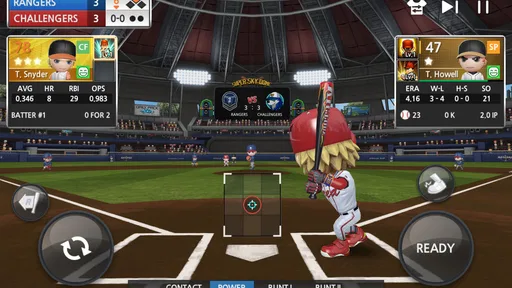
My first practical tip is to pay attention to the difference between a good-looking swing and a well-timed one. New players can be tempted to act as soon as the ball appears, but baseball rewards patience: watch the delivery, judge whether it is worth pursuing, and avoid turning every pitch into an attempt to hit. A disciplined plate appearance can be more useful than swinging at everything. That small change makes the game feel less like a reflex test and more like baseball.
Pitching and batting also ask for different kinds of attention. At the plate, you are reacting to an incoming ball; on the mound, you are trying to make the other side react badly. Rather than rushing through both, I found it helpful to give each a clear purpose: when batting, look for a pitch you can handle; when pitching, think about how to keep the hitter from getting comfortable. Even without deep baseball knowledge, that simple contrast makes the decisions easier to follow.
The game is a good fit if you want baseball you can pick up without first learning a complicated management interface. It also suits fans who enjoy the feeling of developing a team along with playing matches. On the other hand, if your main interest is a highly realistic broadcast-style presentation, extensive real-world roster detail, or a deep front-office model, this may not scratch that itch. I would choose a more simulation-focused alternative for those priorities, and choose this one when I want a more direct, game-first experience.
When you begin, resist the urge to treat every team-building choice as permanent or decisive. Play enough to see what the game asks of you, then use the early matches as practice in noticing where you feel comfortable and where you are making avoidable mistakes. A useful first-session goal is not to build a perfect team; it is to understand the rhythm of a plate appearance and the difference between controlling a play and simply hoping for a good outcome.
That approach also helps keep optional spending in perspective. The game is free to start, while in-app items are priced from $1.99 to $99.99 each. I would first establish whether you enjoy the core play and the team progression before considering a purchase. If a purchase seems tempting because you are frustrated by a match, pause and ask whether the problem is actually a decision you can improve—such as chasing a poor pitch—or a genuine preference for faster progression. Those are different reasons to spend.
For a first meaningful success, set a modest target: make one patient batting decision, then pay attention to how the next play unfolds. If you get a hit or help prevent a scoring chance, treat that as evidence that you are beginning to read the game, not as proof that you have mastered it. The benefit of this small goal is that it gives a newcomer something concrete to learn from even if the final result is not a win. Baseball has plenty of variation, and one match is a poor measure of whether you are improving.
A practical everyday scenario is a short break when you have enough time to focus on a match but not enough to settle into a long console session. BASEBALL 9 makes sense in that setting because its central activity is immediately recognizable: play baseball, make the next decision, and keep building your team over time. I would still avoid opening it when you need to divide your attention constantly. Timing and judgment matter more when you are involved in a play, so a brief uninterrupted session is more satisfying than trying to play while repeatedly switching tasks.
One useful habit is to review your own decision rather than blaming the result. A weak outcome can follow a reasonable choice, and a lucky outcome can follow a careless one. Ask yourself whether you swung at a pitch you could reach, whether you gave the pitcher a chance to make you uncomfortable, and whether you understood what you were trying to do before acting. This keeps the learning process grounded in choices you can repeat, rather than in the unpredictable result of a single play.
Another helpful trade-off is to separate experimentation from progress. When you are still learning, try different approaches in a low-pressure session and notice which ones make the game easier to read. Once you find a comfortable rhythm, use it consistently for a while before changing several things at once. Otherwise, it becomes difficult to tell whether an improvement came from better timing, a different decision, or just a favorable sequence. This is especially useful for players who tend to change their approach after every disappointing result.
Team building can make early progress feel rewarding, but it can also distract from learning the actual game. If you find yourself spending more time considering roster growth than understanding the at-bat, switch your focus back to one match. The team layer is a reason to return, not a substitute for playing. I think that balance is the game’s strongest hook, but it is also where someone looking for a pure arcade baseball challenge may feel the extra progression is unnecessary.
Compared with casual baseball games that focus almost entirely on tapping at the right moment, this one has a broader sense of ownership because your team is part of the experience. Compared with manager-first sports games, it asks you to take part in the action instead of keeping your attention on decisions away from the field. That middle ground is appealing if you want more than a quick reflex game but do not want every session to become a management exercise. It is less suitable if you want either extreme: a one-touch distraction or a highly detailed simulation.
New players may wonder whether they should swing at every pitch. I would not. Treating every delivery as an opportunity makes it harder to distinguish a pitch you can hit from one you should leave alone. Take a moment to watch, then commit when you have a reason. Even when that choice does not produce the result you wanted, it gives you a clearer lesson than swinging automatically.
It can also be confusing to decide whether the game is about individual matches or building a club. In practice, the appeal comes from both: the match gives you immediate decisions, while team development gives those sessions a longer arc. If you only want the result of a single game and have no interest in gradual team progress, the additional layer may feel like friction. If you enjoy having a reason to return and see how your team develops, it is part of what makes the experience more than a series of isolated innings.
Another common misreading is to assume that a free download means there is no purchase consideration at all. The game is free, but optional in-app purchases are available, with individual items priced between $1.99 and $99.99. You can make a sensible decision by trying the playing loop first and deciding whether the progression is enjoyable at its natural pace. I would not buy anything simply to avoid learning the game’s timing; the most satisfying improvements come from understanding what is happening on the field.
As for suitability, the Everyone rating makes it broadly accessible, and the controls and baseball premise are easy to introduce to a younger or inexperienced player. Still, a child who wants a game with no purchase prompts or progression decisions may be better served by a simpler option, with an adult checking the device’s purchase settings. For an adult who likes sports but has never played a baseball game, the approachable match structure makes this a reasonable starting point, provided they are willing to learn by paying attention rather than expecting every action to be obvious immediately.
I would recommend giving it a try if you like baseball, want a mobile game that combines play with team-building, or are curious about the sport and prefer learning through matches. It is particularly well suited to someone who enjoys improving through small decisions: waiting for a better pitch, making a deliberate choice, and noticing how that changes the next moment. Its 50 million-plus installs and strong average rating show that it has reached a large audience, though popularity alone does not mean its pace will suit everyone.
I would skip it if you need a very realistic simulation, dislike progression systems, or want every session to be a quick, consequence-free tap. I would also look elsewhere if the possibility of optional purchases would make you uncomfortable, even when you do not intend to buy. A more stripped-back arcade game may be a better fit for a few seconds of casual play, while a management-focused baseball title will suit someone more interested in building and planning than controlling the action.
My recommendation is to start with a couple of matches and judge the game by whether you enjoy reading the play, not by whether your first result is impressive. Give yourself one goal at the plate and one on the field, then notice which part you want to improve. That makes the first session feel purposeful without turning it into homework. If the mix of immediate baseball decisions and gradual club development clicks, BASEBALL 9 is an inviting sports game to return to. If you want realism above all else, or have no patience for learning the rhythm of a pitch, you will probably be happier with a different kind of baseball game.
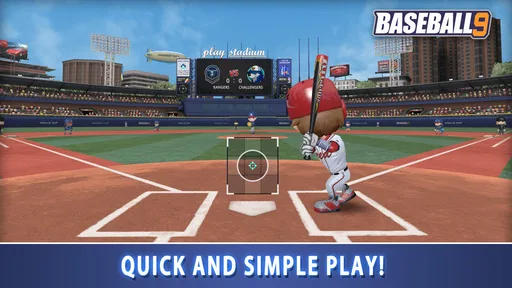
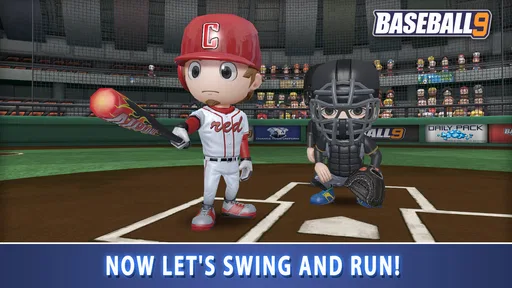
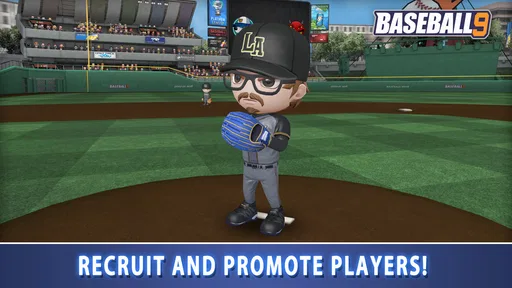
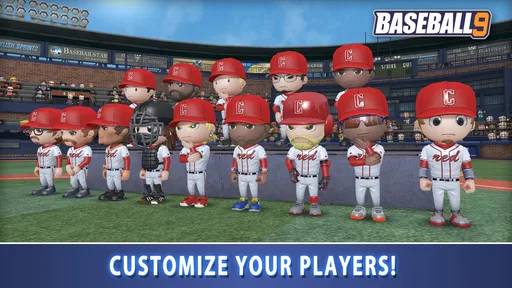
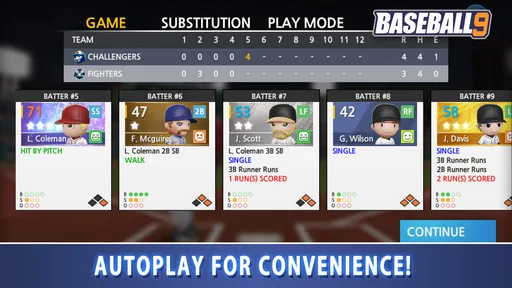
BASEBALL 9 is a mobile baseball game built around quick matches, team management, and player development. You can create and customize a team, play through batting and pitching situations, recruit players, and improve their abilities as you progress. Its arcade-style presentation makes the rules easier to approach than in a detailed simulation, while still giving you decisions to make during games. The experience is designed for individual play, though available features can vary by version.
BASEBALL 9 is generally offered as a free download, but its store listing may include in-app purchases. These purchases can provide optional resources or speed up progression; they are not the same as a required purchase to try the game. You can usually earn game resources by playing, though developing a team may take time. Check the current Google Play or App Store listing for pricing, purchase options, and any changes in your region before installing.
BASEBALL 9 is commonly played as a single-player game, and many of its core baseball matches can be played without a continuous internet connection. However, connectivity may be needed for certain online-dependent features, such as advertisements, purchases, account-related functions, or updates. Offline availability can also differ between versions and devices. If you plan to play while traveling, install and open the game beforehand, then test the features you need with your device disconnected.
BASEBALL 9 is approachable for newcomers because its controls focus on straightforward actions such as batting, pitching, and fielding, rather than requiring knowledge of every rule before you start. The game presents baseball situations as you play, so beginners can learn through practice. Still, understanding basics such as strikes, outs, and base running can make matches easier to follow. Players seeking a highly realistic simulation may find the simplified, arcade-oriented style less detailed than expected.
BASEBALL 9 is available for supported Android and iOS devices, but compatibility depends on the operating system version, device hardware, and the current store requirements. Before downloading, check the Google Play Store or Apple App Store listing for your device, including its minimum OS version, storage needs, age rating, and in-app purchase details. Keeping some free storage available can help with installation and updates. The game’s features and availability may differ by region or version.
On Android, BASEBALL 9 asks for these permissions.
4.6 out of 5
475,683 reviews
Sports · playus soft

Sports4.8 out of 5

Sports4.4 out of 5

Sports4.6 out of 5

Sports4.6 out of 5

Sports4.5 out of 5

Sports4.6 out of 5
Sports4.5 out of 5

Sports4.4 out of 5

Sports4.1 out of 5

Sports4.7 out of 5

Sports4.5 out of 5

Sports4.2 out of 5

Sports4.5 out of 5

Sports3.0 out of 5

Sports4.3 out of 5

Sports4.7 out of 5

Sports4.7 out of 5

Sports4.6 out of 5



Gamesive reviews games on its own and is not paid by developers for scores. We do not host game files: the download buttons open the official Google Play and App Store pages. Names, icons and screenshots belong to their owners.