
Dream League Soccer 2026
Sports4.5 out of 5

For Android & iOS · KONAMI




 Analysis by Gamesive
Football games are at their best when a match feels like more than a sequence of button presses: the pitch, crowd, pace, and player movement all need to work together. eFootball™ aims for that familiar sporting tension, offering mobile football built around playing against people around the world. My first impression is of a game that wants to make the match itself the main event, with its presentation and controls supporting the action rather than overwhelming it.
From the opening moments, eFootball™ is clearly focused on the appeal of football as a contest of space and timing. The pitch gives the action a recognizable setting, and the match format makes the goal easy to understand: read the play, make a decision, and try to turn possession into a chance. That simple premise is a strength on a phone, where a game needs to communicate quickly and keep the focus on what is happening in front of you.
The game has a serious sports identity without needing a complicated setup to explain its appeal. A pass can open up the field, a defensive choice can change the shape of an attack, and a promising move can quickly become a scramble. I like that basic rhythm because it gives each stretch of play a purpose. Even when the action is familiar, the possibility of a sudden change in momentum keeps a match from feeling like a routine animation reel.
Its wider appeal is easy to understand. KONAMI’s football game has been available since 2017, and it has reached more than 100 million installs. That scale suggests a well-established place in mobile sports gaming, while the central idea remains straightforward enough for newcomers: this is a football game designed for matches with players around the world.
Football is a useful setting for a mobile game because its drama is instantly legible. You do not need a lengthy explanation to understand why a through pass matters or why a defender closing down space can change the next few seconds. eFootball™ leans on that shared understanding. The field becomes a stage for quick decisions, and the match’s emotional shape comes from the contrast between patient buildup and sudden danger.
That familiar language also helps the game feel approachable. A newcomer can follow the broad flow of play before mastering every control, while experienced football-game players can focus on refining their timing and choices. I find that balance important: the sport should feel recognizable from the start, but the mechanics still need to reward attention as a match develops.
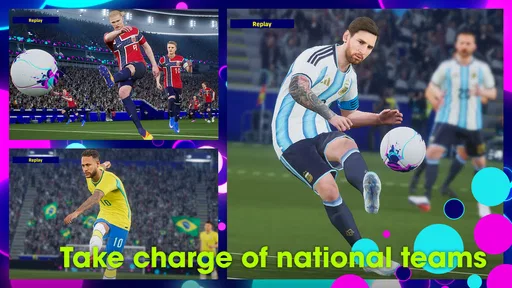
The visual identity is tied closely to the sport rather than to a separate fantasy setting. Players, pitch, and match presentation all serve the same purpose: making the action readable as football. That cohesion helps keep attention on the ball and on the spaces that open and close around it. For a game played on a smaller screen, clarity is not a minor detail; it is part of the atmosphere, because it lets the tension come from the match instead of from trying to decode the scene.
I appreciate how this kind of presentation can make a simple moment feel consequential. A player receiving the ball under pressure creates an immediate question: pass, hold possession, or push forward? A defensive line shifting across the field gives the attack a visible obstacle to solve. The game’s mood comes from those recognizable situations, not from elaborate story dressing. It feels like a sporting contest first, and that is the right choice for a title built around football.
Art direction is also about restraint. When the visual language stays consistent, the important changes in a match stand out: a run into open space, a closing defender, or a sudden opportunity near goal. This makes the field feel like a readable playing surface rather than just a backdrop. The result is a coherent mood of competition, where anticipation builds from what players might do next.
On mobile, a football match can become visually busy in a hurry. Several players may converge on the ball while teammates move into passing lanes and defenders try to block them. A coherent visual approach matters because it helps the player understand the shape of the situation at a glance. eFootball™ benefits from the sport’s own visual grammar: the ball is the focus, open space invites movement, and pressure signals that a decision is needed soon.
That readability supports both immersion and practical play. When I can follow the movement, I can react to it; when I can react, the match feels like something I am participating in rather than merely watching. The best moments in a sports game often come from that connection between seeing an opening and trying to use it. Here, the visual setting reinforces that loop and keeps the focus on the changing contest.
A football match has a natural emotional arc. There is the cautious opening, the search for a route forward, the pressure of defending, and the rush when a chance appears. eFootball™ draws on that built-in drama. The setting does not need to explain why a close match feels tense; the sport already supplies the stakes. That makes the game’s presentation feel grounded, even when the action is being experienced through a phone screen.
I also like that the international focus fits the sport’s broad appeal. Playing with users around the world gives the concept a sense of a larger football community, while the match remains the common language. The game does not need a long narrative to make the contest meaningful: each opponent brings a different challenge, and the familiar rules of football give both players a shared framework.
Sound is an important part of the mood in any sports game because it can make the action feel immediate. In eFootball™, the central rhythm comes from the changing pace of play: slower spells of possession give way to quick attacks, and defensive pressure can turn a calm moment into a scramble. That ebb and flow is what gives a match its shape. The game’s football setting does much of the work, creating an atmosphere where the next decision matters.
I find the rhythm most compelling when a move develops gradually. A team can work forward, look for a passing route, and wait for a gap. Then the pace shifts as the ball moves into a dangerous area. That contrast is essential to the mood: if everything happened at full speed, there would be little sense of buildup; if everything were slow, the excitement would never arrive. The match format naturally provides both, giving the game moments of anticipation and bursts of urgency.
Sound and visual feedback are most effective when they support that rhythm without distracting from it. In a football game, the player needs to keep track of the ball and nearby movement while deciding what to do. A clear, focused presentation helps preserve the feeling of being inside a contest. The mood is not only about spectacle; it is also about the pressure that gathers as a promising attack develops and the relief or frustration that follows the outcome.
The pacing of football is one of its strongest built-in qualities. Possession can feel measured, but a single forward move may suddenly make the whole pitch seem dangerous. eFootball™ uses that familiar contrast to keep matches engaging. A player who enjoys reading the game can take satisfaction in the buildup, while someone looking for immediate excitement can still find it in the quick changes of direction and momentum.
This variation makes the game’s atmosphere feel more coherent than a constant rush would. There is room for a match to breathe, but the possibility of a rapid attack is always present. I like that tension because it encourages attention. A quiet spell is not necessarily empty; it can be the moment when the next opening is being created. That sense of anticipation helps maintain engagement without needing every second to be overloaded with action.
Atmosphere only works if the mechanics let the player take part in it. eFootball™ has to make football decisions feel connected to what happens on the pitch. The core loop is easy to grasp: move the ball, find space, challenge for possession, and respond to the opponent. The interesting part is how those choices fit together. A match asks for both quick reactions and a basic sense of shape, so it can appeal to casual play while still giving attentive players something to think about.
The strongest mechanical fit comes from the connection between reading the field and acting on that read. Spotting an opening is satisfying only if the game lets you try to use it. Recognizing danger matters only if you can adjust your response. That relationship gives each moment a practical purpose and ties the controls to the sporting mood. You are not just looking at a match; you are making decisions within it.
For newcomers, the familiar rules of football provide a helpful starting point. You already understand the broad goals of attacking and defending, even if getting comfortable with a mobile game’s controls takes time. For returning sports-game players, the challenge is in making those familiar choices at the right moment. I would approach it with patience: the flow of a match becomes more enjoyable as you learn to judge when to move forward and when to protect possession.
One of the genre’s advantages is that its basic objective needs little explanation. Score, prevent the opponent from scoring, and try to control the flow between those two aims. But a simple objective does not make every decision simple. The player still has to react to pressure, judge space, and choose whether to take a chance or keep the ball. That combination gives eFootball™ a useful mix of accessibility and tactical thought.
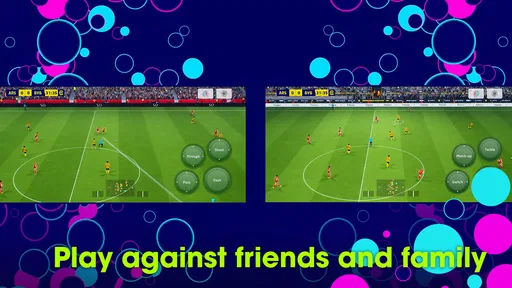
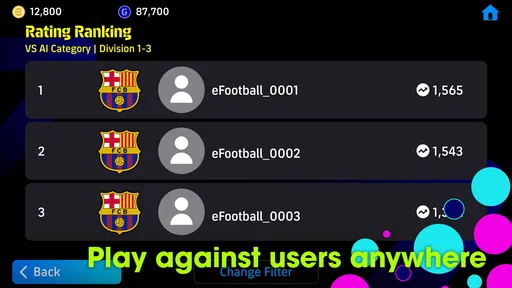
The game’s multiplayer focus adds another layer to that experience. Playing against people around the world means the contest is not just about following a predictable sequence. The opponent’s decisions can alter the pace and force a different response. That unpredictability suits football well: it makes the match feel alive, while the shared rules keep the action understandable.
There is also a practical point for anyone considering a download. The game is free to play, with in-app purchases ranging from $0.19 to $109.99 per item. The age rating is Everyone, and it runs on Android 7.0 or later. Those details make it easy to check whether the game fits your device and preferences before getting started, while the free entry point lets players try the football experience without an upfront purchase.
I would recommend eFootball™ to players who enjoy football games built around direct competition and the changing rhythm of a match. It is a natural fit if you like thinking about passing lanes, reacting to pressure, and watching a game shift from careful buildup to a fast attack. The appeal is less about escaping into a separate fictional world and more about engaging with the drama already present in football.
It can also work for someone who is simply curious about mobile sports games. The recognizable setting makes it approachable, while the worldwide play focus gives matches a broader competitive feel. KONAMI’s title has an average rating of 4.1 from around 19 million ratings, alongside roughly 186,000 written reviews. Those figures show that it has attracted a large audience, though the right test for any player is whether the match pace and style suit them.
What stands out to me is how the game’s setting, presentation, and pacing all point in the same direction. The field is a readable stage, the sport supplies an immediate sense of purpose, and the match rhythm moves between patience and urgency. That coherence helps eFootball™ feel like a football experience rather than a collection of loosely connected mobile features. Its strongest moments come when the visual action, the player’s decision, and the changing pace of the match all line up.
The mechanics remain central. A good atmosphere cannot make a sports game engaging on its own, and the satisfaction here depends on taking part in the contest: finding an opening, defending space, and responding to another player. The game’s familiar football structure gives those choices context. For me, that is the most appealing part of its design: every move belongs to a clear sporting situation, and the match can change quickly enough to keep attention on the field.
There are plenty of reasons to give this mobile sports game a try if football is your thing. Its free-to-play format lowers the barrier to entry, its age rating is Everyone, and its international focus gives the matches a competitive frame. The in-app purchase range is worth keeping in mind, but the main attraction remains the chance to play football against users around the world.
Overall, eFootball™ is a focused choice for players who want a mobile football game with a recognizable sporting mood and a match-first identity. I like its emphasis on the rhythm of competition: buildup, pressure, opportunity, and response. It may take time to get comfortable with the flow and make your decisions feel natural, but that learning process is part of what makes a close match rewarding. If you are looking for a football game that brings global competition and on-pitch decision-making together, this is an easy one to consider.
eFootball is a free-to-play football game from KONAMI, formerly known as the Pro Evolution Soccer series. You can build a team, sign players, adjust tactics, and play matches against the computer or other players, depending on the modes and features available in your version. The game focuses on football matches and team management, but its clubs, events, and online features may change over time.
eFootball is generally free to download, and you can play without buying the game upfront. However, it may offer optional in-app purchases, such as virtual currency or items connected to player acquisition and team-building features. These purchases are not the same as a guaranteed route to a specific player. Check the store listing and in-game purchase details for your device, and use purchase restrictions if children play.
An internet connection is important for eFootball, particularly for online matches, account-related features, and events that depend on KONAMI’s servers. The available offline options can vary by platform and version, so do not assume that every mode works without a connection. A stable network is recommended for online play because interruptions or high latency can affect match responsiveness and may lead to a disrupted session.
eFootball includes online competition, and the platforms supported for multiplayer or cross-platform play can depend on the current version, mode, and platform. Before downloading, check KONAMI’s latest information and the game’s store page for the devices that can play together. You may also need an internet connection and an account or online service for your platform. Matchmaking availability can vary by region and time.
Check that your Android or iOS device meets the current minimum requirements and has enough free storage for the initial download and later updates. Performance can differ between devices, especially during matches, and a reliable internet connection is useful for online features. Also review the app’s age rating, privacy information, permissions, and in-app purchase details in the official store. Requirements and availability may change with updates.
On Android, eFootball™ asks for these permissions.
eFootball™ is also available in 2 other languages on our site.
4.1 out of 5
19,222,852 reviews
Sports · KONAMI

Sports4.8 out of 5

Sports4.4 out of 5

Sports4.6 out of 5

Sports4.6 out of 5

Sports4.5 out of 5

Sports4.6 out of 5
Sports4.5 out of 5

Sports4.4 out of 5

Sports4.7 out of 5

Sports4.5 out of 5

Sports4.6 out of 5

Sports4.2 out of 5

Sports4.5 out of 5

Sports3.0 out of 5

Sports4.3 out of 5

Sports4.7 out of 5

Sports4.7 out of 5

Sports4.6 out of 5



Gamesive reviews games on its own and is not paid by developers for scores. We do not host game files: the download buttons open the official Google Play and App Store pages. Names, icons and screenshots belong to their owners.