
PK XD: Fun, friends & games
Adventure4.7 out of 5

For Android · Halfbrick Studios
 Analysis by Gamesive
I would judge Bluey’s Quest for The Gold Pen less by how much action it packs in and more by whether its story and presentation are comfortable to follow for different players. That is a useful lens for a family-facing adventure: a game can look welcoming while still making text hard to read, controls tiring, or progress difficult to pick up in a noisy room. My overall impression is that this is an appealing choice for a gentle, story-led session, but one I would try alongside the intended player before assuming it suits every age or ability.
Made by Halfbrick Studios, this free adventure game has a story at its center rather than presenting itself as a competitive challenge. That distinction matters if you are choosing something to share with a child or want a lighter alternative to games built around demanding combat, timed runs, or leaderboard pressure. Its straightforward premise makes it easier to approach than an adventure that expects players to learn a complicated world before they can enjoy it.
The game is called Bluey’s Quest for The Gold Pen in the store, and its short description is “Bluey’s Quest.” I would expect the title and story-led framing to be the main invitation, not a promise of a deep customization system or an elaborate strategy game. If the person you are choosing for wants a strong narrative thread and a familiar, approachable mood, that is a more relevant reason to try it than the assumption that every adventure game offers the same kind of action.
It has an average rating of 4.7 from around 14,000 ratings, with about 379 written reviews and over one million installs. Those figures suggest that plenty of people have given it a chance, but they do not tell me whether the text is easy for a particular player to read or whether the controls feel comfortable in their hands. I treat popularity as a useful signal of broad interest, not as a substitute for checking how it fits the person who will actually play.
For a story-led game, readability is part of the play experience rather than a cosmetic extra. A player who can follow the narrative without help is more likely to feel independent; a player who has to ask someone else to interpret every prompt may miss the pleasure of making progress. I recommend starting with a short session and watching whether the intended player can follow what the game is asking them to do, rather than stepping in at the first pause.
That small change in how you introduce it can make a big difference. Sit nearby, let the player explore, and offer help only when they ask or seem genuinely stuck. If the screen is difficult to read at the distance they naturally hold the device, try a closer viewing position or a less reflective spot before concluding that the game itself is unusable. This is a practical check, not a claim that the game includes adjustable text or a dedicated readability mode.
Navigation is also a question of confidence. A young player may understand the story but still be unsure where to tap next; another may move quickly through prompts and miss a piece of context. I would use the first visit as an opportunity to see whether the player can recover after an accidental tap and reorient themselves without frustration. If they cannot, stay available rather than turning the session into a lesson in following instructions.
Because the experience is framed as an adventure, it may suit someone who likes moving through a story more than someone who wants a fast loop of short, instantly understood rounds. That is a meaningful distinction when selecting a game for a waiting room or a quick break. A simple arcade game can be easier to dip into for a minute; a narrative experience is often more satisfying when the player has enough attention to remember what is happening.
Different players bring different levels of touch accuracy, stamina, and sensitivity to visual or audio stimulation. I would not assume that a child who enjoys watching Bluey will automatically find the game comfortable to control, or that a player who is fine with a tablet in one setting will enjoy it in another. The most useful test is hands-on: give the player time to hold the device in their preferred position and notice whether interacting with it seems relaxed or effortful.
A helpful household adjustment is to set the device on a stable surface if holding it for a long stretch is tiring. That can reduce the need to grip and reposition it while following the story. It is also worth taking turns if one person has less endurance than another; the player can remain involved without having to manage a long continuous session. These are everyday workarounds, not built-in accessibility features, and they can help only when the game’s interaction itself feels manageable.
For sensory comfort, consider the room as well as the screen. If a player is easily distracted, a quieter place can make it easier to attend to the story. If they are sensitive to screen brightness or sound, adjust the device environment where possible before beginning. I would avoid promising that the game has particular sound, motion, contrast, or animation controls; the safer recommendation is to observe the player’s response and stop or change the setting if the experience becomes uncomfortable.
For a family sharing one device, a quick handoff can reveal more than a long explanation. Let the player try the opening on their own, then ask what felt easy and what felt awkward. Children may not describe a small control problem in technical terms, but hesitation, repeated mis-taps, or handing the device back are useful signs. Treat those signs as feedback about fit, rather than as a failure by the player.
A realistic use case is a quiet stretch at home when a child wants something story-based and an adult is close enough to help if needed. In that setting, the game can be a shared activity without requiring the adult to turn every moment into instruction. I would let the child lead, and keep conversation for natural pauses so that the story remains theirs rather than becoming a guided demonstration.
It may be less convenient in a busy car, a crowded waiting area, or a place where the player is repeatedly interrupted. Any story-led activity can lose its thread when attention is split, and a young player may find it harder to return after an interruption than an adult expects. If you need something that works in tiny, fragmented bursts, a quick puzzle or arcade game may be a better match. If the child wants a calmer activity and has a settled few minutes, this adventure is more promising.
Sharing a screen can be a practical way to support a player who needs help reading or navigating, but it changes the feel of play. One person may end up controlling the device while the other watches, which is not the same as independent access. To preserve the player’s agency, ask before taking over and describe choices rather than making them automatically. Even a small pause can let a child decide what to do next.
The game is free to download, with in-app purchases listed at $14.99 per item. For a parent or caregiver, the practical takeaway is to review purchase settings on the device before handing it over, especially if a child is playing independently. That is sensible preparation for any game with paid items; it does not mean the purchase is required to enjoy the story. The age rating is Everyone, which helps with basic suitability, while a caregiver’s knowledge of the child remains the better guide to whether its content and interaction are a good fit.
Compared with the usual adventure options, this is most attractive to someone who wants a recognizable, story-oriented experience rather than a game defined by challenge, competition, or complex systems. That can make it easier to recommend to a younger player or to a family looking for a shared activity. On the other hand, players who want a precise difficulty curve, lots of control choices, or a highly demanding skill test should look elsewhere; a gentle story-first approach is not a substitute for those things.
It is also not automatically the best choice for every accessibility need just because its premise is approachable. Some players need larger text, highly customizable controls, reduced animation, or explicit narration to play comfortably. I would not select this title on the assumption that it provides those supports. If one of them is essential, choose a game that clearly offers the needed option and test it before relying on it for independent play.
For families, another trade-off is the difference between “easy to start” and “easy for everyone to use.” A familiar character and simple story premise can lower the emotional barrier to trying a game, but they do not resolve motor, vision, hearing, or attention barriers on their own. I find that distinction useful: the game may be welcoming in tone while still needing a thoughtful setup or occasional help.
The current version is 1.1.8, and the listed minimum operating system is 8.0. Before installing, check that the device meets that requirement and has enough room for another game. If you are setting it up for a child, open it yourself first, review the available screens, and make sure the device’s purchase controls are appropriate. That brief preparation can prevent a more frustrating first encounter later.
I would not use a rating, age label, or install count to decide whether the game is accessible for a particular person. Instead, make the first session short and low-pressure. Look for whether the player can read what they need, understand the next step, and interact without discomfort. If they enjoy the story but need help with a specific task, try a stable device position or a quieter room before deciding whether the title is a poor fit.
Halfbrick Studios released the game on January 10, 2026. It remains a free option to try, though paid items are available. The best approach is to treat that first play as a compatibility check, not a commitment: the player’s comfort and interest matter more than finishing a chapter or proving they can manage without assistance.
I would recommend this adventure to families looking for a story-led game that can be explored at a relaxed pace, especially when an adult can be nearby during the first session. Its accessible tone and familiar framing are appealing strengths, and the free entry point makes it reasonable to test. The strongest practical tip is to let the intended player try it in their normal setting, with the device positioned comfortably and help available without taking over.
I would hesitate to choose it for someone who needs clearly specified accessibility controls, struggles with touch interaction, or becomes uncomfortable with screen-based play. In those cases, a game with confirmed options tailored to that player—or a non-screen activity—may be a kinder fit. For everyone else, the combination of an adventure format and a story-first approach makes it worth a careful try, provided you judge it by the player’s actual comfort rather than by its popularity or its age label alone.
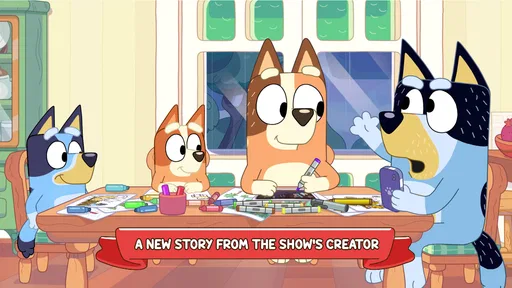
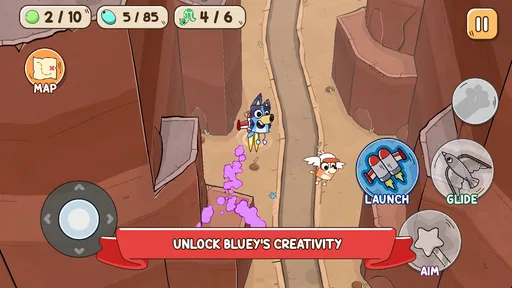
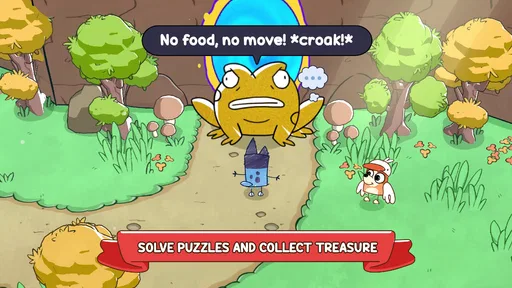
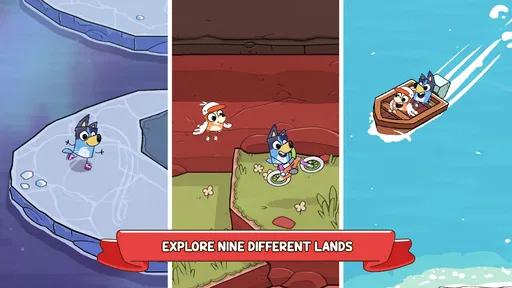
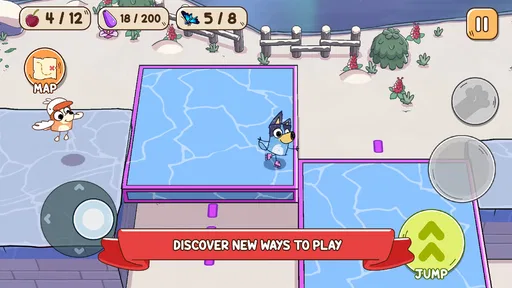
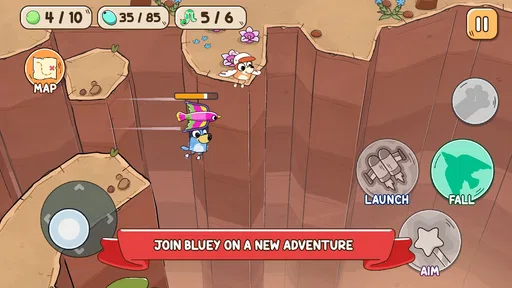
Bluey’s Quest for The Gold Pen is a story-driven adventure based on the world of Bluey. Players join Bluey on a journey to find the missing Gold Pen, exploring imaginative settings and meeting familiar characters along the way. Its focus is on playful discovery and storytelling rather than complex combat or realistic action, making it most suitable for fans looking for a gentle, family-friendly game.
The game’s Bluey setting and lighthearted adventure premise make it appealing to children, especially fans of the television series. Its playful themes are generally more appropriate for younger audiences than games centered on violence or intense competition. Parents should still check the age rating, store description, and any available parental controls before downloading, since suitability can depend on a child’s age and the particular version offered in their region.
Whether Bluey’s Quest for The Gold Pen is free, paid, or includes optional purchases can vary by platform, country, and the version listed in the app store. Check the current Google Play or Apple App Store listing before installing, paying particular attention to the price, in-app purchase details, and publisher information. Do not assume that a game is free simply because it can be downloaded without an upfront charge.
Offline availability is not guaranteed and may depend on the game’s version and the device being used. Some games require an internet connection for the initial download, updates, account features, or certain content, even if much of the play is available offline afterward. Review the store listing and the game’s current instructions, and, if offline play matters to you, test it before relying on the game during travel or away from Wi-Fi.
Compatibility depends on the specific Android or iOS release, your device model, operating-system version, and the game’s availability in your region. Check the official Google Play or Apple App Store page for supported devices, storage requirements, age rating, and publisher details. Downloading through an official store is the safest approach; avoid unofficial APKs or download sites, which may provide altered files or expose your device to security risks.
On Android, Bluey's Quest for The Gold Pen asks for these permissions.
Bluey's Quest for The Gold Pen is also available in 2 other languages on our site.
4.7 out of 5
13,734 reviews
Adventure · Halfbrick Studios

Adventure4.2 out of 5

Adventure3.5 out of 5

Adventure4.3 out of 5

Adventure4.1 out of 5

Adventure4.3 out of 5

Adventure3.3 out of 5

Arcade4.4 out of 5
Adventure4.7 out of 5

Adventure4.5 out of 5

Adventure4.5 out of 5

Adventure4.4 out of 5

Adventure4.4 out of 5

Adventure4.6 out of 5

Adventure3.9 out of 5

Adventure4.4 out of 5

Adventure4.2 out of 5

Adventure3.6 out of 5

Adventure4.2 out of 5

Adventure3.7 out of 5



Gamesive reviews games on its own and is not paid by developers for scores. We do not host game files: the download buttons open the official Google Play and App Store pages. Names, icons and screenshots belong to their owners.