
PK XD: Fun, friends & games
Adventure4.7 out of 5
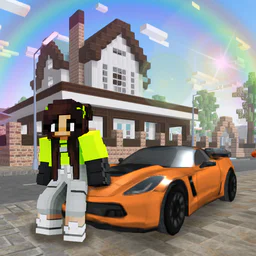
For Android & iOS · Candy Room Games & RabbitCo
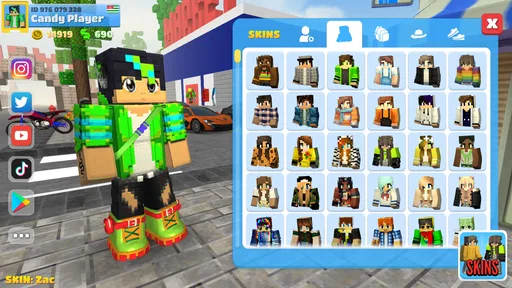
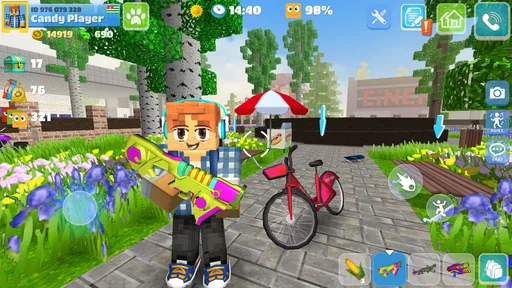
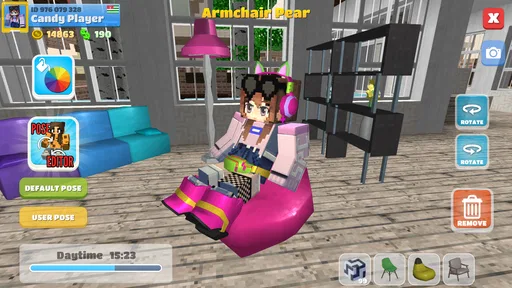
 Analysis by Gamesive
The first thing I notice about School Party Craft is its invitation to treat school-age life as a place to play with style and make-believe, rather than as a task to complete. It is an adventure game from Candy Room Games & RabbitCo, built around a social, fashion-minded setting for children and teenagers. That gives it a lighter, more personal mood than an adventure focused on danger or a tightly plotted quest. I’d recommend it to someone who enjoys inventing a look and spending time in a playful setting, but not to a player who wants demanding action or a story that keeps pushing them forward.
The game’s central appeal is easy to grasp: its school-party premise puts self-expression near the center of the experience. Instead of asking me to approach every moment as a challenge to beat, it suggests a space where choosing a style and inhabiting a youthful world are part of the fun. That makes the game feel approachable for casual sessions, especially when the player is in the mood to play creatively rather than chase a high score.
It sits in the adventure game category, although its fashion-party identity gives it a different emphasis from the usual adventure formula. If you expect combat, elaborate puzzle chains, or a carefully paced narrative, the premise may not match what you have in mind. I’d approach it more as a themed play space: the pleasure comes from engaging with its school-and-party mood, not from expecting every session to unfold like a conventional quest.
The game is free, has an Everyone 10+ content rating, and has been available since February 2, 2018. Its reach is substantial, with more than 100 million installs, a 4.4 average rating, and around 2.2 million ratings. Those figures suggest broad appeal, but popularity alone cannot tell you whether its particular mix of fashion and adventure will suit you. The useful question is whether you enjoy a relaxed, imaginative setting enough to return to it.
The school-party idea creates a clear social frame without making the game sound like a school simulator. I find that distinction helpful: it gives younger players an easy theme to understand, while leaving room for the experience to be about appearance and play rather than lessons or routines. It also makes the game a natural choice for short, informal play when a child wants something more imaginative than a quick reflex game.
For a parent or older sibling choosing a game, the age label is a useful starting point, not a substitute for checking whether the tone fits the individual player. The theme is youthful, but preferences still vary. A child who likes styling characters and pretending to attend a party may connect with it quickly; one who wants a strong plot or constant mechanical goals may lose interest even if the setting sounds appealing.
The strongest way to judge the game is to look at how consistently its setting supports the idea of a fashionable school gathering. A good themed game makes its premise useful, not merely decorative. Here, the fashion-party framing gives players a reason to think about how they want to appear in the world. That can make a small choice feel more meaningful than it would in an adventure whose only purpose is to move from one objective to the next.
That same focus is also a trade-off. A theme centered on social style will naturally be less compelling for someone who treats appearance as a secondary detail. If you usually choose games for exploration, narrative surprises, or intricate challenges, you may find the premise too gentle. I would not pick it as a substitute for a story-rich adventure; I’d choose it when the player wants a softer, more expressive kind of play.
One practical way to get more from that premise is to give a session a small personal goal. Rather than opening the game and waiting for it to supply a dramatic objective, a player can decide to create a particular party look or simply spend time enjoying the setting. This is a useful approach for a game whose appeal is tied to expression: a self-chosen aim can make a brief visit feel complete without demanding a long play session.
For this kind of game, sound and rhythm matter because they help determine whether the world feels like a place to relax or a challenge to hurry through. I’d judge a session by whether its audio and pace let the school-party atmosphere remain the focus. The premise benefits from breathing room: if a player can linger over choices and enjoy the setting, the game’s identity comes through more clearly than it would in a rush from one demand to another.
That slower, mood-led approach may not work for every player. Someone who needs frequent surprises, escalating pressure, or a strong beat of action may want a more energetic adventure. The key is to match expectations before downloading: this is a better fit for a player who enjoys inhabiting a theme than for one who needs every minute to introduce a new obstacle.
For an everyday use case, imagine a child with a few spare minutes after finishing homework who wants to play without committing to a long narrative. The school-party framing offers an easy point of entry, and a self-directed styling goal can give that short visit a purpose. I’d also see it working as a shared conversation starter: one person can ask what kind of party look the player is trying to create, without turning the session into a competition.
The most important design question is whether the play supports the fashion-and-party identity instead of pulling attention away from it. In a game built around this kind of premise, mechanics work best when they let players express a preference and then enjoy the result. That is a different kind of satisfaction from mastering a difficult control scheme. The game’s appeal is therefore likely to be strongest for players who value choice and atmosphere over mechanical complexity.
A practical tip is to avoid treating it as a checklist game. If you enter with a strict expectation that every session must deliver a major milestone, a gentle, self-directed experience can feel thin. Instead, choose one small intention before playing—experiment with a style, explore the party idea, or simply take a break in the game’s world. That makes the experience easier to enjoy on its own terms and helps a parent understand what the child finds engaging.
It is also worth considering what kind of alternative the player usually enjoys. Compared with a conventional action-adventure game, this one sounds more interested in fashion and setting than in testing reflexes. Compared with a dress-up game, its adventure framing gives the theme a broader world to inhabit. That middle ground is appealing if a player wants more context than a simple styling screen but does not need a complicated campaign. If neither side interests them, another genre will be a better choice.
The game is free, which makes trying it an easy decision for someone curious about the premise. Still, free access does not guarantee that every player will find it a good fit, and I would not recommend downloading it solely because it is widely played. Its current version is 1.8.55, and it requires Android 5.0 or later. Those details are particularly useful when checking an older device before installing; for someone on a different platform, the relevant app store is the place to confirm compatibility.
I’d put it on the shortlist for children and teenagers who like fashion, role-play, and light adventure settings. It may also suit a casual player who wants a colourful-feeling break with a clear, friendly premise instead of a demanding game. The combination of a school-party setting and personal style gives those players an immediate imaginative hook, even if they are not looking for a deep story.
I would steer players toward another option if they want strategic depth, fast combat, a substantial plot, or a steady stream of difficult objectives. The same goes for someone who dislikes fashion-centered play: the theme is not an incidental wrapper, so ignoring it may leave little reason to stay. For those players, a more mechanics-led adventure is a better match than trying to make this game serve a different purpose.
One small but useful way to decide is to ask what the player wants to talk about after playing. If they are likely to describe the look they created or the party atmosphere they enjoyed, the game’s strengths are aligned with their interests. If they would rather explain a clever puzzle, a tense encounter, or a story twist, they may be happier elsewhere. That simple expectation check can prevent a mismatch before the game becomes an unwanted download.
School Party Craft works best when I treat its mood as the main attraction and its adventure framing as a way to give that mood a setting. The school-and-party concept is approachable, and its fashion focus gives players a personal reason to engage. I like that it offers a gentler alternative to games built around pressure, though that gentleness is also why it will not satisfy everyone.
Its popularity is impressive, with more than 100 million installs and around 22,000 written reviews, but I’d still make the decision based on the individual player. The large audience shows that the idea has found plenty of fans; it does not mean a player who wants a demanding quest will suddenly enjoy a relaxed fashion-centered experience. That distinction is the most useful thing to keep in mind before installing.
My recommendation is simple: try it if the player enjoys imagining a party look and spending time in a youthful adventure setting. Skip it if the priority is complex mechanics, a strong narrative, or constant action. For the right person, it can be a pleasant little world to dip into and shape around personal taste. For everyone else, choosing a game built around their preferred kind of challenge will be more rewarding.
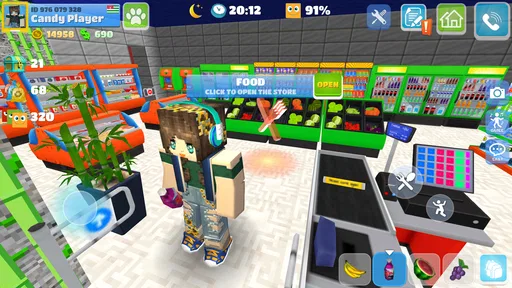
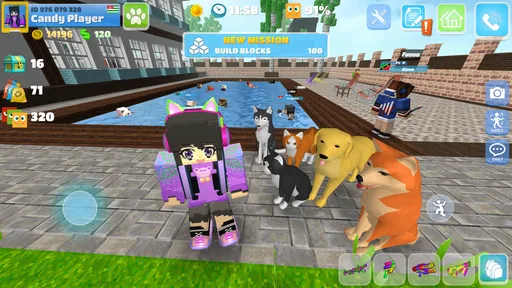
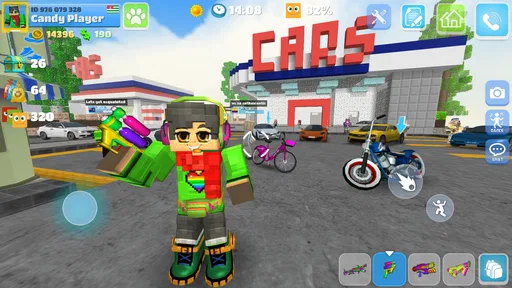
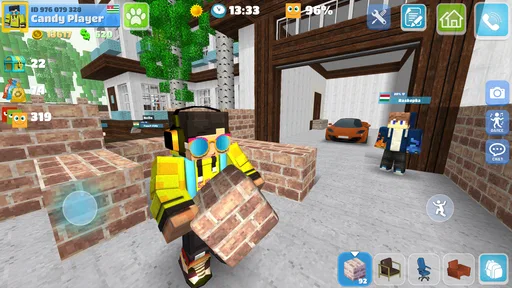
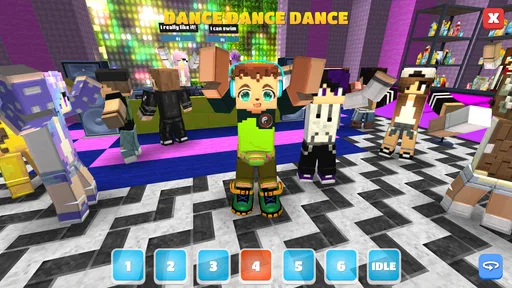
School Party Craft is a casual, block-style sandbox game built around exploring a colorful town and creating your own activities. You can customize a character, visit locations such as a school and other town buildings, and interact with objects and characters. It is more open-ended than a traditional school simulator, so the experience is largely about choosing what to explore and how to play.
The game is generally available as a free download, but availability and included features can vary by platform, region, and version. Check the listing for your device before installing, especially for details about advertisements, optional in-app purchases, and any age or parental guidance information. Avoid assuming that every item or feature is free, and use the official Google Play or Apple App Store listing.
Some of the game's basic exploration and building-style activities may be playable without a continuous internet connection, but this can depend on the current version and the feature you want to use. Online functions, advertisements, updates, or store-related features may require connectivity. If offline play matters to you, try launching the game after installation with your device disconnected, and check its store description for current requirements.
The game uses a playful, cartoon-like block world and focuses on free exploration rather than realistic violence, which may make it appealing to younger players. However, parents should review the current store age rating and privacy information, and check whether the version includes ads, purchases, or online interactions. Playing together initially is a practical way to understand the content and decide whether it suits a child.
Check that your phone or tablet meets the requirements shown on its official store page, and make sure you have enough storage for the installation and any updates. The game’s open-ended format may suit players who enjoy roaming and experimenting, but those looking for structured lessons or a detailed school-life simulation may find it less focused. Download from an official app store and review permissions before proceeding.
On Android, School Party Craft asks for these permissions.
School Party Craft is also available in 2 other languages on our site.
4.4 out of 5
2,238,388 reviews
Adventure · Candy Room Games & RabbitCo

Adventure4.2 out of 5

Adventure3.5 out of 5

Adventure4.3 out of 5
Adventure4.1 out of 5

Adventure4.3 out of 5

Adventure3.3 out of 5
Adventure4.7 out of 5

Adventure4.5 out of 5

Adventure4.5 out of 5
Adventure4.4 out of 5

Adventure4.6 out of 5

Adventure3.9 out of 5

Adventure4.4 out of 5

Adventure4.2 out of 5

Adventure3.6 out of 5

Adventure4.2 out of 5

Adventure3.7 out of 5

Adventure4.0 out of 5



Gamesive reviews games on its own and is not paid by developers for scores. We do not host game files: the download buttons open the official Google Play and App Store pages. Names, icons and screenshots belong to their owners.