
PK XD: Fun, friends & games
Adventure4.7 out of 5

For Android & iOS · Wooga



 Analysis by Gamesive
I can see why June’s Journey makes a strong first impression: it turns a familiar search-the-picture puzzle into a genteel mystery, with scenes that invite you to slow down and look closely. In my experience, its appeal is less about rushing toward a solution than settling into a small, repeatable ritual: inspect a busy illustration, spot the requested objects, and follow the story onward. That makes it easy to try in a spare moment, though whether it deserves a lasting place on your phone depends on how much you enjoy repetition and gradual progress.
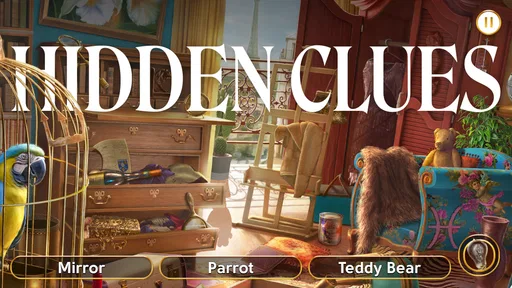
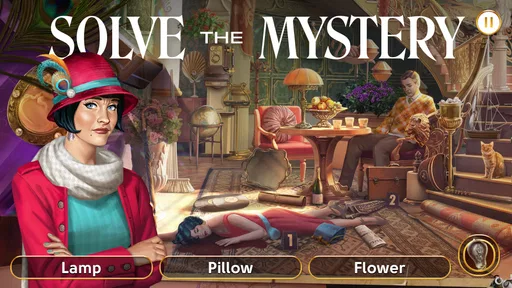
June’s Journey: Hidden Objects is an adventure game from Wooga built around finding concealed items, gathering clues, and following a mystery. The opening stretch gives those activities a clear purpose. Instead of presenting a disconnected stack of pictures, it frames each search as part of a larger investigation, which makes the next scene feel like a small step forward rather than just another puzzle.
The basic interaction is immediately understandable: study the illustration, match the requested words to objects in the scene, and keep moving. The challenge comes from visual ambiguity. A word may point to an item partly hidden by scenery, or to a shape that blends into the artwork. I like that this encourages a second look rather than reflex tapping. It is a gentle test of attention, not a game that asks for quick fingers.
The atmosphere also helps the first sessions feel distinct. The scenes are composed to reward scanning across the whole image, and the mystery gives the objects a little narrative context. If you enjoy illustrated puzzles, cozy detective stories, or games you can pause between searches, the combination is easy to understand. It suits a short break better than a long, uninterrupted session, especially when you want something more engaging than a basic word puzzle but less demanding than an action adventure.
For a realistic everyday use, I’d reach for it while waiting for an appointment or winding down after dinner. One scene gives me a defined task and a stopping point; I don’t need to remember a complicated sequence of controls when I return. That low barrier is a real strength. The trade-off is that the central activity stays consistent. If you’re expecting a mystery game where deduction and dialogue do most of the work, the hidden-object searches may take up more of your attention than you want.
The strongest early sessions come when I treat each picture as a scene to inspect, not a list to click through as fast as possible. I scan broad areas first, then return to crowded corners and unusually shaped objects. That simple workflow is useful when several targets remain: moving systematically reduces the chance of repeatedly checking the same obvious patch while overlooking a small detail elsewhere.
I also find it more satisfying to take a brief pause when my eyes stop noticing new shapes. Staring harder at the same section can make everything blur together; looking away for a moment often makes a missed object stand out when I return. This is a practical way to keep the game relaxing rather than turning a stubborn search into a frustrating hunt. The pleasure is in noticing, so a little patience usually serves the experience better than tapping at random.
June’s Journey is free to start, and its Teen content rating is useful context for anyone choosing a game for a household. Optional in-app purchases range from a few cents to nearly two hundred dollars per item, so I’d treat spending as a personal choice rather than a requirement for enjoying the basic search-and-story loop. If you prefer games with a single upfront cost and no purchase prompts, that model may simply be less appealing to you.
The first-week question is whether the art and mystery are enough to make one more scene tempting. The month-to-month question is different: does the routine still feel pleasant once the format is familiar? For me, the answer depends on whether I enjoy returning to the same kind of visual challenge. The game’s lasting value is rooted in that dependable loop, not in constantly changing how I play.
Its scale gives newcomers a sense that this is an established destination rather than a tiny experiment. June’s Journey has over fifty million installs, an average rating of 4.4 from around 1.2 million ratings, and roughly 99,000 written reviews. Those figures suggest broad interest, but they don’t guarantee that its pace will suit you. I’d use them as context, then judge the game by whether searching scenes remains a pleasure after the initial curiosity fades.
Compared with the usual alternatives, it sits between a pure spot-the-object game and a more involved adventure. A standalone puzzle may get straight to the image and finish without asking you to follow a continuing mystery; a narrative adventure may offer more choices or dialogue but demand more sustained attention. Here, the story gives the searches a reason to continue, while the searches remain the main activity. That balance is appealing if you want a light ongoing thread, but less so if you want every session to introduce a different kind of puzzle.
One useful way to decide whether it has monthly staying power is to notice what makes you return. If you look forward to examining the artwork and seeing the mystery progress, the routine can feel comforting. If you mostly return because you feel obliged to clear a backlog or keep pace, the same routine may begin to feel like maintenance. I’d keep it as a casual choice, not a task to manage: play when the scenes sound inviting, and stop when they don’t.
The game asks for little from a player who is happy to take it at a natural pace, but its repeating format can still create a sense of duty if you try to make progress every time you open it. My advice is to set a small personal boundary: play one scene during a short break, then decide whether you actually want another. That keeps a relaxing search from expanding into an obligation, and it makes it easier to tell whether the game is still entertaining you.
When a scene feels difficult, I would change my search pattern before assuming I need to push harder. Check the edges, revisit areas with overlapping objects, and look for the target’s silhouette rather than relying only on its color. This is especially helpful when the requested item is visually small or partly obscured. It’s a simple adjustment, but it makes the challenge feel like observation instead of guesswork.
The maintenance burden is therefore mostly about attention and expectations. There is no need to approach every session as a serious commitment. A few minutes can be enough for a satisfying search, while longer stretches may expose the repetition sooner. If you’re the kind of player who likes a calm game that can be picked up and put down, that flexibility supports its staying power. If you prefer a compact experience with a clear ending, an ongoing mystery may be less attractive.
The version available now is 4.17.6, and the game requires Android 7.0 or later. It originally released on October 3, 2017, so it has had a long life as a mobile title. I’d still judge its fit by the actual play loop rather than its age: the appeal comes from the scenes and the steady search, not from needing to follow every update or treat the game as a hobby that demands constant attention.
The main source of fatigue is also the game’s defining strength: you keep looking through detailed pictures for hidden objects. That can be soothing, but the basic action doesn’t change into a wholly different genre just because the story moves forward. After several sessions, I sometimes want a puzzle that asks me to reason through a new mechanism instead of scanning another illustration. Players who tire quickly of repeated visual tasks should take that seriously.
There can also be a gap between wanting the story to advance and wanting to do another search. If you’re invested in the mystery but not in finding objects, the core activity may feel like a hurdle between narrative moments. Conversely, if you love searching but don’t care about a continuing story, the framing may add little for you. The best fit is someone who enjoys both sides enough that neither feels like an interruption.
Purchases are another consideration. Because the game is free to begin and offers in-app items across a wide price range, I recommend deciding in advance whether you want to spend at all. That makes the choice clearer if you reach a point where progress feels slower or you’re tempted by an offer. I wouldn’t recommend it to someone who strongly dislikes optional purchases appearing in free games, even if they intend never to buy anything.
It is also not my first pick when I want high-pressure competition, fast reactions, or a one-sitting story with a definite finish. For those moods, a timed action game, a self-contained puzzle, or a more choice-driven adventure would be a better match. June’s Journey is at its best when I want to focus quietly, notice details, and make a little progress without needing to coordinate with other players or master complicated controls.
June’s Journey: Hidden Objects earns lasting space for a particular kind of player: someone who enjoys illustrated scenes, patient observation, and a mystery that gives repeated searches a thread of purpose. I appreciate how quickly I can settle into a session, and the deliberate pace makes it a comfortable companion for waiting rooms, quiet evenings, or small breaks in the day. Its appeal is real, but it is specific rather than universal.
I’d recommend trying it if you want a free adventure built around finding objects and you’re comfortable with a familiar loop. Give yourself time to see whether the artwork and story make you curious enough to return after the novelty passes. If they do, the game can become a low-pressure habit. If you find yourself opening it only out of obligation, that’s a good sign to move on rather than force the routine.
My honest reservation is that long-term enjoyment rests more on liking the search itself than on expecting constant mechanical surprises. That makes the game easy to revisit but also easy to tire of if visual spotting isn’t your favorite activity. I’d choose a different option for a stronger focus on branching narrative, varied puzzle mechanics, or a tidy ending. For a calm, ongoing hidden-object adventure that rewards careful looking, though, Wooga’s game remains a pleasant fit when I want a small mystery rather than a demanding project.
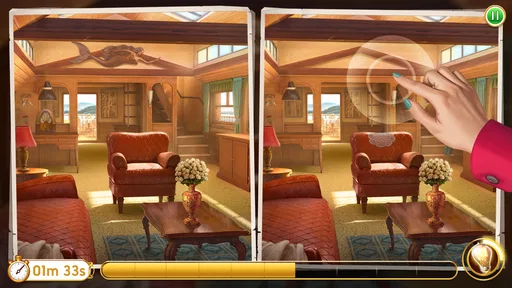
June's Journey is a hidden-object mystery game set in the 1920s. You examine detailed illustrated scenes and search for items listed on the screen, with each correct find helping you uncover clues and advance the story. Between investigations, you can develop June's island estate, unlock new areas, and follow character relationships and plot twists. It combines visual searches with light renovation and narrative progression.
You can download and play June's Journey without paying upfront, but it includes optional in-app purchases. Energy limits how many scenes you can play in a row, and players may choose to buy resources or wait for energy to refill. Purchases are not required to experience the story, though progression can feel slower if you prefer not to wait. Check your device's purchase settings, especially if children may use the game.
Some previously available gameplay may work without a continuous connection, but you should not assume the game is fully playable offline. Features such as saving progress, syncing between devices, events, social or club activities, and receiving updates generally need internet access. Availability can vary by version and feature, so launch the game while connected before travelling or relying on offline play, and make sure your progress has synchronized.
June's Journey is a story-focused puzzle game rather than an action game, and its main activity is searching illustrated scenes for objects. It also includes mystery themes, character drama, and optional purchases. Suitability depends on a child's age and sensitivity to the story, as well as whether they can manage screen time and spending prompts. Parents should review the current age rating and configure purchase approval or parental controls before downloading.
Progress is generally safest when the game is connected to a supported account or platform service and has had time to synchronize. Before changing devices or reinstalling, confirm that the game is linked and that your latest progress appears on the original device. If progress does not return, contact the game's support team with your player details and any purchase receipts. Avoid sharing account credentials, and do not delete the app until you know your save is backed up.
On Android, June's Journey: Hidden Objects asks for these permissions.
June's Journey: Hidden Objects is also available in 2 other languages on our site.
4.4 out of 5
1,236,437 reviews
Adventure · Wooga

Adventure4.2 out of 5

Adventure3.5 out of 5

Adventure4.3 out of 5

Adventure4.1 out of 5

Adventure4.3 out of 5

Adventure3.3 out of 5
Adventure4.7 out of 5

Adventure4.5 out of 5

Adventure4.5 out of 5

Adventure4.4 out of 5

Adventure4.4 out of 5

Adventure4.6 out of 5

Adventure3.9 out of 5

Adventure4.2 out of 5

Adventure3.6 out of 5

Adventure4.2 out of 5

Adventure3.7 out of 5

Adventure4.0 out of 5



Gamesive reviews games on its own and is not paid by developers for scores. We do not host game files: the download buttons open the official Google Play and App Store pages. Names, icons and screenshots belong to their owners.