
Pokémon GO
For Android & iOS · Niantic, Inc.
- 3.5 out of 5Rating
- 15.37MReviews
- 500.00M+Downloads
- AdventureGenre
Game details
- Version
- 0.433.1
- Updated
- Requires
- 9
- Price
- Free
- Age rating
- Everyone
- In-app purchases
- $0.99 - $99.99 per item
Screenshots






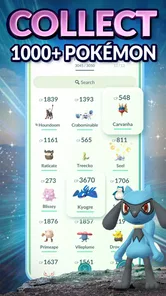
Pokémon GO review
 Analysis by Gamesive
I think Pokémon GO works best when it turns a small everyday outing into a reason to look around. A walk to the shops can become a chance to check nearby Pokémon, while a trip through a park feels a little more like an exploration. That makes it an unusual adventure game: instead of asking you to settle in for a long session, it asks you to take the game with you and engage with the real places around you.
That real-world focus is also the main household question. It can be fun to share the experience with a child, partner, or friend, but the game is tied to individual accounts and personal devices. I would treat it as a shared activity rather than a shared login: agree on where and when to play, keep an eye on the surroundings, and let each person manage their own account.
How it fits into a shared routine
In my view, Pokémon GO suits a household that already goes out together better than one looking for a game to play around the kitchen table. Imagine walking to a nearby park after dinner. One person can keep an eye out for Pokémon while another chooses the route, and the outing has a light goal without needing to become a major expedition. The game gives ordinary movement a playful purpose, but the walk itself remains the important part.
That distinction matters. This is not a conventional adventure game where everyone can sit on a sofa and progress through the same story at the same pace. It uses the real world as its play space, so different people may encounter different opportunities depending on where they are and when they go out. For household use, I’d plan around a shared walk rather than expect identical progress or a perfectly synchronized session.
The game is free to download, which makes it easy to try without an upfront purchase. Optional in-app purchases range from $0.99 to $99.99 per item, however, so I would decide on household spending expectations before handing a device to a younger player. Free access does not mean every optional purchase is free, and a clear agreement is more useful than having to negotiate after an item catches someone’s attention.
Separate accounts make sharing simpler
A shared phone can seem like the easiest way for two people to try the game, but it blurs who is playing and who is responsible for the account. I would avoid treating one account as a household profile. Instead, decide whose account is being used before a session begins, and don’t pass a device around without making that clear. This is a practical boundary, not a claim that the game provides family-account tools.
There is also a basic device trade-off: the person carrying the phone is the person steering that session. If a child wants to explore while an adult is navigating, stopping to agree on each interaction is safer and less frustrating than trying to play while walking. For younger players, I’d keep the device in an adult’s hands near roads or crowded places, then pause play before crossing or changing direction.
At home, it helps to distinguish between discussing the game and sharing access. A parent can ask what a child enjoyed, review spending expectations together, and set household rules for outings without needing to use the child’s account. That keeps the conversation open while leaving account credentials and device access with the person responsible for them.
Coordination is part of the experience
Pokémon GO is a social outing only if the people playing agree on what the outing is for. One person may want a relaxed walk, while another wants to focus on catching Pokémon. I’ve found that a simple plan—choose a familiar route, agree on a stopping point, and decide when the phone goes away—prevents the game from taking over the whole trip. It is especially helpful with children, who may otherwise want to stop whenever something appears on screen.
For a group, the best approach is to keep the pace comfortable for the least experienced player. Someone who has just started may need time to understand the map and basic interactions, while a long-time player may be tempted to move quickly. Letting the newer player set the rhythm makes the outing more welcoming and reduces the feeling that they are holding everyone back.
I would also make a distinction between coordination and constant device use. A group can decide together where to go, then take short pauses to check the game. That keeps attention on the environment and conversation instead of having everyone stare at separate screens for the entire walk. If the route is busy, unfamiliar, or difficult to navigate, the outing should take priority and the game can wait.
Age, trust, and real-world awareness
The game is rated Everyone, which makes its general content suitable for a broad audience, but that does not remove the need for adult judgement about location and independence. A child’s ability to play responsibly depends on maturity, the route, and whether an adult is nearby. I would not treat an age rating as a substitute for talking about where the player may go, when they should stop, and what to do if the group gets separated.
The central trust issue is that play happens outside the usual boundaries of a screen-based game. Players may be tempted to look at the phone while walking or to follow an in-game prompt without thinking about traffic, private property, or the people around them. My household rule would be straightforward: stop somewhere safe before interacting, stay with the agreed group, and never enter a place or approach someone just because the game gives a reason to explore.
For parents, I’d make those expectations specific rather than vague. “Stay nearby” can mean different things to different people; naming the route and a check-in point is clearer. If a child is not ready to follow those boundaries independently, the game can still be part of a supervised walk, with the adult deciding when it is appropriate to play.
What the game does well—and where it asks more of you
As an adventure game, Pokémon GO stands apart from the usual alternatives because movement through actual neighborhoods is central to the experience. A traditional mobile adventure is easier to play indoors, in short bursts, or while staying in one place. Pokémon GO is a better fit when you want an excuse to get outside and you enjoy noticing what is around you. If you want a self-contained story or a game that works equally well on a rainy day at home, a conventional adventure may suit you better.
Its scale is striking: Niantic, Inc. released it on July 6, 2016, and it has reached over 500 million installs. The average rating is 3.5 from around 15 million ratings, alongside roughly 997,000 written reviews. I read that as a sign of a game with broad appeal and real sticking power, but not one that satisfies everyone. Its premise is distinctive; the need to go out, pay attention, and manage optional spending can also be a source of friction.
One useful way to approach it is to make the game a companion to an activity you already planned, rather than the only reason to leave home. A short walk with a clear destination is less likely to turn into aimless screen-checking than an open-ended search. This also gives families a natural stopping point: once you reach the destination, the outing can finish whether or not anyone wants to keep playing.
Version 0.433.1 is the current release, and the stated minimum operating system is version 9. That gives prospective players a concrete compatibility check before they make plans around a shared outing. If the game is going on a child’s device, I’d test it on that device first, make sure the account owner is clear, and discuss purchases before play begins.
The biggest limitation is not that the game lacks a conventional campaign; it is that its best use depends on circumstances outside the app. Weather, safe walking routes, available time, and the people you are with all affect whether a session feels enjoyable. If you have limited mobility, prefer not to use location-based experiences, or simply want entertainment that asks nothing of your surroundings, this may not be the right adventure for you.
I’d recommend Pokémon GO to households that enjoy walking together and can set sensible boundaries around devices, accounts, and spending. It is especially appealing when a child and adult can explore side by side, with the adult helping choose the route and keep attention on the real world. I would skip it for a household seeking a shared, screen-only game or one that expects everyone to progress together from a single account.
My verdict is that Pokémon GO can make a familiar walk feel more engaging, provided the game stays in its proper place: an extra reason to explore, not a reason to ignore the people or surroundings around you. Its free entry makes a trial easy, but the in-app purchases and real-world play deserve an upfront conversation. If your household can agree on those boundaries, it is a distinctive way to add a little adventure to an ordinary outing.
What we like
- Exploration gives everyday walks a clear purpose.
- Nearby Pokémon and raids create reasons to revisit familiar places.
- Trading and battling add social ways to play.
- Seasonal events keep the experience feeling fresh.
- Many core features are available without spending money.
What could be better
- Progress depends heavily on access to PokéStops and Gyms.
- Some powerful items and upgrades take substantial grinding.
- GPS errors can disrupt catches and movement.
- Raids often require nearby players or remote passes.
- Frequent events can make the game feel demanding.
Frequently Asked Questions
What do you do in Pokémon GO?
Pokémon GO is a location-based mobile game in which you explore the real world to find and catch Pokémon. The map reflects your surroundings, while landmarks and other locations can host PokéStops, Gyms, and special activities. You can collect items, complete research tasks, battle, and take part in events. Since much of the experience is tied to moving around, it is best played outdoors with attention to your surroundings.
Is Pokémon GO free to play?
Pokémon GO is free to download and play, and you can catch Pokémon, visit PokéStops, and enjoy many core features without paying. The game also offers optional in-app purchases, such as PokéCoins and items that can make certain activities more convenient. Purchases are not required to begin playing, but availability and prices may vary by region. If children use the game, review device purchase settings and parental controls beforehand.
Does Pokémon GO require an internet connection and location access?
Yes. Pokémon GO relies on an internet connection and your device’s location services to show nearby Pokémon, map locations, and other players’ activities. GPS accuracy, mobile coverage, and device settings can affect how well it works, and some features may be unavailable when connectivity is weak. The game can also use significant mobile data and battery during outdoor sessions, so consider bringing a charger or power bank and checking your data plan.
Can you play Pokémon GO without walking or going outside?
Walking and exploring are central to Pokémon GO, because movement helps you encounter Pokémon and reach PokéStops and Gyms. Some activities can be enjoyed from home at times, including certain research, collection, or remote-play features, but their availability and rules can change. The game is not designed to be fully experienced without travel. Never play while driving, and stop somewhere safe before checking your phone or interacting with the map.
Is Pokémon GO safe and suitable for children?
Pokémon GO can be suitable for families, but it encourages players to visit real-world places, so supervision and sensible boundaries matter. Set parental controls, discuss privacy and in-app purchases, and make sure children do not enter unfamiliar or restricted areas or share personal information with strangers. Players should remain aware of traffic, terrain, and local rules rather than watching the screen while walking. Age suitability also depends on a child’s maturity and the family’s preferences.
Permissions
On Android, Pokémon GO asks for these permissions.
- Identity
- find accounts on the device
- Contacts
- find accounts on the device, read your contacts
- Location
- approximate location (network-based), precise location (GPS and network-based)
- Photos/Media/Files
- read the contents of your USB storage, modify or delete the contents of your USB storage
- Storage
- read the contents of your USB storage, modify or delete the contents of your USB storage
- Camera
- take pictures and videos
- Wi-Fi connection information
- view Wi-Fi connections
- Other
- view network connections, pair with Bluetooth devices, access Bluetooth settings, full network access, run at startup, use accounts on the device, control vibration, prevent device from sleeping
Languages
Pokémon GO is also available in 1 other languages on our site.
EspañolPokémon GO
User reviews
3.5 out of 5
15,368,678 reviews
- 50%
- 10%
- 7%
- 7%
- 27%
Download Pokémon GO
Adventure · Niantic, Inc. · Free
Games like Pokémon GO
View all: Games like Pokémon GO
Roblox
Adventure4.2 out of 5

Animals & Coins Adventure Game
Adventure4.9 out of 5

Last Extract
Adventure4.4 out of 5
About this listing
- Game
- Pokémon GO
- Developer
- Niantic, Inc.
- Package
- com.nianticlabs.pokemongo
- Version reviewed
- 0.433.1
Gamesive reviews games on its own and is not paid by developers for scores. We do not host game files: the download buttons open the official Google Play and App Store pages. Names, icons and screenshots belong to their owners.