
FPS Strike Ops : Modern Arena
Adventure4.5 out of 5

For Android & iOS · COGNOSPHERE PTE. LTD.




 Analysis by Gamesive
The first thing that stood out to me in Genshin Impact is how quickly a small errand can turn into a detour. I might set out to follow a marker, then notice a path climbing above it, an enemy group nearby, or a puzzle that makes me stop and look around. That easy drift from one task to another is the game’s real hook: the world keeps offering reasons to take one more step.
This is a free adventure game from COGNOSPHERE PTE. LTD., released on September 26, 2020. Its central appeal is exploring a broad fantasy world while taking on fights and quests, rather than repeating a single short challenge. I find it most enjoyable when I choose a loose goal—reach a landmark, make progress on a quest, or see what lies beyond a ridge—and let discoveries shape the rest of the session.
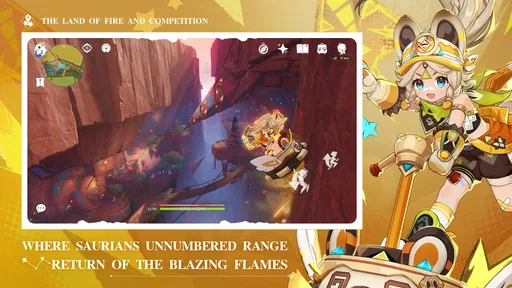
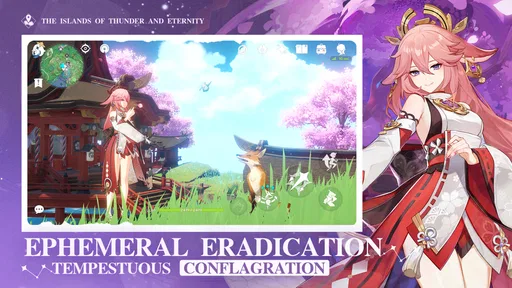
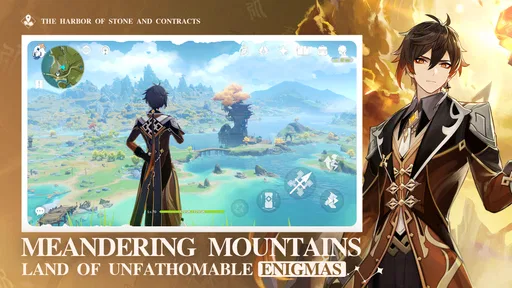
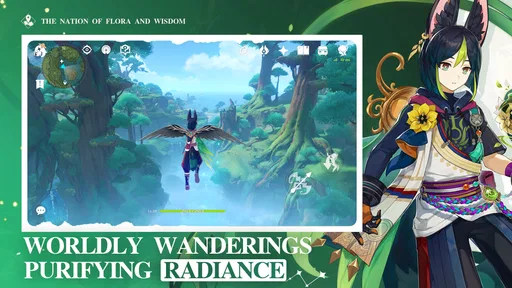
Movement and exploration are closely tied to attention. A route is not just a line between two markers: the landscape can tempt me to climb, glide, or investigate a nearby object. That makes wandering feel purposeful without requiring me to plan every minute in advance. It also means the game suits players who enjoy looking around as much as reaching the next objective.
The trade-off is that an open world can be distracting when I have little time. If I want a tightly directed story beat or a quick, self-contained round, the temptation to explore can feel like friction rather than freedom. I recommend starting with one clear intention—such as completing a particular quest—if I only have a short window to play.
Fights provide a more immediate rhythm than exploration. I watch enemies, choose when to attack, and adjust rather than treating every encounter as background noise. The useful habit is to pay attention to how a battle is unfolding instead of tapping through it automatically. When I do, even a routine clash gives me a small test of timing and decision-making.
That hands-on pace is a good fit for players who like action woven into exploration. It is less appealing if I want combat to be effortless while I focus on a podcast or another screen. Encounters interrupt the quiet of roaming, and players who mainly want a relaxing scenery tour may find that shift unwelcome.
For a practical session, I try to group related goals: follow a quest through an area, deal with enemies I meet along the way, and explore nearby points of interest before moving on. This keeps the trip from becoming a string of unrelated marker chases. It also gives the action a clear purpose, so rewards and discoveries feel connected to what I chose to do.
The game’s feedback comes from several directions: an enemy is overcome, a route opens up, a quest advances, or a new detail in the environment catches my eye. Not every reward is a dramatic payoff. Often, the satisfying part is seeing a small task completed and realizing it has led naturally to another one. That gentle chain is why I can sit down for a brief objective and end up exploring longer.
There is a useful distinction between progress that feels meaningful and progress that is merely busywork. I get more from sessions where I have a reason to travel through an area than from wandering without any interest in what I might find. When the game’s activities align with my curiosity, the feedback loop feels smooth; when they do not, the same amount of movement can feel like chores between the moments I actually enjoy.
One non-obvious way to make the loop work better is to treat the map as a planning aid, not a checklist. I pick a destination, then allow one or two nearby diversions rather than trying to clear every visible point of interest. This helps preserve the pleasure of discovery and reduces the sense that I am doing errands for their own sake.
Progression and discovery give me reasons to return, but the game also offers in-app purchases. Individual items range from $0.99 to $99.99, so I would go in with a spending boundary if I prefer not to make purchases impulsively. The game is free to start, which makes trying its exploration and combat straightforward, but “free” should not be confused with having no optional spending decisions.
I would not recommend spending just to keep up with a self-imposed pace. A better approach is to decide what I enjoy first—exploring, following quests, or improving my ability to handle encounters—and let that guide whether any optional purchase is worth considering. If I am comfortable playing at my own pace, the pressure to buy can be easier to resist. If I dislike games that present purchase options at all, that aspect may be a reason to choose a different adventure.
The game has a Teen content rating. That makes it worth checking whether its content and purchase options suit the person who will play, especially if the device is shared or used by a younger player. I would also consider the player’s tolerance for a game that invites extended sessions: the open-ended structure can make it harder to stop at the exact moment planned.
A satisfying stopping point for me is reaching a clear milestone: finishing the part of a quest I set out to do, arriving at a destination, or resolving a nearby challenge. That gives a session a natural ending even though the world still has more to explore. The next session then has an easy starting point, whether I continue the same journey or pick a different goal.
This reset is the reason another session begins. I remember an unfinished task, or I am curious about a place I noticed while passing through. The game does not need every session to end with a grand conclusion; a small unresolved intention can be enough. That structure works well for players who like returning to a persistent world, but less well for someone who prefers games that provide a firm finish after each short play.
For everyday use, I would treat it as a planned leisure activity rather than a dependable “five-minute break.” A short session can be spent making focused progress, but a wandering mood may stretch it. If I need a game that reliably fits into a precise gap, a level-based adventure with clearer endpoints is likely a better match.
The game has an average rating of 3.3 from around 5.3 million ratings, with about 134,000 written reviews and over 100 million installs. Those figures show that it has reached a very large audience, while the average suggests that a substantial number of players have reservations. I would read that combination as a reason to judge it by my preferences, not by its popularity alone: the open-world appeal is compelling for some, while its scale and ongoing structure may not suit everyone.
The current version is 7.2.0_48751704_49008628, and the minimum operating-system requirement is Android 6.0. Before installing, I would check that my device meets that requirement and has enough room for a large game; a sprawling adventure is not an ideal choice if storage is already tight. On mobile, I would also think about where I plan to play and whether I am comfortable spending longer sessions on a handheld screen.
Compared with a more linear adventure, this one gives me more freedom to turn away from the main objective and explore. Compared with a compact action game built around quick rounds, it asks for more attention and continuity. That difference matters more than a generic claim that one style is better: I would choose this when I want a world to roam, and a more focused alternative when I want a crisp beginning and ending in every sitting.
I would recommend Genshin Impact to someone who likes combining exploration with action and enjoys having several possible directions to follow. It is especially satisfying when I have enough time to let a simple objective grow into a small journey. The game’s adventure focus is clear, and its large community makes it easy to see why so many people have tried it, though popularity alone cannot guarantee that its pace will click for me.
I would skip it if I strongly dislike open-ended play, prefer quick rounds, or want an adventure that never asks me to think about optional purchases. I would also look elsewhere if I find map-driven errands tiring or want each session to resolve neatly without leaving another goal in view.
My verdict is that the strongest part of the experience is the loop: choose an action, get a response, earn a reason to continue, then pause with a new destination in mind. The same loop can become distracting if I play without a limit, so I get the most from it by setting a modest goal before I begin. For a player who enjoys that balance of purposeful action and spontaneous detours, it is a rewarding free adventure; for someone who needs a compact, tightly bounded game, a more linear option will be a better fit.
Genshin Impact is a free-to-play open-world action role-playing game set in the fantasy world of Teyvat. You explore regions, complete quests, solve puzzles, fight enemies, and build a party of characters with different abilities. Combat centers on switching between characters and combining elemental effects. The game also includes a continuing story, optional activities, and online features, so it is designed to be played over time rather than finished in a single short session.
You can download and play Genshin Impact without paying, and its main story and much of the world can be explored for free. Optional purchases include the in-game currency used for character and weapon wishes, along with other paid items or subscriptions that may be offered. These purchases are not required to begin playing, but they can affect how quickly you obtain certain characters and equipment. Check the store listing and parental controls before downloading, especially if younger players will use the device.
Genshin Impact is available on supported mobile devices, but it is a demanding game with detailed environments and frequent updates. Before downloading, check the current app-store listing for compatible operating system versions, supported devices, and storage requirements; these can change over time. Make sure you have ample free space for the initial installation and later updates, plus a stable internet connection. Older or lower-powered phones may experience reduced performance, longer loading times, or limited graphics options.
Genshin Impact includes cooperative play, allowing eligible players to visit one another’s worlds and take on some activities together after meeting the game’s requirements. Cross-platform play is supported across several versions of the game, but players generally need to use the same regional server, and some progress or account features depend on how the account was created or linked. Co-op does not make every quest or activity multiplayer. Check the in-game settings and current support information for account-linking details.
Genshin Impact requires an internet connection to play; it is not an offline game. Your progress is associated with your game account and server, and you can generally continue on another supported platform when using the correct account and region. Linking methods and availability can vary by platform, so confirm your account is connected before switching devices. Avoid starting on a different server if you expect to see the same progress, since game data is typically tied to the selected server.
On Android, Genshin Impact asks for these permissions.
Genshin Impact is also available in 1 other languages on our site.
3.3 out of 5
5,250,279 reviews
Adventure · COGNOSPHERE PTE. LTD.

Adventure4.2 out of 5

Adventure3.5 out of 5

Adventure4.3 out of 5
Adventure4.1 out of 5

Adventure4.3 out of 5

Adventure4.7 out of 5

Adventure3.7 out of 5
Adventure4.5 out of 5

Adventure4.5 out of 5

Adventure4.4 out of 5

Adventure4.4 out of 5

Adventure4.6 out of 5

Adventure3.9 out of 5

Adventure4.4 out of 5

Adventure4.2 out of 5

Adventure3.6 out of 5

Adventure4.2 out of 5
Adventure3.7 out of 5

Adventure4.0 out of 5



Gamesive reviews games on its own and is not paid by developers for scores. We do not host game files: the download buttons open the official Google Play and App Store pages. Names, icons and screenshots belong to their owners.