
PK XD: Fun, friends & games
Adventure4.7 out of 5

For Android & iOS · COGNOSPHERE PTE. LTD.

 Analysis by Gamesive
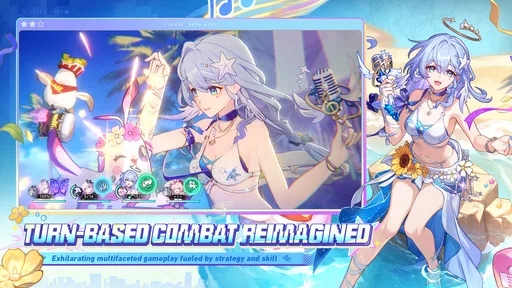
I’d consider Honkai: Star Rail if I wanted an adventure RPG that rewards planning more than quick reactions. Its turn-based battles let me pause, weigh a choice, and think about how my team’s abilities fit together. That makes it a different sort of space adventure from action games built around constant movement. The trade-off is that its story, battles, and character-collection loop ask for regular attention; it is not the best pick if I only want a brief, self-contained game to dip into occasionally.
Honkai: Star Rail is a free adventure game from COGNOSPHERE PTE. LTD., built around a journey through a science-fiction setting and a strategy-focused RPG format. The appeal, for me, is the combination: narrative gives the trip a sense of direction, while battles give me a tactical problem to solve rather than asking me to rely on reflexes alone. If you like choosing a plan and seeing how it plays out, that distinction matters more than the broad label of “adventure.”
The game’s audience response is substantial but not universally glowing: it has a 3.7 average from around 528,000 ratings, with about 14,000 written reviews. It has passed 10 million installs. Those figures suggest a widely tried game with a range of opinions, not a guarantee that every player will enjoy its rhythm. I’d treat the rating as a prompt to consider fit: someone who enjoys turn-based combat and ongoing character progression may value it differently from someone seeking a fast action RPG.
It is free to start, with optional in-app purchases ranging from $0.29 to $99.99 per item. That makes the first decision straightforward: you can try the game without paying, but it is worth deciding early whether you are comfortable with a game that offers purchases as part of its broader progression and character-collection appeal. I would set a personal spending limit before getting attached to a particular character or team idea. The game is rated Teen, so it is also sensible to check that age guidance against the player’s needs.
The current version is 4.7.0, and the minimum supported Android version is 6.0. It was released on April 6, 2023. For a prospective player, the practical point is that this is an established, actively versioned game rather than a short standalone story. I’d go in expecting a continuing experience, and I’d make sure the device has enough room and reliable access for a substantial game, rather than treating it like a tiny casual download.
The biggest strength is how clearly the format lets me think. In a real-time action RPG, I may be watching movement, timing attacks, and avoiding danger at once. Here, turns create space to consider the order of actions and the role each character should play. That makes a short play session feel more deliberate: I can stop after a battle and still feel I made decisions, rather than merely passing time between story scenes.
A useful habit is to treat each difficult encounter as a team-building question, not simply a test of having the newest or most appealing character. If a plan is failing, I’d review who is supporting the group, who is dealing damage, and whether I am using abilities with a purpose. That mindset makes experimentation more rewarding and reduces the temptation to spend just because a battle feels difficult. It also helps explain why the game suits players who enjoy adjusting a roster as much as advancing a plot.
Another practical advantage is that turn-based play is easier to fit around interruptions than a combat system that demands continuous input. I can make a choice, watch the result, and think about the next move. That makes it a plausible companion for a commute or a quiet break, provided I have time to follow the story when it matters. If I have only a minute and want an instantly disposable activity, though, a puzzle game or a short-run arcade title is likely a cleaner fit.
The narrative is part of the reason to keep playing, rather than a thin wrapper around battles. I would recommend giving important scenes enough attention to understand the setting and the people traveling through it. If I rush every conversation just to reach the next fight, I lose some of the context that gives the journey its personality. On the other hand, players who prefer a game to get straight to combat may find story-led stretches slow, especially when they are trying to squeeze play into a busy day.
My most realistic use case would be settling in for a short evening session: progress through a section of the adventure, take on a few encounters, then stop at a natural break. That is more satisfying than opening it repeatedly with no idea what I want to accomplish. Before a busy day, I’d choose a simple goal—advance the story or strengthen a team—so I do not spend the whole session browsing options. This small routine helps the game feel like a planned hobby rather than an endless list of things to keep up with.
One non-obvious trade-off is that a broad roster can make choice feel exciting and demanding at once. It is tempting to build around whichever character currently catches your eye, but a team usually needs roles that complement one another. I’d focus on a dependable core before spreading attention across every new possibility. That approach keeps decisions manageable and makes resource choices feel more intentional, especially for someone who wants to enjoy the game without turning every session into a research project.
Compared with action-focused mobile RPGs, this one favors considered turns over precise movement and rapid reactions. That is a win if I want combat I can read and plan around; it is a loss if I want to control every dodge and attack directly. Compared with a traditional, self-contained role-playing game, its ongoing character and purchase structure may feel less settled. The best alternative depends on whether I value tactical battles and a continuing journey or prefer a finite story with a clearly defined endpoint.
It also occupies a different space from lightweight idle games. Honkai: Star Rail asks me to care about team choices and follow a story, so it offers more involvement than a game designed mainly to run in the background. In exchange, it is less suitable when I want something I can ignore for long stretches and still understand instantly. If I want a compact offline-style adventure with little ongoing commitment, a smaller premium RPG may be a better category to explore, even though its play experience will differ.
The game’s scale is part of its attraction, but scale can become friction. There are many reasons to continue, and that can make it hard to know when a session is “done.” I’d avoid treating every available activity as mandatory. Choose the parts that are fun—story, strategic battles, or developing a favorite team—and let the rest remain secondary. That is particularly useful for players who want a relaxing pastime rather than another checklist competing for attention.
Because it is free to begin, the main cost is not necessarily money; it is the time and attention invested in learning the characters, story, and progression. Purchases are optional, but the listed range—from $0.29 to $99.99 per item—is wide enough that I would use device-level purchase controls or a firm budget if spending is a concern. I would not treat a difficult encounter as proof that I need to buy something. Trying a different team approach first is a healthier and often more satisfying response.
Switching to another game later is easy in one sense: you can simply stop playing. The harder part is that a story-driven RPG may leave you wanting to remember where you were and why a character mattered if you return after a long break. I’d keep sessions anchored to clear story milestones rather than trying to maintain a perfect daily routine. That makes taking time away feel less like falling behind and more like pausing a show until I am ready to continue.
For Android users, the minimum OS requirement is 6.0. The practical check is not only whether the game can be installed, but whether the device handles a large modern RPG comfortably and has storage to spare. I would check available space before downloading and avoid starting an update when I need the phone for something urgent. Those are ordinary precautions, but they matter more for a substantial adventure than for a tiny casual game.
I’d recommend Honkai: Star Rail to someone who likes science-fiction adventures, enjoys turn-based strategy, and is happy to make a game part of their leisure routine. It is especially appealing if you like building a team around complementary roles and would rather consider your next move than execute a difficult sequence of inputs. The fact that it is free to start makes it reasonable to try, as long as you approach optional purchases deliberately.
I would steer away from it if you want a short, complete campaign, dislike character-collection progression, or find long story passages tiring. A direct-action RPG is a better choice if movement and real-time combat are the main attraction; a compact puzzle or arcade game is better for very brief sessions. Neither alternative is automatically better—the point is that this game asks for a particular kind of attention.
My recommendation is to try it for its tactical battles and story, not because its popularity promises a perfect fit. Give it a few focused sessions, see whether planning teams feels enjoyable, and decide whether the ongoing structure suits your schedule. If those parts click, it can be a satisfying adventure to return to. If you mainly want instant action or a neatly finished experience, choosing a different RPG style will probably leave you happier.
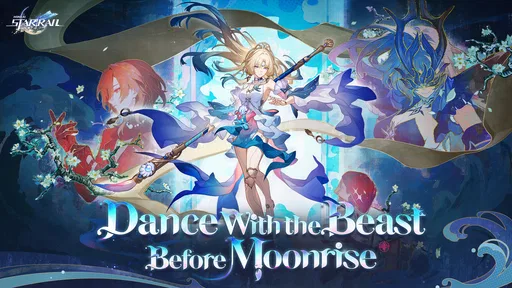
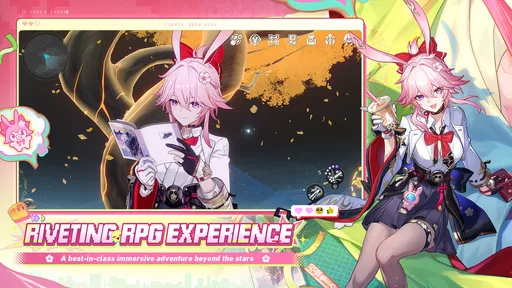
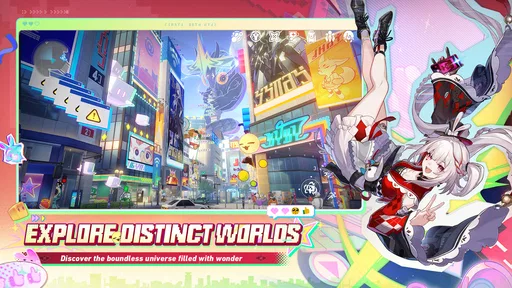
Honkai: Star Rail is a free-to-play, story-focused role-playing game from HoYoverse. You explore different worlds aboard the Astral Express, meet a large cast of characters, and take part in turn-based battles. Its presentation combines animated cutscenes, voiced dialogue, exploration, puzzles, and character-building systems. It is not an action combat game; battles depend on choosing attacks, skills, and team combinations strategically.
The game is free to download and offers a substantial amount of story and gameplay without requiring payment. However, it includes optional in-app purchases and a gacha system, where players spend in-game currency for a chance to obtain characters and equipment. Progress is possible without spending, but collecting specific limited-time characters can take patience, careful resource management, or purchases. Check the store listing for current pricing and availability in your region.
No. Honkai: Star Rail requires an internet connection to launch and play, so it is not suited to offline travel or areas with unreliable service. A stable connection helps with downloading updates, signing in, and playing without interruptions. The game also receives ongoing content updates, which can require substantial downloads. Before installing, make sure you have a dependable connection and enough free storage for the initial download and future patches.
Honkai: Star Rail is available on mobile devices and other platforms, and its cross-save features can let you continue the same account and story progress across supported platforms. You generally need to sign in with the appropriate HoYoverse account and select the correct server; progress is tied to the server you use. Linking and account setup details can vary, so check the in-game account settings before switching devices.
Expect a long-running game with frequent updates, a considerable storage footprint, and graphics that may perform differently depending on your device. Combat is turn-based, with teams built around character roles, elements, and abilities, while exploration and story make up much of the experience. Older or lower-spec devices may need reduced graphics settings and can still encounter heat or battery drain. Check your device’s current store listing for compatibility and required space.
On Android, Honkai: Star Rail asks for these permissions.
Honkai: Star Rail is also available in 2 other languages on our site.
3.7 out of 5
527,505 reviews
Adventure · COGNOSPHERE PTE. LTD.

Adventure4.2 out of 5

Adventure3.5 out of 5
Adventure4.3 out of 5
Adventure4.1 out of 5

Adventure4.3 out of 5

Adventure3.3 out of 5
Adventure3.3 out of 5
Adventure4.7 out of 5

Adventure4.5 out of 5

Adventure4.5 out of 5

Adventure4.4 out of 5

Adventure4.4 out of 5

Adventure4.6 out of 5

Adventure3.9 out of 5

Adventure4.4 out of 5

Adventure4.2 out of 5

Adventure3.6 out of 5

Adventure4.2 out of 5

Adventure4.0 out of 5



Gamesive reviews games on its own and is not paid by developers for scores. We do not host game files: the download buttons open the official Google Play and App Store pages. Names, icons and screenshots belong to their owners.