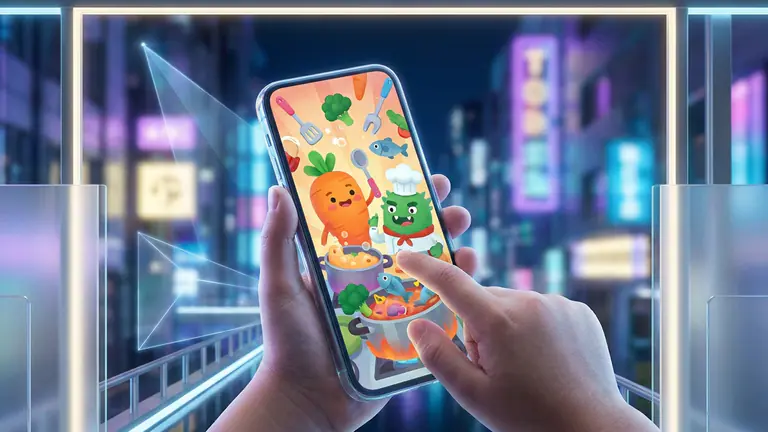
Toca Boca Jr Under Pressure: Play Is Forgiving, but Setup Can Get in the Way
 Analysis by Gamesive ·
Kids rarely stop playing at a neat endpoint. They tap the wrong thing, get called away, lose a connection, or hand a device to someone who has no idea what was happening. That makes Toca Boca Jr: Fun Kids Games interesting to review not just as a bundle of cheerful activities, but as a play space that needs to survive mistakes. Its low-pressure, exploratory design makes many in-game missteps feel harmless. The less certain part is what happens around the play: access, downloads, subscriptions, device settings, and returning after an interruption can depend on details a family should check on its own device.
The reliability promise
Toca Boca Jr gathers child-friendly games into a bright, tactile collection. The central promise is less about teaching a fixed lesson than inviting children to poke, make, experiment, and discover what responds. That distinction matters in a failure-mode review. A game with a single correct sequence can turn a mistaken tap into a dead end; open-ended play can make the same tap simply become part of the next experiment.
The rhythm is usually short and self-directed: enter an activity, try an action, watch what happens, then repeat or move on. There is no need to master a long chain of controls before the fun begins. That gives the collection a useful kind of resilience at the level of play. If a child misunderstands an object or changes direction halfway through, the session does not necessarily collapse. The trade-off is that “forgiving” does not mean every activity has the same rules, save behavior, or return point. Parents should not assume a shared technical standard across the whole collection.
First setup failure points
The first fragile moment can arrive before a child reaches a game. A family may need to confirm which activities are available, whether anything requires an additional download or purchase, and whether the device has enough storage and a stable connection to finish setup. Availability and purchase terms can change by region, platform, account, or version, so I would verify the current listing and in-app prompts rather than treating an old description as a guarantee.
That setup is also a handoff problem. An adult may be comfortable navigating account screens, but a young child is likely to see only a blocked route or an unfamiliar prompt. Before passing over the device, I would open the intended activity, check that it loads, and make sure any adult-only decisions are settled. Parental controls and purchase protections are worth checking at the operating-system level, too. Those are practical precautions, not proof that the game itself will behave identically on every device.
Compared with a focused game such as 8 Ball Pool, where the basic premise is obvious from the opening screen, a collection asks a child to choose among more possibilities. That variety is part of the appeal, but it can make a half-finished setup harder to diagnose: is an activity unavailable, still loading, or simply not the one the child meant to open? A grown-up’s quick first pass can prevent that uncertainty from becoming the child’s first experience.
Mistakes and reversibility
Inside an activity, the strongest resilience comes from the absence of a harsh fail state. Toca Boca Jr’s play-first approach encourages cause and effect: tap, drag, combine, or repeat, then see what the world does. That is a good fit for young players because a wrong move often becomes a new result rather than a penalty. There is little pressure to protect a score or preserve a perfect run, so children can experiment without the emotional cost that comes with losing progress in a competitive match.
Still, I would separate creative freedom from guaranteed undo. A forgiving activity is not necessarily reversible in the technical sense. I cannot responsibly promise that every choice can be undone, that every scene restores to its original state, or that every activity preserves a child’s exact arrangement after leaving. If a child becomes attached to a particular setup, take a moment to see whether the activity has a reset, back, or restart control before relying on it. That is especially useful when several children share a device and one player may erase or rearrange another’s work.
The collection’s replay value is strongest when children treat each visit as another round of experimentation, not a campaign to complete. That keeps an accidental reset from feeling like a major loss, but it also means the game may not offer the kind of persistent, carefully tracked progress some families expect from educational software. Its value lies in repeatable play and discovery more than a visible record of achievement.
Interruption and return
Real sessions get interrupted by meals, messages, battery warnings, and the simple fact that a child has spotted something else. On mobile devices, an app may be paused or closed when another task takes priority, and the operating system can behave differently depending on memory pressure and settings. I would not promise that every activity resumes at precisely the same point after a forced close. The safest expectation is that a short interruption may be manageable, while a full exit could mean reopening the app and finding the activity again.
That uncertainty is less troubling here than in a story game with long missions, but it still affects family routines. If the child has spent time arranging or making something, ask them to show you whether that state survives a brief background-and-return test before treating it as something they can save for later. A simple test on the actual device is more useful than a general claim about mobile apps, because operating-system behavior and app versions change.
There is also a social return problem: a child may forget what they were doing. Because the activities are designed for quick exploration rather than a demanding sequence, restarting the idea is often easy. A parent can help by naming the last action or inviting the child to try a different one. That is a softer recovery path than a formal checkpoint, but it suits the game’s short-session character.
Connectivity pressure
Weak internet can turn a supposedly simple play session into a wait. The key question is not only whether the app opens offline, but whether the particular activity has already been installed and whether any asset, account check, or storefront step is still required. I do not have enough verified, version-specific evidence to claim that every part of Toca Boca Jr works without a connection. Families planning to use it in a car, on a flight, or at a place with unreliable Wi-Fi should test the intended activities in advance, then briefly try them with the connection disabled.
That distinction prevents a common disappointment: an app can appear ready while a selected activity is not. If something stalls, avoid tapping repeatedly or making a purchase decision just to clear a screen. Check the connection, wait for any download to complete, and reopen only if necessary. The game’s gentle tone cannot compensate for uncertainty about what has loaded.
Offline preparation is especially important if the device is shared or has limited data. Downloading or updating over a trusted connection, confirming the activity launches, and then leaving the network off for a quick test gives a family a much clearer answer than assuming that a child-focused title is automatically offline-ready.
Unclear states
Young children read screens literally. A spinner can look like a broken game; a locked activity can look like something they should keep tapping; an unexpected prompt can feel like part of the play. Adults may know the difference between loading, a purchase gate, and a connection error, but a child may not. This is where a friendly presentation still needs clear state changes and adult guidance.
When a screen does not explain itself plainly, I would pause before interpreting it as a bug or a deliberate restriction. Check whether the activity is still loading, whether the device is offline, and whether an adult decision is required. If the same unclear state repeats, note what happened and when before contacting support. Specific details such as device model, operating-system version, app version, and the activity involved make a support report more useful than “it froze.”
Recovery guidance
A sensible recovery routine is deliberately boring: stop repeated tapping, check the connection, give an active download time to finish, then close and reopen the app if it remains stuck. Before clearing app data, reinstalling, or changing account settings, consider whether that could remove local information or require an adult to set things up again. I would not use a drastic fix until simpler steps have failed, especially when the child may have made something they want to keep.
For parents, prevention is more effective than troubleshooting in front of a disappointed player. Update the app when convenient, keep some device storage free, protect purchases, and test the activity before a trip or a quiet-time window. If a child shares the device, show them a simple way to leave the activity and return to the collection without navigating account or store screens. These steps cannot guarantee a flawless session, but they make the likely failure points easier to handle.
Where evidence is missing
Some resilience claims need current, hands-on verification that a general review cannot safely supply. Exact offline behavior, whether an activity restores its previous state after a force close, how downloads behave on a nearly full device, and whether a purchase or subscription prompt appears for a particular account can all vary. App updates may also change menus, access terms, and technical behavior. I would rather mark those limits than turn a plausible guess into a promise.
That caution does not erase what is clear about the design. The collection aims to make play approachable and low-stakes, and its open-ended rhythm is naturally more tolerant of small mistakes than a game built around winning or losing. But technical recovery is a separate question from emotional forgiveness. Parents deciding whether to rely on it during travel or for unsupervised sessions should test the exact setup they plan to use.
Who needs more certainty
Families looking for a flexible activity to explore together are likely to appreciate the low-pressure structure. It is also a reasonable candidate for short stretches of play when an adult can help with setup and explain an unexpected screen. A child who enjoys trying actions just to see what happens may return to the collection repeatedly, even without a score chasing them forward.
More cautious buyers have good reason to ask further questions. If the child needs reliable offline access, must return to an exact saved state, or will use the app independently on a tightly managed device, test those conditions first. A title like Avatar World may appeal more to families seeking a broader role-play setting, while Toca Boca Jr’s case rests on its approachable activities and low-pressure experimentation. Neither comparison answers the practical question of how a particular device behaves after a failed download or interruption.
Resilience verdict
Toca Boca Jr is resilient where its design has the most control: it makes exploration feel safe, keeps the play loop accessible, and does not lean on a punishing failure structure. A mistaken action is often just another thing to investigate, and that is a genuine strength for young players. Its weak point is the boundary around play, where setup, connectivity, persistence, and unclear prompts require more caution than the cheerful surface suggests.
Toca Boca Jr: Fun Kids Games is an easy recommendation for families willing to prepare the device and stay nearby when a child is learning the collection. It is not a title I would describe as proven dependable offline or guaranteed to preserve every interrupted session without checking the exact version and device. Treat its creative play as forgiving, its technical recovery as something to test, and the result is a more honest promise: a welcoming place to experiment, provided an adult handles the uncertain edges.
Articles related to Toca Boca Jr: Fun Kids Games
Games like Toca Boca Jr: Fun Kids Games
View all: Games like Toca Boca Jr: Fun Kids Games
Baby Panda World-Learning Game
Educational4.4 out of 5

Coloring & Learn
Educational4.3 out of 5

Baby Panda's School Bus
Educational4.5 out of 5

Fluvsies - A Fluff to Luv
Educational4.1 out of 5

Coloring Games: Color & Paint
Educational4.4 out of 5

Toca Boca World
Educational4.4 out of 5
More articles on the blog
View all: More articles on the blog
In Little Kitty, Big City, Curiosity Is the Best Way Home

Whiteout Survival Shows What Mobile Strategy Now Demands