Magic Dancing Tiles
For Android & iOS · PHY STUDIO
- 4.8 out of 5Rating
- 49.84KReviews
- 50.00M+Downloads
- MusicGenre
Game details
- Version
- 0.5.69
- Updated
- Requires
- 7.1
- Price
- Free
- Age rating
- Mature 17+
- In-app purchases
- $3.99 - $29.99 per item
Screenshots
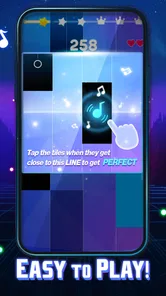
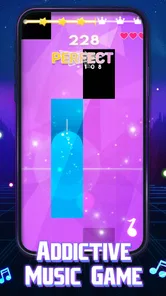
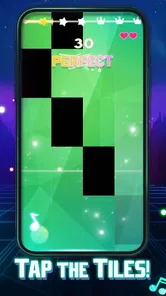


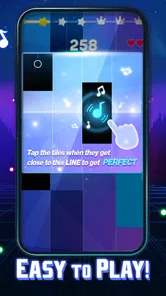
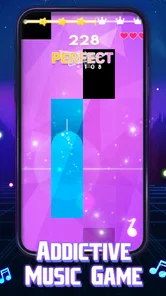
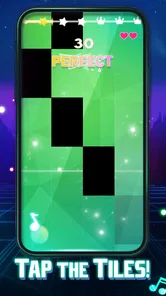
Magic Dancing Tiles review
 Analysis by Gamesive
I like rhythm games best when the first few minutes tell me whether the timing feels fair, not just whether the music is catchy. Magic Dancing Tiles is built around that immediate test: follow an EDM track and tap the piano tiles in time. It is a music game from PHY STUDIO, and its appeal is easy to understand—you can start playing without learning a complicated control scheme. The real question is whether its quick, repeatable rounds provide enough reason to keep coming back.
Small early goals make the first session easy to enter
The basic aim is clear from the outset: watch the moving tiles and tap along with the beat. That simplicity is useful when I have a few spare minutes and want something more active than listening to a song. There is no elaborate setup to get in the way of the central rhythm challenge, so the early goal is simply to find the pulse and stay with it.
That also means the game asks for attention straight away. A tile can be easy to understand but still demand precise timing, and familiar piano imagery should not be mistaken for a gentle, hands-off experience. I found it more satisfying to treat an early run as practice: notice how the visual movement relates to the beat, then adjust my taps rather than rushing to chase a perfect result.
For a newcomer, a sensible first-session routine is to play in a quiet moment, keep the volume at a comfortable level, and focus on one track at a time. Trying to play while distracted makes it harder to tell whether a missed tap came from my timing or from divided attention. This is a small but important distinction in a game whose core interaction is so direct.
Progress feels tied to timing, not complicated controls
The strongest progress signal here is personal: I can feel when I am responding more confidently to the rhythm and less often hesitating over the next tile. That kind of improvement suits a tap-based music game. It gives short sessions a purpose even when I am not aiming for a particular milestone, because I can use each attempt to sharpen my sense of timing.
I would not assume that every player will find the same song equally approachable. A track’s pace and the way its tiles arrive can change how much concentration a run takes. If one selection feels uncomfortable, switching to another is more useful than repeatedly forcing a difficult attempt. The game’s premise encourages practice, but patience works better than treating every missed note as a reason to restart immediately.
One practical tip is to avoid changing your tapping rhythm to match a single mistake. I get better results by returning attention to the music and letting the next beat reset my timing. In rapid sequences, reacting emotionally to a miss can create a second one; staying calm is a genuine skill in a game that relies on quick, repeated inputs.
The challenge is immediate, with a focus on concentration
The difficulty comes from coordinating what I see with what I hear. That makes the game feel different from a conventional piano-learning app, where the emphasis is on lessons or building broader musical technique. Here, the point is moment-to-moment responsiveness and keeping up with an EDM rhythm. I would choose it for a quick reflex challenge, not as a substitute for learning an instrument.
There is a trade-off in that clarity. Straightforward tapping is easy to pick up, but it leaves little room to recover when my attention slips. If I want a relaxed background game, the need to watch each tile may feel demanding. On the other hand, players who enjoy concentration tests may appreciate that the main challenge stays focused rather than being buried under complex controls.
For the fairest experience, I recommend playing with the device held steadily and your hands positioned so taps feel natural. That is especially helpful during longer runs, when awkward posture can make a simple input feel less consistent. If you are playing on the move or while multitasking, expect the experience to be less forgiving than a slower casual game.
Short sessions suit it better than distracted play
A realistic use case is a brief break between tasks: I can open the game, try a focused run, and put it down without needing to commit to a long story or a complicated session. Its music-game format makes it a natural fit for that kind of stop-and-start play. I would still avoid using it while doing something that needs attention, because watching the tiles is central to the fun.
The game is free to download, with optional in-app purchases priced from $3.99 to $29.99 per item. That makes it possible to try the core experience before spending, but I would decide on purchases only after I know how often I actually play. If I tend to sample rhythm games and move on, paying for extras is unlikely to improve the basic question of whether I enjoy the timing challenge.
The age rating is Mature 17+, so it is not a title I would casually recommend for younger players. Adults looking for a compact music challenge can make that judgment for themselves, but families should check the rating before handing over a device. The game’s simple controls do not make its age guidance irrelevant.
Its popularity is a signal, not a promise of fit
Magic Dancing Tiles has a 4.8 average from around 50,000 ratings and has passed 50 million installs. Those figures suggest that the quick-tap format has found a large audience, but they cannot tell me whether its pace will suit a particular player. I would use them as context, then make the decision based on whether I like reacting to rhythm under pressure.
The current version is 0.5.69, and the game was released on October 30, 2023. It runs on Android 7.1 or later. Those details are useful when checking whether an older device can install it, but the more important practical question is whether the screen and touch response on that device feel comfortable for precise tapping.
Compared with music games built around instrument practice, this one is more immediate and less educational in its basic premise. Compared with rhythm titles that ask players to manage multiple kinds of input, its central appeal is the direct tap-and-follow loop. That focus is a strength for casual sessions, though anyone seeking deep musical instruction or a broader range of mechanics should look at alternatives designed for those goals.
Where the repeat-play appeal has limits
The same simplicity that makes the game accessible can also narrow its appeal over time. If I enjoy improving my timing on familiar patterns, repeated attempts can feel worthwhile. If I need a strong sense of narrative, extensive strategic choices, or a long-term goal clearly driving each session, a straightforward tile rhythm game may not hold my attention as well.
That is where I would be careful about expectations around progression. A satisfying run and a noticeable improvement in timing can be rewarding, but I would not recommend installing it solely in expectation of a deep unlock journey. The available description establishes a music-tile challenge; it does not give me a basis to promise particular unlocks or progression systems. The honest way to approach it is to judge the repeat-play loop itself.
Players who are sensitive to fast visual movement may also prefer to try a brief session before settling in. Rhythm play asks the eyes and hands to stay coordinated, and that can feel tiring rather than fun if the pace is uncomfortable. Taking breaks is more sensible than pushing through a session that stops feeling enjoyable.
My verdict: a focused rhythm test for the right mood
I would recommend this game to someone who wants an uncomplicated EDM rhythm challenge, enjoys improving through repeated attempts, and is happy to give the screen their full attention for a short while. It is especially suited to quick breaks when I want a clear, hands-on activity rather than passive music playback.
I would skip it if I wanted a music tutor, a low-attention background game, or a progression-heavy experience with elaborate goals. Its appeal rests on the immediate relationship between beat, tile, and tap, so the deciding factor is whether that loop stays enjoyable for you. My advice is to try it free, play a few focused rounds, and spend only if the challenge—not just the music—makes you want another go.
What we like
- Simple one-touch controls are easy for newcomers to learn.
- A broad music selection offers variety across play sessions.
- Short rounds make it convenient to play during spare moments.
- Increasing difficulty gives experienced players a clear challenge.
- Bright visuals make notes easy to follow on screen.
What could be better
- Fast sections can feel demanding on smaller phone screens.
- Some tracks may be unavailable without an internet connection.
- Ads can interrupt the flow between attempts.
- Precise timing may take practice on devices with touch delay.
- Repeated songs can make longer sessions feel less varied.
Frequently Asked Questions
What is Magic Dancing Tiles?
Magic Dancing Tiles is a rhythm-based mobile game in which you tap or hold tiles in time with the music. The main challenge is to follow the notes accurately as they move across the screen, while keeping up when the pace increases. It is designed for quick sessions and straightforward touch controls, though your experience may depend on the songs and modes available in your version.
How do you play Magic Dancing Tiles?
Choose a song or available level, then tap the tiles as they reach the required points on the screen. Some notes may call for a longer press or a swipe, so watch the prompts rather than tapping randomly. Accurate timing helps you maintain a streak and improve your score. Headphones can make the rhythm easier to follow, but responsive touch controls and a steady connection may also matter.
Is Magic Dancing Tiles free to download and play?
The game may be available to download without an upfront purchase, but that does not necessarily mean every feature is free. Depending on the app version and platform, you may encounter advertisements, optional purchases, or content that requires unlocking. Check the store listing on your device for current pricing and in-app purchase details before installing, since availability and monetization can change between regions or updates.
Can I play Magic Dancing Tiles offline?
Offline access can vary by version, and some parts of the game may need an internet connection to load songs, display ads, sync progress, or access online features. If you expect to play without data, open the game while connected first and check whether your chosen songs remain available after disconnecting. The app’s store description and in-game notices are the best places to confirm its current requirements.
Is Magic Dancing Tiles suitable for children, and what should I check before downloading?
The basic rhythm gameplay is easy to understand, but suitability depends on the specific content, advertising, and purchase options in the version you install. Before downloading, review the age rating, privacy information, permissions, and in-app purchase details on the official app store. Parents may also want to check whether ads or online features are present and use device settings to limit purchases or screen time.
Permissions
On Android, Magic Dancing Tiles asks for these permissions.
- Wi-Fi connection information
- view Wi-Fi connections
- Other
- view network connections, full network access, run at startup, control vibration, prevent device from sleeping, Google Play license check
Languages
Magic Dancing Tiles is also available in 2 other languages on our site.
User reviews
4.8 out of 5
49,836 reviews
- 90%
- 3%
- 2%
- 1%
- 4%
Download Magic Dancing Tiles
Music · PHY STUDIO · Free
Games like Magic Dancing Tiles
View all: Games like Magic Dancing Tiles
Tiles Hop Music & Ball Game
Music4.3 out of 5
Magic Tiles 3™ - Piano Game
Music4.6 out of 5
Music Piano 7: Rush Song Games
Music4.8 out of 5

Kpop Piano Beats - Music Game
Music4.7 out of 5
About this listing
- Game
- Magic Dancing Tiles
- Developer
- PHY STUDIO
- Package
- com.magic.dancing.tiles.game.piano
- Version reviewed
- 0.5.69
Gamesive reviews games on its own and is not paid by developers for scores. We do not host game files: the download buttons open the official Google Play and App Store pages. Names, icons and screenshots belong to their owners.