
Brawl Stars
Action4.2 out of 5
For Android & iOS · Level Infinite
 Analysis by Gamesive
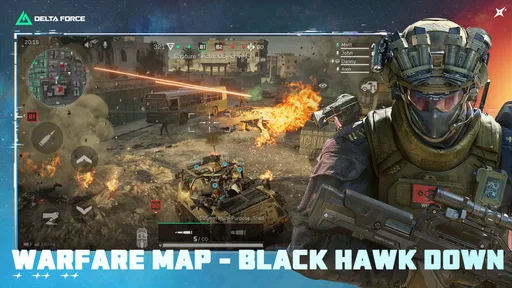
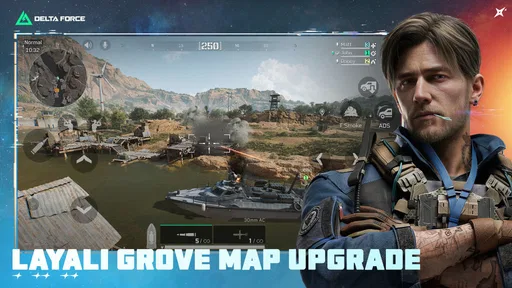
What stands out to me about Delta Force is the tension built into an extraction run: getting through a fight is only half the job. You also have to decide whether to keep pushing for more or leave with what you have. That simple pressure gives its action a different feel from a match where the only goal is to win a firefight. I find it most compelling when I treat every encounter as a choice with a cost, not as an invitation to chase every opponent.
As an operator-based action game from Level Infinite, Delta Force puts a clear emphasis on planning around danger. The extraction premise changes how I read a battlefield: a fight can be worth taking, but it can also expose me to losses when a safer route would serve me better. That makes patience feel like a skill, not a pause between bursts of action.
The game is free to download, with optional in-app purchases priced from $0.29 to $99.99 per item. Its Teen rating is worth considering if you are choosing a game for a younger player, especially because the core appeal is combat and competitive pressure. The game’s average rating is 4.3 from around 317,000 ratings, and it has over 10 million installs. Those figures suggest a large audience, but they do not guarantee that its deliberate, risk-based pace will suit everyone.
The key capability is not simply that the game has extraction; it is that extraction gives each run a decision point. I find that more interesting than treating every enemy as something to eliminate. If I am carrying a useful haul or have already spent resources surviving a difficult encounter, reaching safety may be the smarter success. If I am still well equipped and the route ahead looks manageable, continuing can be tempting. The uncertainty is the point.
In practice, I would go into a run with a basic plan: know what I want to accomplish, keep an eye on how much risk I have already taken, and decide in advance what would make me turn back. That last part is easy to overlook. Without a personal limit, a promising run can become a string of increasingly risky decisions simply because I do not want to leave early.
A useful habit is to pause after a major fight rather than immediately moving toward the next sound or visible opportunity. Take stock of what the encounter cost, whether the route still makes sense, and whether the remaining objective is worth the exposure. This is not a secret setting or an advanced menu trick; it is a way of playing that makes the extraction loop feel less impulsive and more satisfying.
That approach also helps with learning. If a run ends badly, I can ask whether I chose the wrong fight, stayed too long, or made a poor decision about when to leave. That is more actionable than blaming every loss on aim. Over time, the game’s central tension can reward players who pay attention to decisions before and after a firefight, not only their reactions during one.
One realistic situation where I would choose Delta Force is an evening when I have time for a focused gaming session but do not want to commit to a long campaign. I can enter with one modest aim, such as exploring cautiously or improving how I judge danger, and let the run’s outcome decide when I stop. The extraction objective gives a session a natural sense of closure, even if I do not come away feeling like I dominated every encounter.
It also suits playing with a friend who enjoys talking through choices. “Do we push on, or do we leave now?” is a more interesting team discussion than simply moving toward the next opponent. I would recommend agreeing on a rough risk tolerance before a run, though. A cautious player and a teammate who wants to chase every opportunity can pull the group in opposite directions, and that mismatch can make the game more frustrating than tense.
If I only have a few minutes and want a reliably low-pressure distraction, this would not be my first pick. Extraction games ask for attention to the state of a run, and interruptions can make a careful decision harder. For that sort of quick break, a simpler arcade action game is likely a better fit. Delta Force’s appeal depends on being willing to think about the consequences of staying in the action.
Compared with a standard team shooter, the important contrast is the weight placed on leaving safely rather than simply finishing a round. In a conventional match, a lost fight can be disappointing, but the match’s fixed end point usually keeps the objective clear. Here, the possibility of extracting makes risk management part of the entertainment. I like that change because it gives a retreat a purpose instead of making it feel like a failure.
It is also different from a story-led action game, where progress often comes through a sequence of authored missions. Delta Force is better suited to someone who enjoys adapting to a run and making judgment calls under pressure. If I want a carefully paced narrative, memorable characters, or a relaxed solo journey, I would look elsewhere. Its appeal is the repeated challenge of operating in a dangerous space and choosing when enough is enough.
There is a tradeoff in that design. A cautious approach can feel thoughtful, but it can also make a session feel slow if I am hoping for continuous combat. Conversely, playing aggressively may produce exciting moments while making the extraction goal harder to reach. Neither style is automatically right, but players who dislike uncertainty may find the push-and-pull tiring rather than exciting.
The biggest practical limitation is that the game’s central loop asks for restraint from players who may have installed it for action. It can be tempting to keep going after a good encounter, especially when the next opportunity seems close. Yet a run built around extraction is at its best when I can accept that leaving with less than the maximum possible reward may be the sensible choice. If that kind of self-control feels like busywork, the format may not click.
Competitive play can add another source of frustration: other players do not have to follow the cautious plan I have made for myself. A route that looked safe can become dangerous, and a promising run can turn quickly. I would not recommend approaching every session with the expectation of a clean success. The more useful mindset is to treat each run as a series of decisions and to notice which ones I would change next time.
There is also the question of spending. The game is free, but it includes purchases ranging from $0.29 to $99.99 per item. I would decide on a budget before browsing optional purchases, rather than treating a free download as a promise that every part of the experience will be cost-free. The listed range alone does not tell me what each item does, so I would judge any purchase on its individual description and whether it adds something I genuinely want.
I think the strongest audience is players who enjoy competitive action but want more to consider than aim and movement. If you like weighing a possible gain against the chance of losing the safety of a run, the extraction focus gives each choice a purpose. It is especially appealing to a player who can learn from a setback, adjust the next plan, and enjoy a tense escape as much as a successful fight.
I would steer away from it if you want a relaxed game to play while distracted, dislike losing progress after a risky decision, or prefer a clearly scripted story. It may also be a poor match for a group whose members have very different ideas about when to take a chance. For those players, a straightforward match-based shooter can offer a clearer objective and a more predictable rhythm.
On Android, the listed minimum operating system is version 7.0, and the current version is 1.202.37119.3601. I would check that my device meets the requirement and has room for the installation before starting, then consider whether I can give the game enough uninterrupted attention to enjoy its risk-and-reward rhythm. The Teen age rating is another sensible check for families deciding whether it is appropriate.
Delta Force is at its best when I stop thinking of extraction as a final button and start treating it as the decision that gives the action its shape. Its strongest moments come from judging whether another push is worth the danger, then living with that choice. That focus makes it more distinctive than a shooter built only around winning the next exchange, although it also narrows its audience.
I would recommend it to a friend who enjoys competitive action, can handle uncertain outcomes, and likes discussing tactics with teammates. I would not recommend it as a universal pick for anyone who wants instant, uncomplicated shooting. Level Infinite’s game has a strong central idea, and the 4.3 average across around 317,000 ratings reflects a substantial player response, but the real question is whether you enjoy the tension of deciding when to leave. If you do, that decision can be the most satisfying part of a run.
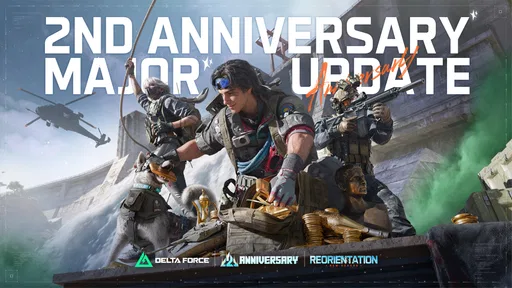
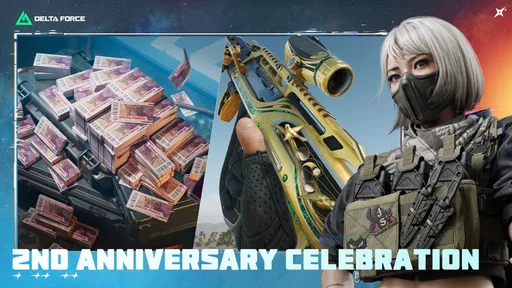
Delta Force: 2nd Anniversary is a celebratory edition or event associated with the Delta Force tactical shooter, rather than necessarily a separate game. Anniversary content can include limited-time activities, rewards, themed cosmetics, or updates, but the exact offerings may vary by platform and region. Check the official game listing and in-game announcements to confirm what this release includes before downloading.
The download may be free if the edition is offered through an official app store, but that does not guarantee that every feature or item is free. The game may offer optional purchases, such as cosmetic items or other digital content, and availability can differ between platforms. Review the store page for pricing, in-app purchase details, and any requirements before installing.
Device compatibility depends on the specific version being offered and its current system requirements. Before downloading, check the official listing for the supported operating system, minimum software version, storage needs, and any device restrictions. A demanding multiplayer shooter may also run differently across phones and tablets, so meeting the minimum requirements does not necessarily mean every device will deliver the same performance.
Delta Force is centered on online shooter gameplay, so you should expect to need a stable internet connection for its main modes, account features, and multiplayer matches. Connectivity quality can affect matchmaking and responsiveness, particularly during fast-paced combat. Confirm the requirements shown on the official store page, and consider using a reliable Wi-Fi connection for downloading updates or playing if mobile data is limited.
For the safest installation, download the game only from an official app store or a link provided through the publisher’s verified channels. Check the developer name, recent updates, device permissions, age guidance, and privacy information before installing. Avoid unofficial APKs or download pages, which may expose your device or account to risk. Also note that online play may involve communication or purchases.
On Android, Delta Force: 2nd Anniversary asks for these permissions.
4.3 out of 5
317,024 reviews
Action · Level Infinite

Action4.3 out of 5

Action4.4 out of 5
Action4.6 out of 5

Action4.5 out of 5

Action3.9 out of 5

Action4.1 out of 5
Action4.3 out of 5
Action4.2 out of 5
Action4.8 out of 5

Action4.3 out of 5

Action4.5 out of 5

Action4.3 out of 5

Action4.3 out of 5

Action4.7 out of 5

Action4.1 out of 5

Action4.2 out of 5

Action4.3 out of 5

Action4.7 out of 5
Action4.4 out of 5



Gamesive reviews games on its own and is not paid by developers for scores. We do not host game files: the download buttons open the official Google Play and App Store pages. Names, icons and screenshots belong to their owners.