
Brawl Stars
Action4.2 out of 5
For Android & iOS · Playgendary Limited
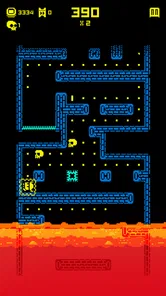
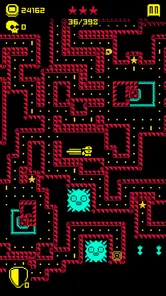
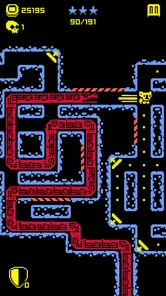
 Analysis by Gamesive
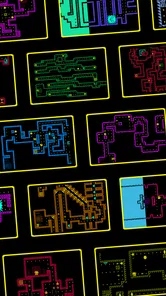
I can see why Tomb of the Mask: Old Maze works well as a shared-device game: it is easy for someone to pick up for a few minutes, yet its maze-and-trap format gives each short turn a clear challenge. I would hand it to a friend while waiting for food or pass the phone around at home, with one person trying a route and the next deciding whether they can do better. That casual handoff is a better fit than expecting it to act like a coordinated multiplayer game.
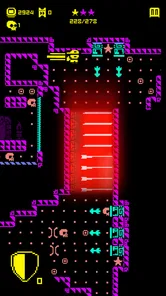
Developed by Playgendary Limited, this is a free action game built around quick arcade play and a pixel-art maze. The central appeal is immediate: guide your way through a confined grid, react to hazards, and try to reach the end without letting a small mistake end the run. It has the directness of an old-school arcade game, but the maze layout makes success depend on reading the space rather than simply tapping through a sequence.
The game is particularly convenient when several people are sharing one phone or tablet. A player can take a turn, then give the device to someone else without needing a long explanation of a story, team role, or complicated control scheme. That makes it useful for small gaps in the day: a short wait, a quiet moment at home, or a break between other activities.
In that setting, I would make the handoff part of the fun. One person can attempt a room, while the next watches for a trap or suggests a safer path. The useful distinction is that the game itself is still a solo arcade experience; the conversation and turn-taking happen around it. If your household wants everyone playing simultaneously, competing in a shared match, or keeping separate personal progress, this is not the kind of title I would choose for that purpose.
The maze structure also gives spectators something concrete to discuss. Instead of offering vague advice such as “try again,” someone can point out a turn, a hazard, or a route that looks less risky. I find that makes the game more engaging for a bystander than an action game where the important decisions are too fast or visually cluttered to follow.
Its pick-up-and-play quality should not be mistaken for a lack of thought. A narrow maze can make the next move matter: rushing into an unfamiliar section may be quicker, but pausing to read the layout can help avoid a trap. A practical habit is to scan the visible route before committing, especially when a turn might leave little room to recover. That small change in approach is more useful than repeatedly making the same quick attempt.
This is one of the game’s stronger trade-offs. The arcade pace makes it approachable, but the obstacle course can punish impatience. If a child or a less experienced player is taking turns, I would keep the mood light and treat a failed run as part of the challenge rather than as a reason to grab the device back and solve it for them. The game is more enjoyable when everyone gets a chance to try their own route.
On a shared phone, I would decide who is playing and when before opening the game. That sounds ordinary, but it prevents a common household annoyance: one person starts a run, another takes the device mid-turn, and nobody agrees whose attempt counted. A simple rotation—one turn each, then another round if everyone still wants to play—keeps the game from becoming an argument over the screen.
I would also treat the device owner’s account and settings as separate from the game’s casual turn-taking. The fact that people can take turns on one screen does not mean the app should be treated as a family account system. If preserving separate personal activity or progress matters, use the arrangements available on your device rather than assuming the game provides household profiles. That is especially important when a device is used by both adults and children.
The game is free to start, but it includes optional in-app purchases, with listed items ranging from $0.99 to $139.99. On a shared device, I recommend setting a clear purchase rule before handing it to a child: do not approve a transaction without the account holder’s permission. That is sensible for any app with purchases, and here the wide range makes it particularly worth checking how your device handles purchase approval. The game can be tried without treating spending as part of the household routine.
For coordination, I would use the maze as a shared problem rather than making every run a scorekeeping exercise. A younger player may prefer to explore, while an older one may want to optimize a route. Letting each person set their own goal—reach the next section, avoid a particular hazard, or simply beat their previous attempt—keeps the activity welcoming across different skill levels.
There is also a useful rhythm to sharing it: one person plays while another watches, then they swap. The observer can help spot a route, but should avoid giving constant instructions if the player wants to work it out. That balance makes the game suitable for casual co-presence: people can talk and help, but each turn remains short and independent. It is not a replacement for a game designed around cooperative roles, and families looking for that should choose a title where collaboration is built into the play itself.
For a group with very different patience levels, I would keep sessions brief. The maze challenges invite another attempt, which can be satisfying, but the same retry loop may frustrate someone who dislikes repeating a section. A good stopping point is after a successful run or after a couple of attempts that stop feeling fun. There is no benefit in turning a snack-break game into a prolonged test of patience.
The content rating is Everyone, so the game is positioned for a broad audience rather than an adult-only one. Its pixel-art action and maze obstacles are easy to understand at a glance, which helps a parent decide whether it looks appropriate for a child. I would still look at the screen together the first time, not because the format is complicated, but because seeing the actual style and pace is the most straightforward way to judge whether it suits that child.
For a household, age suitability is only one part of trust. I would also explain that free-to-play does not automatically mean every option is free, since purchases are available. A child can enjoy the maze as a game without making purchases, but the adult responsible for the device should handle any payment decisions. That division is clear and practical: the child gets a turn, while account and spending choices remain with the account holder.
At home, I would avoid presenting it as an app that manages children’s use or separates family members. The available facts establish a game, not household controls. If you need screen-time limits, purchase restrictions, or distinct user spaces, rely on your device’s own settings and make those boundaries clear before play. That is a more dependable approach than expecting a casual arcade title to handle family administration.
Compared with a conventional endless runner, this game puts more emphasis on navigating a fixed maze and reacting to the route ahead. Compared with a reflex-only arcade game, it gives the player a little more reason to pause and inspect the space. That makes it a good choice when you want action that still rewards observation, particularly if someone is watching and offering ideas.
On the other hand, a platform game may be better if you want a stronger sense of character movement and varied terrain, while a cooperative arcade title is better for people who want to play together rather than take turns. A puzzle game may be a better fit for a child who prefers calm, deliberate problem-solving without the pressure of hazards. I would choose this one when the group wants quick attempts, visible routes, and an easy way to pass the screen around.
The game has an average rating of 4.3 from around 2.5 million ratings, with roughly 83,000 written reviews, and has passed 100 million installs. Those figures suggest that it has reached a large audience, but they do not tell me whether its retry-heavy arcade style will suit your household. I would judge it by whether the players enjoy reading the maze and trying again, rather than by popularity alone.
The most important practical point is that shared play means sharing the device, not sharing a built-in household setup. If everyone is comfortable taking turns on the same screen, the game’s compact arcade structure makes that easy. If different players need distinct accounts, a formal multiplayer mode, or a shared family progression system, I would look elsewhere instead of assuming those needs are covered.
It is free, rated Everyone, and the current version is 1.26.1. It was released on June 19, 2018, and requires Android 7.0 or later. Those basics make it straightforward to assess compatibility and suitability before installing; the in-app purchase range is the main point I would discuss with the account holder in advance.
I would recommend Tomb of the Mask: Old Maze to households that want a quick, easy-to-explain arcade game for passing around, especially when players enjoy spotting routes and learning from failed attempts. I would skip it for a family seeking true cooperative play, carefully separated personal experiences, or a slow puzzle with no pressure to react. Used with a clear turn-taking and purchase rule, it can be a lively little shared-screen challenge without pretending to be a family-management tool.
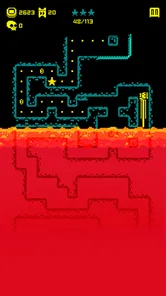
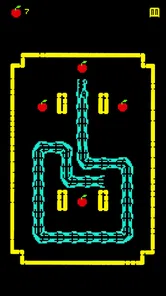
Tomb of the Mask: Old Maze is an arcade-style maze game built around quick movement, narrow corridors, and avoiding hazards. You guide a character through tomb-like stages, collecting items and finding a route through each maze. Its simple swipe-based controls make it easy to pick up, while the need to react quickly and choose a safe path gives the levels their challenge.
The controls are designed for touchscreens: swipe in the direction you want the character to travel, and the character moves along the maze until reaching an obstacle or another stopping point. This makes turns and timing important, especially when traps or enemies are nearby. If a swipe does not behave as expected, try shorter, clearer gestures and check the game’s opening tutorial for its exact control rules.
Some maze gameplay may be available without a continuous internet connection, but offline access can depend on the version, device, and any online features included in the current release. Ads, rewards, updates, or other connected features may require internet access. For the most reliable information, check the app-store listing and test the game after installation; do not assume every feature will work offline.
The price and monetization can vary by platform, region, and version. Before downloading, review the Google Play or App Store listing for the current price, advertising disclosures, and any in-app purchases. Free-to-download games may show ads or offer optional paid items, while purchase availability and policies can change. Check the payment details before confirming any transaction, particularly if a child will use the device.
The game’s maze-running premise is generally accessible, but suitability depends on the child and the content and monetization in the version available in your region. Review the store’s age rating, content description, privacy information, and details about ads or in-app purchases. Also check device compatibility and required permissions. Parents may want to use device-level purchase controls and supervise play if the game includes advertising or online features.
On Android, Tomb of the Mask: Old Maze asks for these permissions.
Tomb of the Mask: Old Maze is also available in 2 other languages on our site.
4.3 out of 5
2,497,427 reviews
Action · Playgendary Limited

Action4.3 out of 5

Action4.4 out of 5
Action4.6 out of 5

Action4.5 out of 5

Action3.9 out of 5

Action4.1 out of 5
Action4.1 out of 5
Action4.3 out of 5
Action4.3 out of 5
Action4.2 out of 5

Action4.8 out of 5

Action4.5 out of 5
Action4.3 out of 5
Action4.3 out of 5

Action4.7 out of 5

Action4.1 out of 5

Action4.2 out of 5

Action4.3 out of 5

Action4.7 out of 5
Action4.4 out of 5

Action4.6 out of 5



Gamesive reviews games on its own and is not paid by developers for scores. We do not host game files: the download buttons open the official Google Play and App Store pages. Names, icons and screenshots belong to their owners.