
Brawl Stars
Action4.2 out of 5
For Android & iOS · Playgendary Limited
 Analysis by Gamesive
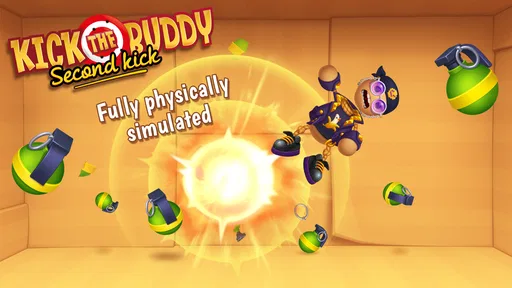
When I want a quick, silly break rather than a game that asks me to learn a map or follow a story, Kick the Buddy: Second Kick is easy to understand: there is a ragdoll puppet, a collection of ways to interact with it, and room to experiment with cartoon destruction. That simple premise is also the main decision point. I would recommend it to someone who enjoys playful physics and short bursts of undemanding action; I would steer a player seeking precise combat, a meaningful campaign, or a calm puzzle toward something else.
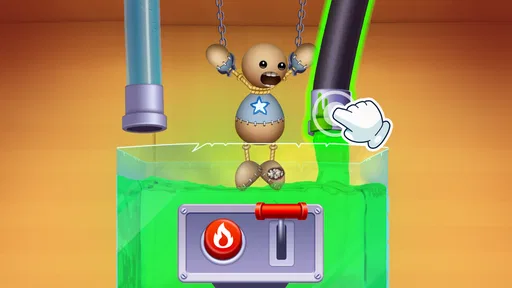
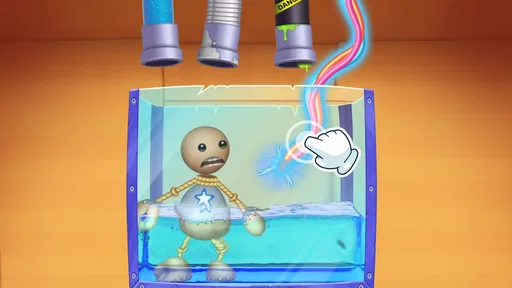
This is an action game from Playgendary Limited, built around tapping, dragging, and trying different ways to send a puppet tumbling. Its appeal is less about mastering a conventional fight and more about seeing how the character reacts when you change what you do. I find that makes it approachable even if I have only a few minutes: there is no complicated premise to remember before I can start playing.
The game is free to download, with optional in-app purchases listed from $0.99 to $84.99 per item. That range is worth keeping in mind before handing a device to a child or treating the game as a no-cost pastime. I would approach purchases as optional extras, not as a reason to install it. If you are comfortable trying the basic experience first and deciding later whether anything offered is worth paying for, the free entry point is straightforward.
There is an audience signal here, too: it has a 4.3 average from around 1.1 million ratings and over 100 million installs. Those figures suggest broad reach, but they do not tell me whether its humor or interaction style will suit a particular player. The more useful question is whether you enjoy repeatedly testing playful reactions without needing each session to build toward a larger goal.
The age rating is Teen, so I would not assume that the cartoon presentation makes it a fit for every young child. The central activity is intentionally about hitting and wrecking a puppet, even though the framing is comic rather than realistic. If you are choosing a game for someone else, consider both the age guidance and whether that kind of slapstick is welcome in your household.
Many action games ask me to aim accurately, track enemies, or react to incoming threats. Here, the puppet itself is the focus, so the pleasure comes from cause and effect: I try an interaction, watch the ragdoll respond, then choose whether to repeat it or switch approaches. That makes the game feel more like a digital stress toy than a traditional action challenge. It is a useful distinction, because someone expecting levels of escalating combat may find the open-ended play less satisfying.
One practical way to get more from it is to treat each short session as a small experiment. Instead of tapping randomly for a long stretch, I can choose one kind of interaction and notice how the puppet moves, then change one thing at a time. That gives the play a loose sense of purpose without pretending there is a deep strategy layer. It also helps avoid the feeling that every moment is simply the same action repeated.
The ragdoll setup is well suited to quick, low-commitment use: a brief pause between tasks, a few minutes on a commute when it is safe to use a phone, or a casual turn-taking moment with someone who likes slapstick. I would not choose it for a long session where I need sustained progression or a strong reason to return to a particular objective. Its strength is immediacy, not a long-form arc.
Compared with the usual action alternatives—games centered on combat stages, platforming, or competitive matches—this one puts less pressure on accuracy and performance. I do not need to prove I can beat another player or clear a demanding sequence to enjoy the core idea. For a player who finds conventional action games stressful, that softer, toy-like interaction can be a welcome change. For someone who wants responsive controls to translate into measurable skill, the absence of that kind of challenge may feel like a limitation rather than a benefit.
It also differs from simple physics sandboxes in emphasis. The puppet gives the interactions a clear target and a comic tone, so the activity is easier to grasp than an entirely open-ended simulation. The trade-off is that the concept can feel narrow once the novelty of trying different actions fades. I would choose a broader sandbox if I wanted to build, explore, or create a scene; I would choose this when I want the immediate payoff of watching a ragdoll react.
For a realistic everyday scenario, imagine waiting for a friend who is running late. A compact session can fill that gap without requiring me to remember a quest or coordinate with a team. But if I have only a minute and dislike ads, interruptions, or purchase prompts in free games, I would first check how the current version behaves on my device rather than assume every session will be uninterrupted. That is a sensible precaution for any free game with in-app purchases, especially when the phone is shared.
Because the game is free, the main cost decision is whether to buy optional items, not whether to pay before trying it. I recommend playing long enough to see whether the basic loop holds your attention before spending. A purchase is hard to justify if what you want is simply a quick laugh and you already get that from the available play. On the other hand, if you find yourself returning often and a particular item clearly improves your own use of the game, you can weigh that against the listed purchase range rather than buying on impulse.
For families, I would set expectations before installation: the action is deliberately rough in a cartoonish way, and purchases can be substantial. That does not automatically make the game unsuitable, but it does make supervision and purchase controls worth considering. The Teen rating is a more useful starting point than the bright, comic presentation alone. If a child is uncomfortable with slapstick violence, or if you want a game focused on cooperation and creativity, another category is likely a better match.
The current version is 1.14.1529, and the stated minimum operating system is Android 7.0. Those details matter when checking compatibility, especially on an older device. I would also make sure there is enough room and a reliable connection for the initial install through the app store, then judge performance on the phone or tablet I actually plan to use. A game that feels light in concept can still be a poor fit if it runs awkwardly on a particular device.
If I want a clear sense of advancement, a story to follow, or increasingly difficult encounters, I would pick a level-based action game instead. Those games give each session a more defined endpoint and a stronger reason to practice. If my goal is to unwind with something gentle, a puzzle or decorating game would be a better choice; this one is playful, but its humor depends on rough treatment of the puppet. And if I want to compete or collaborate, a multiplayer game is built around a kind of social interaction this solo toy-like premise does not provide.
The other reason to skip it is repetition. The core appeal depends on enjoying the same character reacting to different attempts. If that interaction stops being amusing, there may not be enough variation in the central idea to bring you back. I would not install it expecting a deep combat system or a constantly changing challenge. It is strongest when judged by the small pleasure of experimenting, not by standards meant for a campaign-driven action title.
Switching into this game is easy because the premise is immediately legible: interact with the puppet and see what happens. That low learning cost is one of its practical advantages over action games that require tutorials, loadouts, or time to understand their objectives. Switching away is just as easy if the repetition is not for you; there is no need to commit to a long series of missions before deciding. I would give it a short trial, notice whether I naturally want to test another interaction, and stop if the loop already feels stale.
That test also helps answer a common question: is it suitable for playing in tiny gaps? Yes, that is one of the situations where its straightforward setup makes sense. Is it a good substitute for a full action game? Not if you want demanding controls, structured goals, or a sense of progress. The right comparison is not “which game has more action,” but whether you want a playful ragdoll toy or a challenge with objectives.
My recommendation is simple: try it if comic ragdoll reactions sound entertaining and you value immediate, casual play more than depth. Skip it if you need a substantial campaign, dislike slapstick violence, or want a game whose appeal grows through skill and progression. With a 4.3 average, a large player base, a free download, and optional purchases, Kick the Buddy: Second Kick is easy to sample, but its best audience is quite specific: people who enjoy a quick, mischievous physics toy and are happy to leave when the joke has run its course.
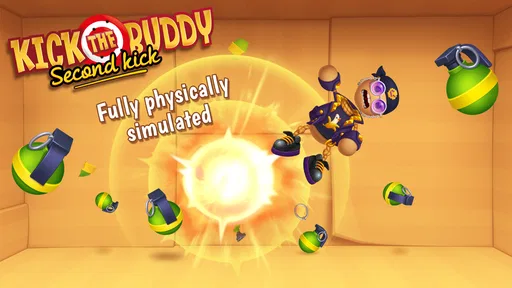
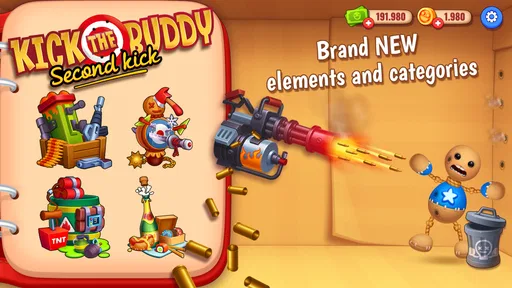
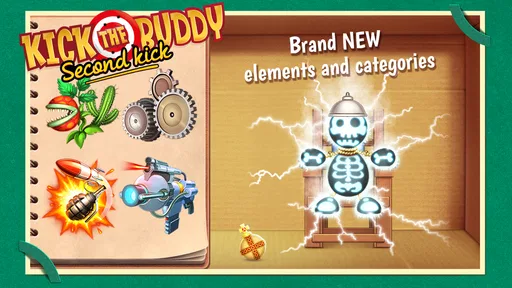
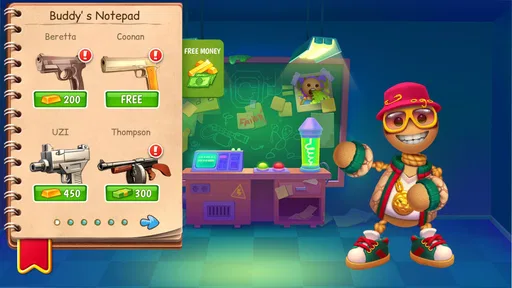
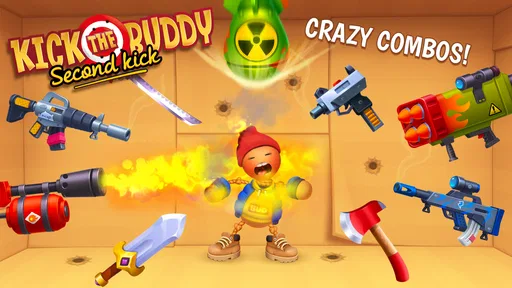
Kick the Buddy: Second Kick is a casual action game built around interacting with a ragdoll character named Buddy. Players can tap, drag, and use available weapons or other items to trigger exaggerated reactions and animations. The appeal is its quick, open-ended play rather than a story or complex objectives. Features and available items can vary by version, so check the current store listing for details before installing.
The game may be available as a free download, but that does not necessarily mean every feature is free. Games in this series can include optional purchases, advertisements, or content that becomes available through progression or payment. Check the Google Play Store or Apple App Store listing in your region for the current price and in-app purchase information. If a child will play, review purchase settings and parental controls first.
Some of the core interactions may work without a continuous internet connection, but offline availability can depend on the version and device. Advertising, store functions, updates, or other online features generally require connectivity, and the game may behave differently when network access is unavailable. If offline play matters to you, install the current version and test it in airplane mode before relying on it during travel.
The game uses cartoon-style violence in which players attack a ragdoll character with exaggerated effects. Although the presentation is fictional and comedic, parents may still want to decide whether that theme is appropriate for a particular child. Also review the store’s age rating, advertising disclosures, and purchase options, which can differ by platform and region. Use device-level parental controls if you want to limit purchases or access.
Confirm that the store listing matches the exact title, since similarly named Kick the Buddy games may be separate apps with different features. Check the supported operating system, required storage, recent update information, age rating, privacy details, and any in-app purchases. Download only through an official app store, and review recent user feedback for device-specific issues such as crashes, intrusive ads, or performance problems.
On Android, Kick the Buddy: Second Kick asks for these permissions.
Kick the Buddy: Second Kick is also available in 2 other languages on our site.
4.3 out of 5
1,125,105 reviews
Action · Playgendary Limited

Action4.3 out of 5

Action4.4 out of 5

Action4.6 out of 5

Action4.5 out of 5

Action3.9 out of 5

Action4.1 out of 5
Action4.1 out of 5
Action4.3 out of 5

Action4.3 out of 5
Action4.2 out of 5

Action4.8 out of 5
Action4.3 out of 5

Action4.5 out of 5
Action4.3 out of 5

Action4.7 out of 5

Action4.1 out of 5

Action4.2 out of 5

Action4.3 out of 5

Action4.7 out of 5
Action4.4 out of 5

Action4.6 out of 5



Gamesive reviews games on its own and is not paid by developers for scores. We do not host game files: the download buttons open the official Google Play and App Store pages. Names, icons and screenshots belong to their owners.