
Pure Sniper: Gun Shooter Games
Action4.8 out of 5

For Android & iOS · Innersloth LLC

 Analysis by Gamesive
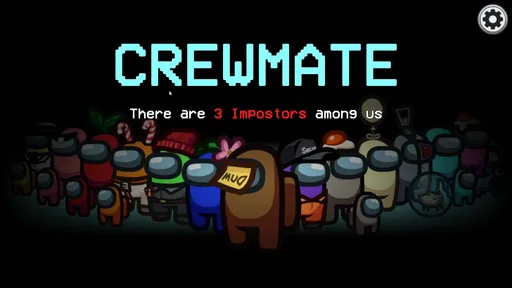
My best sessions with Among Us start with a simple plan: finish a few tasks, keep an eye on who moves where, and avoid treating every accusation as proof. This action game from Innersloth LLC turns a small group into crewmates trying to work together while one or more impostors try to undermine them. The rules are easy to grasp, but reading people well—and making yourself understood—takes practice.
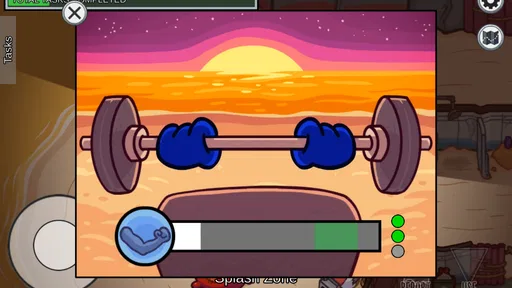
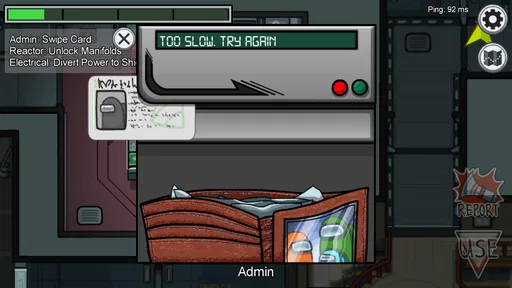
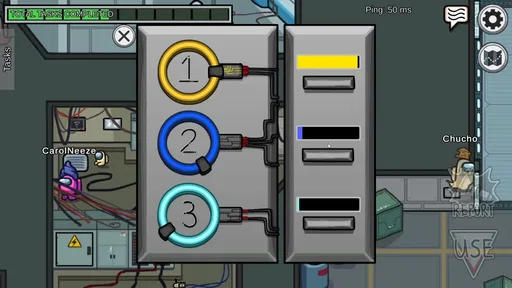
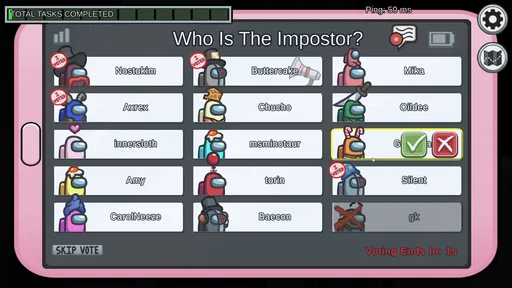
A typical round alternates between movement and discussion. As a crewmate, I move through the map completing assigned tasks and watch for behavior that seems out of place. If someone finds a body or calls a meeting, the pace changes: players share what they saw, question each other, and vote. An impostor has a different job, blending in and steering suspicion elsewhere.
That contrast is the game’s lasting hook. A task gives you something concrete to do, but it also asks you to notice the room around you. Did another player follow you without doing anything? Did someone’s explanation fit the route you remember? I’ve found that a useful account of where I went is often more convincing than a dramatic accusation.
The game is most enjoyable when everyone can take part in the conversation. Playing with friends makes it easier to build a shared vocabulary, but a group of strangers can be fun too if people communicate clearly and keep the discussion focused. If nobody speaks, or if players vote without listening, the social deduction side loses much of its appeal.
When I’m a crewmate, I try to work in short, sensible routes rather than wandering back and forth. I remember a couple of nearby places I visited and who was around, then update that mental picture as the round continues. This is more practical than trying to memorize every movement. After a meeting, I also treat the next stretch as a fresh check: earlier suspicions may be useful, but new behavior matters more.
There is a trade-off between finishing tasks efficiently and staying with other players. Going alone can make progress straightforward, but it can also leave you with less information if something happens. Sticking close to a group gives you witnesses and context, though it may make it harder to complete your own route. I vary that choice instead of following one rule every round.
As an impostor, consistency matters more than elaborate acting. I pay attention to the broad routes other players use and avoid giving an explanation that clashes with what the group has already seen. Long speeches can draw more questions than a brief, clear account. The strongest deception is often not a perfect story; it is a plausible one that does not demand attention.
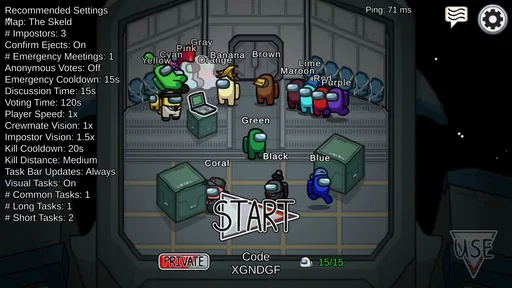
Before starting, it is worth checking the game settings rather than assuming every room will feel alike. The available choices can affect how quickly the round moves and how much room players have to reason through events. I recommend that a group agree on a comfortable pace, especially if some people are new. A setup that feels tense and exciting to veterans can leave beginners with too little time to understand what happened.
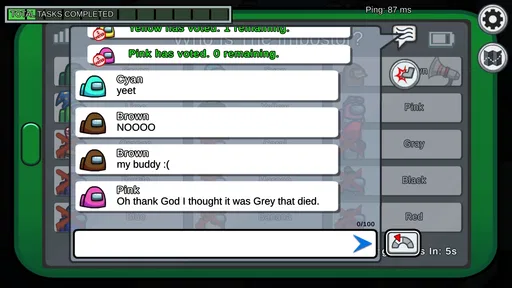
Communication is another practical consideration. If your group is using voice chat elsewhere, agree on when to talk so it does not drown out the meeting discussion or give away information at the wrong time. With text-based discussion, concise messages help: a location, a route, or a specific observation is more useful than a string of guesses. The best setup is the one your group can use consistently, not necessarily the one that makes each round fastest.
It also helps to decide how seriously everyone wants to play. Some friends enjoy carefully comparing routes; others prefer quick, unpredictable rounds. A shared expectation keeps disagreements about play style from becoming arguments outside the game. I would avoid changing several settings between rounds until the group knows what each change does to the overall feel.
A small memory habit pays off: after a notable encounter, keep one brief detail in mind, such as who was nearby or which direction someone went. You do not need a full detective’s notebook. A few concrete observations are easier to explain later and harder for the group to confuse with a hunch. When sharing them, separate what you saw from what you infer.
For example, “I saw someone leave that area” is different from “that player must be the impostor.” That distinction makes your account more credible and gives other players something they can compare with their own memories. It also prevents a common mistake: becoming so certain about an early guess that you ignore evidence that points elsewhere.
Meetings are short social puzzles, not just voting screens. I listen for whether a player answers the question asked, whether their route makes sense, and whether multiple people independently describe the same event. I do not treat hesitation as automatic guilt; new players may simply need time to explain themselves. A fair question usually produces better information than an aggressive accusation.
If you are eliminated or otherwise no longer directing the discussion, use the moment to notice how the group reached its decision. That can teach you which kinds of evidence people trust and where they tend to jump to conclusions. It is a useful way to improve without turning every loss into a debate about who played badly.
The core loop is excellent for short sessions: tasks create a reason to move, and meetings turn ordinary movement into evidence. The same map can feel different from one round to the next because players—not just objectives—shape the tension. Compared with action games built around continuous aiming or reflex challenges, this one places more weight on observation, timing, and conversation.
That strength is also its main limitation. If you want a solo campaign, a predictable challenge, or action that depends mostly on mechanical skill, this is not the best fit. The experience relies on having other people engaged. Quiet groups, players who leave mid-session, or discussions dominated by one person can make a round feel lopsided.
It can also be tough for someone who dislikes being suspected or having to speak under pressure. A mistaken vote is part of the game, but repeated, careless accusations can feel frustrating rather than funny. I suggest starting with people who are happy to explain their reasoning and accept that nobody can read every round perfectly.
Compared with other multiplayer action games, Among Us is less about mastering controls and more about learning how a group communicates. If you want quick combat and direct competition, a conventional action game is likely a better choice. If you enjoy bluffing, noticing inconsistencies, and changing your mind when new information appears, this offers a distinctly different kind of challenge.
I would recommend it to friends looking for a social game that can turn a casual get-together into a lively round of deduction. It can also suit players who enjoy replaying familiar rules with different people and testing how well they can explain what they observed. Those who mainly want a solitary game or dislike debate should probably look elsewhere.
It is free to download, with in-app purchases ranging from $0.99 to $24.99 per item. The content rating is Everyone 10+, so it is sensible for families to consider whether the social arguments and themes suit the players they have in mind. Innersloth LLC has kept the identity of the game clear: its appeal comes from teamwork, suspicion, and the uncertainty between the two.
The game has an average rating of 3.9 from around 14 million ratings, alongside roughly 530,000 written reviews and over 500 million installs. Those figures suggest a widely played title, but they do not guarantee that every group will enjoy its conversational style. I would judge it by whether your friends like sharing clues and laughing at a wrong guess.
The current version is 2026.11.3, and the minimum operating system listed for Android is version 8.0. It was released on June 15, 2018, yet the basic appeal remains easy to explain to a newcomer: move with purpose, notice what others do, and make a case when the group has to decide whom to trust. Before installing, I would check that your device meets the operating-system requirement and that the people you plan to play with are ready to communicate.
My advice for getting better is to build repeatable habits instead of trying to sound clever. Keep routes simple, remember a few concrete details, ask direct questions, and leave room to revise your theory. When playing as an impostor, avoid unnecessary complexity; when playing as a crewmate, do not confuse confidence with proof. These small choices make discussions clearer without relying on tricks or secret techniques.
Among Us is at its best when a group treats every round as a shared puzzle rather than a contest to shout the loudest. Its free entry makes it easy to try, and its familiar structure supports quick sessions, but the social side is essential. I would pick it for friends who enjoy deduction and playful mistrust—and skip it when I wanted a quiet, solo experience or dependable action without discussion.
Among Us is a multiplayer social deduction game in which players are assigned roles aboard a space-themed map. Most participants are Crewmates, who complete tasks and try to identify the Impostor or Impostors. Impostors secretly sabotage the group and eliminate Crewmates without being discovered. Matches include discussion and voting, so success depends on observation, communication, and making careful decisions.
Yes. You can create a private lobby and share its code with friends, or join a public match with other players. Among Us supports cross-platform multiplayer, allowing players on compatible mobile devices, consoles, and computers to play together. Everyone needs a compatible game version and an internet connection for online matches. Check the current store listing and in-game options for platform availability and account requirements.
The mobile version has generally been available as a free download, but monetization and availability can vary by platform, region, and store. The game may offer optional purchases such as cosmetic items, bundles, or other in-game content, and mobile editions may include advertising. Purchases are not necessary to understand the core social deduction gameplay. Review the store listing and purchase settings before downloading, especially if children use the device.
Among Us is primarily designed for online multiplayer, where players interact and discuss suspicions in real time. It also offers practice and other limited solo options that can help you explore maps, tasks, or controls, but these do not replace a full match with human players. You will generally need an internet connection to join online games. If you want to play with friends, make sure everyone can connect and coordinate a lobby.
Among Us uses cartoon-style visuals, but its gameplay involves characters being eliminated and players making accusations. Online matches can include communication with strangers, so parents should review the game’s current age rating, chat and safety settings, and account requirements for their region. Consider using private lobbies with people your child knows, supervising play, and setting device purchase controls. Features and moderation options can change with updates.
On Android, Among Us asks for these permissions.
Among Us is also available in 2 other languages on our site.
3.9 out of 5
13,679,436 reviews
Action · Innersloth LLC

Action4.3 out of 5

Action4.4 out of 5

Action4.6 out of 5

Action4.5 out of 5

Action4.1 out of 5

Action4.2 out of 5
Action4.8 out of 5

Action4.3 out of 5

Action4.5 out of 5

Action4.3 out of 5

Action4.3 out of 5

Action4.7 out of 5

Action4.1 out of 5

Action4.2 out of 5

Action4.3 out of 5

Action4.7 out of 5

Action4.4 out of 5

Action4.6 out of 5



Gamesive reviews games on its own and is not paid by developers for scores. We do not host game files: the download buttons open the official Google Play and App Store pages. Names, icons and screenshots belong to their owners.