
Bus Fever Party!
For Android · Lumi Games
- 4.1 out of 5Rating
- 55.27KReviews
- 10.00M+Downloads
- CasualGenre
Game details
- Version
- 1.2.9
- Updated
- Requires
- 8.0
- Price
- Free
- Age rating
- Everyone
- In-app purchases
- $1.99 - $99.99 per item
Screenshots

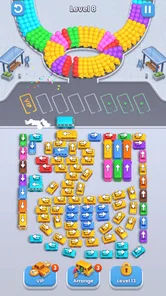
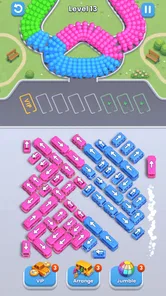
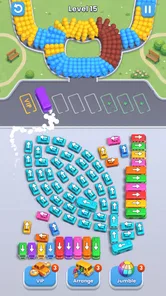

Bus Fever Party! review
 Analysis by Gamesive
I find Bus Fever Party! easiest to understand as a small traffic puzzle built around buses and a crowded parking area. The aim is to work out how to clear a jam and get a bus moving, so the appeal is less about racing and more about spotting a workable order. It is a casual game from Lumi Games, and that focused idea makes it approachable when I want a brief, low-pressure challenge rather than a long session.
What to expect from the bus-and-traffic puzzles
The central pleasure is looking at a blocked scene and figuring out which move will open space for another. That gives each puzzle a satisfying little planning problem: I need to pay attention to what is in the way, consider the order of actions, and avoid treating every obstacle as if it can be shifted independently. The bus theme gives the puzzle a clear goal, even for someone who has not played this kind of game before.
It is worth setting expectations before installing. This is not a driving simulator, a route-planning tool, or a deep management game. The store describes it as a bus game and traffic escape puzzle, and that is the right way to approach it: the focus is on clearing congestion, not steering through a realistic city. If you enjoy compact logic challenges, that narrow scope is a strength. If you want vehicle handling or a story-led campaign, you may find the premise too limited.
The game sits in the casual category, which suits its basic pick-up-and-play appeal. I would use it for a short break, a quiet moment between tasks, or a few puzzles while waiting somewhere. Its free price makes it easy to try, although in-app purchases range from $1.99 to $99.99 per item. I would treat optional spending as a separate decision rather than something necessary to judge whether the core puzzle idea suits me.
There is a substantial audience around it: the game has more than 10 million installs, around 55,000 ratings, and roughly 1,100 written reviews, with a 4.1 average rating. Those figures suggest that the simple bus-and-jam premise has found plenty of players, but they do not tell me whether I will enjoy its particular puzzles. My own test would be whether I like the first few problems enough to keep thinking through the next one.
Starting without overthinking the setup
For a first-time player, the best approach is uncomplicated: install the game, open it, and focus on the puzzle in front of you instead of trying to learn a larger system in advance. It is rated for Everyone and requires Android 8.0 or later. The current version is 1.2.9, and the game was released on April 23, 2025. Those details are useful when checking compatibility, especially on an older device.
I would begin by scanning the whole parking layout before making a move. Look for the bus that appears to be the immediate goal, then trace the vehicles or obstacles that prevent it from leaving. This simple pause is more useful than tapping quickly: in a traffic puzzle, one move can change what space is available, and a hasty action may make the next step harder to see. Treat the opening board like a small map, not a reflex test.
One practical habit is to separate the problem into two questions: what must move first, and where can it safely go? That prevents a common beginner mistake—spotting a blocker but not checking whether moving it actually creates useful room. If the first move does not help the bus escape or make a later move possible, reconsider the order. This kind of backward planning is a better starting method than trying random moves until something seems to work.
I would also give myself permission to stop and reassess. The game’s premise is about resolving a jam, so the important skill is reading the arrangement, not playing at speed. If a move produces no clear progress, take another look at the spaces that have opened and the ones that remain blocked. Even a small change in the layout may reveal a route that was not obvious at first glance.
The first meaningful win: clear a route, not just a space
A useful first success is not merely moving an object; it is understanding why that move matters. Before acting, identify the chain: the bus needs an exit, a nearby obstruction limits that exit, and another move may be needed to give the obstruction somewhere to go. When that chain becomes visible, the puzzle feels less like trial and error and more like a plan. That is the moment I would use to decide whether the game’s core loop clicks for me.
For example, imagine opening the game during a short wait before an appointment. Rather than tapping through the board in a hurry, I would spend a few seconds finding the bus’s path, move the piece that creates the most useful space, and then check the layout again. If I solve the jam, I get a neat sense of completion without needing to settle in for a long session. If I do not, I can still leave with a clearer idea of what the board is asking me to solve.
A second helpful tactic is to think about destination space before choosing a blocker to move. It is easy to focus only on the vehicle that is in the way, but a move is useful only if there is room for that vehicle to shift and the resulting opening supports the bus’s exit. This is a small distinction, yet it helps avoid aimless shuffling. In my view, the most satisfying solutions come from making one move serve two purposes: freeing a position now while preparing the next step.
The game’s short-description tagline, “Bus Fever Party!”, signals a playful presentation, but I would not confuse that with a promise of complex simulation. The lasting interest is in the arrangement of the jam and the sequence needed to resolve it. That makes the title more suitable for players who like visual puzzles than for people seeking detailed bus facts, realistic traffic behavior, or a broad collection of unrelated activities.
Where first-time players can get stuck
The main source of confusion is assuming that the most obvious blocker should always move first. In these puzzles, an object can be in the way without being the best first target. I recommend asking whether moving it creates a route, creates room for a more important move, or simply rearranges the same problem. If the answer is only “it gets out of the way,” check whether the new position will cause another obstruction.
Another trap is judging progress by how much the board changes. A large rearrangement can still leave the bus trapped, while a single carefully chosen move may open the right corridor. I would focus on access rather than activity: which space needs to become available, and what must happen immediately before that? This makes the puzzle easier to reason about and reduces the temptation to repeat moves without a plan.
It is also sensible to distinguish a momentary dead end from a genuinely difficult puzzle. If I cannot see a route, I would mentally reset the sequence by returning to the goal and working backward. That does not require memorizing a complicated system; it is just a way to make the next move deliberate. Players who prefer puzzles with explicit instructions at every stage may need patience while they learn to read the traffic layout for themselves.
Spending is another point to keep in perspective. The game is free to download, but it offers in-app purchases priced from $1.99 to $99.99 per item. Since those amounts span a wide range, I would avoid buying anything impulsively, particularly before I know whether I enjoy the puzzles over time. If a purchase prompt appears, pause and decide whether it solves a problem you genuinely have; the basic appeal should be clear from playing, not from spending.
Who will enjoy it, and what to choose instead
I would recommend Bus Fever Party! to someone who likes tidy, visual challenges and wants an easy-to-grasp goal. It is a good candidate for short sessions because a parking jam naturally gives each puzzle a clear beginning and an attempt at resolution. It may also suit a casual player who wants to practise sequencing and spatial reasoning without committing to a large game world or a lengthy story.
On the other hand, I would skip it if I mainly want to drive buses, navigate open roads, or build a transport network. Those experiences depend on control, exploration, or management, while this game is centered on freeing a bus from congestion. I would also look elsewhere if I strongly prefer games where every challenge introduces a new mechanic or where long-term progression is the main attraction; the confirmed premise here is a focused traffic-escape puzzle, not a promise of those broader systems.
Compared with the usual alternatives in casual gaming, this is more spatial and sequence-based than a simple tap-to-match game. Match-style puzzles often reward recognizing patterns and making quick combinations; here, I would expect to spend more attention on where things can move and what order unlocks the exit. Compared with a full logic puzzler, the bus theme makes the objective immediately legible, though players who want abstract, multi-step brainteasers may prefer a more demanding puzzle game.
One trade-off is that the same focused premise can be both its advantage and its limit. I like knowing what I am trying to accomplish, but someone who tires quickly of parking layouts may not get enough variety from the core idea. Before making it a regular game, try a few sessions and notice whether each board makes you rethink the order or whether you are already solving by rote. That is a better personal test than relying on popularity alone.
What I would do after the first clear
After getting a first puzzle right, I would not immediately speed up. I would take a moment to identify which move mattered most and whether I had chosen it deliberately or stumbled into it. That reflection turns a one-off success into a reusable method: check the exit, find the necessary space, and work backward through the blockers. It is a simple routine, but it makes later attempts feel more controlled.
If I am playing in short bursts, I would stop after a satisfying solve rather than pushing through when my attention is gone. Traffic layouts reward careful observation, and tired, rapid tapping is likely to make them feel more frustrating than they are. If I want a more active or varied session, I would switch to a different kind of casual game; if I want a compact problem that asks me to plan a sequence, this is the better fit.
Lumi Games has built a clear, approachable concept here, and the game’s broad reach and 4.1 average rating make it an easy one to consider, not an automatic recommendation for everyone. My advice is to try it for the puzzle itself: install it if the idea of opening a route through a bus jam sounds satisfying, use deliberate moves instead of rushing, and keep purchases optional. For a first-time player, the most reassuring sign of a good fit is simple: you look at a blocked board, see a possible chain of moves, and want to test it.
What we like
- Easy-to-learn controls make it approachable for casual players.
- Short rounds fit well into quick gaming sessions.
- Bright visuals make the busy roads easy to follow.
- Unlockable vehicles give players goals to work toward.
- Traffic puzzles reward planning and quick decisions.
What could be better
- Later levels can feel repetitive.
- Frequent hazards may make some stages frustrating.
- Progress can slow without regular play.
- Small road details can be hard to see on phones.
- The game may not appeal to players seeking deep strategy.
Frequently Asked Questions
What is Bus Fever Party!?
Bus Fever Party! is a casual mobile game centered on managing buses and transporting passengers. Players generally need to organize traffic, match buses with passengers, and clear crowded areas by making careful moves. Its appeal comes from simple rules paired with increasingly challenging levels, making it suitable for short play sessions. Exact features and gameplay details can vary by version, so check the store listing for the current description.
How do you play Bus Fever Party!?
The main challenge is to send the right buses to collect waiting passengers without blocking other vehicles or running out of available space. You tap or select buses and plan the order of moves, with each level testing your ability to manage congestion. Early stages are usually easier to understand, while later puzzles may require more careful planning. Read the on-screen instructions when a new mechanic appears.
Is Bus Fever Party! free to download and play?
The game may be available as a free download, but that does not necessarily mean every part of it is free. Mobile games commonly offer optional in-app purchases, such as items, hints, or other progress aids, and may also display advertisements. Availability and pricing can differ by country, device, and store version. Before installing, review the official Google Play or App Store page for current costs and purchase details.
Can I play Bus Fever Party! offline?
Whether Bus Fever Party! works without an internet connection can depend on the version and on which features you want to use. Core levels in many casual puzzle games may be playable offline after installation, while advertisements, purchases, cloud saves, or other online features can require a connection. If offline play matters to you, check the store description and test the game in airplane mode before relying on it during travel.
Is Bus Fever Party! suitable for children, and what should I check before downloading?
The traffic-and-passenger puzzle concept may be accessible to a broad range of players, but suitability depends on the game's age rating, advertising, and purchase options. Parents should check the current rating and privacy information on the relevant app store, then review whether the game includes ads, in-app purchases, or online features. It is also sensible to use device-level purchase controls and parental settings where appropriate.
Permissions
On Android, Bus Fever Party! asks for these permissions.
- Wi-Fi connection information
- view Wi-Fi connections
- Other
- view network connections, full network access, control vibration, prevent device from sleeping, Google Play license check
Languages
Bus Fever Party! is also available in 2 other languages on our site.
User reviews
4.1 out of 5
55,265 reviews
- 67%
- 10%
- 6%
- 3%
- 14%
Download Bus Fever Party!
Casual · Lumi Games · Free
Games like Bus Fever Party!
View all: Games like Bus Fever Party!
Township
Casual4.7 out of 5

Royal Smash! - Physics Puzzle
Casual4.6 out of 5

MemeMix Challenge: Funny Party
Casual4.3 out of 5
About this listing
- Game
- Bus Fever Party!
- Developer
- Lumi Games
- Package
- gridplus.busjam.carpuzzle
- Version reviewed
- 1.2.9
Gamesive reviews games on its own and is not paid by developers for scores. We do not host game files: the download buttons open the official Google Play and App Store pages. Names, icons and screenshots belong to their owners.