
Keyboard Escape: +1 Speed ASMR
For Android · Goldoint
- 3.4 out of 5Rating
- 3.42KReviews
- 5.00M+Downloads
- SimulationGenre
Game details
- Version
- 0.1.1
- Updated
- Requires
- 8.1
- Price
- Free
- Age rating
- Everyone
- In-app purchases
- No
Screenshots
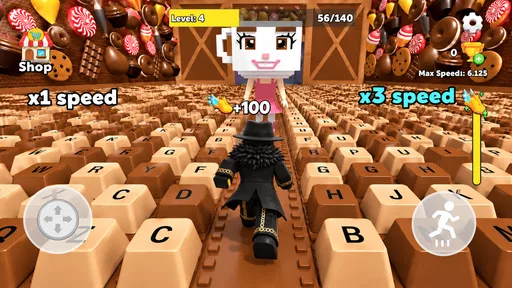
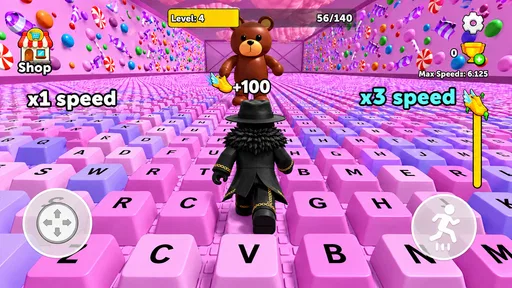
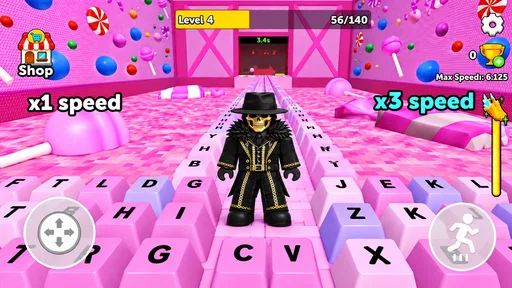
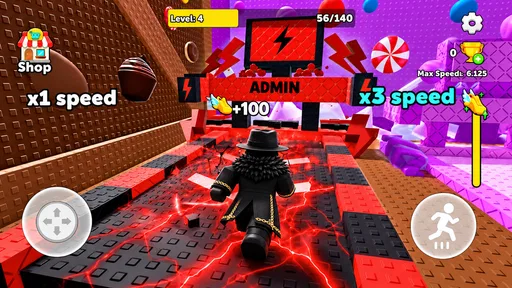
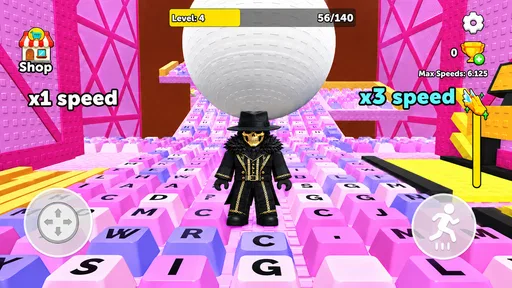
Keyboard Escape: +1 Speed ASMR review
 Analysis by Gamesive
I can see the appeal of Keyboard Escape: +1 Speed ASMR straight away: it turns the familiar tap-and-dodge rhythm of a small arcade game into a run built around keyboard sounds and gradually increasing speed. It is a simulation game in the broad mobile sense, though its real draw is quick, reflex-led play rather than managing a detailed world. I’d treat it as a compact distraction, not a game that promises a deep routine or a long campaign.
Why the first sessions work
The basic idea is easy to grasp: keep moving, avoid what gets in the way, and build speed as you go. That simplicity makes the game approachable when I have only a moment to spare. There is little conceptual overhead before the central challenge becomes clear: the faster the run feels, the more carefully I need to react.
The keyboard theme gives the action a specific character. The ASMR angle suggests that the sounds are part of the pleasure, not merely background decoration, and that can make a short run feel more tactile than a generic obstacle course. I would try it with sound on first, then decide whether the audio adds to the rhythm or becomes distracting. A game built around satisfying effects loses some of its personality if played permanently muted.
That sensory hook is also what may make the first few sessions unusually engaging. A familiar action becomes more distinctive when each movement is paired with crisp keyboard-style feedback. The pleasure is immediate, but it depends on enjoying that sound-and-motion combination; players who want a story, characters, or a more elaborate simulation should look elsewhere.
A useful game for small gaps
I can picture opening it while waiting for a coffee or taking a short break between tasks. The premise does not demand a long explanation, so it suits a quick check-in better than a game that requires remembering objectives or returning to a complicated setup. That makes it easy to test whether the core loop fits my mood without committing an evening to it.
For a first-week trial, I’d pay attention to how the speed changes affect my decisions rather than chasing an ideal run immediately. When the pace picks up, reacting early is usually more useful than making a last-second correction. If I find myself tapping frantically, I’d pause and reset my focus instead of treating every stumble as a reason to play longer. That small adjustment can keep a reflex game fun instead of turning it into a test of irritation.
Keyboard Escape is free, and its Everyone age rating makes it broadly approachable. Goldoint is the developer, and the game is at version 0.1.1. Those details are worth knowing, but they don’t tell me whether I’ll enjoy the central loop; the best test is whether the keyboard sound and escalating pace feel satisfying after the novelty of the theme has passed.
What might keep it interesting over time
The recurring appeal has to come from the moment-to-moment challenge. A speed-building run naturally gives me a reason to try again: I can focus on cleaner dodges, steadier timing, or simply staying composed as the action gets quicker. That is a different kind of motivation from unlocking a story chapter or building a collection. If I like improving a small skill through repetition, the loop may have staying power.
On the other hand, the store’s description gives the game a very focused identity, and that focus can cut both ways. It is easy to understand what I’m getting, but a single central idea has to carry repeated sessions. I wouldn’t assume that a short, satisfying run automatically develops into months of fresh goals. If I need varied modes, a campaign, or a larger set of systems to stay engaged, a broader arcade game will probably serve me better.
The wider reception gives a prospective player a little context without settling the question. The game has a 3.4 average from around 3,400 ratings, and it has passed five million installs. I read those figures as a reason to approach it with measured expectations: many people have tried it, but the modest average suggests the experience may not click for everyone. The count of written reviews is 27, so I would judge it by the actual play style rather than treating popularity as a guarantee.
Compared with a typical endless runner, the pitch here is less about a richly presented world and more about quick movement, avoidance, speed, and audio texture. That could be a welcome change if I’m tired of runners that rely on elaborate scenery or layers of progression. Conversely, a runner with more varied routes and goals is a stronger choice if I want each session to feel meaningfully different.
Keeping the habit enjoyable
For a game like this, the maintenance burden is mostly about managing my own attention. I would keep sessions short and decide what I want from each one: a few minutes of sound-led relaxation, or a deliberate attempt to improve my reactions. Mixing those intentions can help. When I’m tired, I can enjoy the sensory side without expecting a personal best; when I’m alert, I can focus more closely on timing.
One practical trade-off is sound. The ASMR presentation is a defining part of the concept, but it may not suit every place I play. In a quiet waiting room or beside someone sleeping, I’d use headphones at a considerate volume or mute the game if that’s more appropriate. If the audio is the main reason the game feels distinctive, though, playing without it may make the experience less compelling. That makes the setting a real part of deciding when to open it.
Another useful habit is to stop when the pace stops feeling entertaining. Speed-based play can encourage the “one more run” impulse, especially when a near miss makes a better attempt seem just within reach. I’d set a natural stopping point before I start, such as ending after a brief break or when concentration slips. This is not a warning that the game is unusually demanding; it is simply a sensible way to keep a small reflex game from swallowing more time than I intended.
The game is listed for a minimum OS version of 8.1. That gives readers a straightforward compatibility check before installing: if a device does not meet that requirement, it is not the right fit. If it does, the more important question is whether the device and play environment let the sounds and quick reactions feel comfortable.
Where repetition can wear thin
The same simplicity that makes the game easy to pick up can also make repeated sessions feel familiar quickly. Dodging and gaining speed are clear hooks, but players who need a steady stream of new mechanics may notice the narrow focus sooner than casual players. I would not choose it as my main game if I were looking for a long-form progression system or a simulation with several activities to manage.
There is also a tension between relaxation and difficulty. ASMR-style keyboard sounds can feel calming, while rising speed asks for sharper attention. If I’m using the game to unwind after a draining day, that acceleration may eventually work against the mood I wanted. A slower puzzle game or a gentle creative app would be a better choice for someone who wants calm without reflex pressure.
That distinction matters when deciding whether to keep it installed. A game can be enjoyable in small doses without becoming a daily habit. If I only reach for it when I want a brief, focused burst, that is still a valid use; I just wouldn’t mistake occasional enjoyment for evidence that it needs a permanent place on my home screen.
Who should give it a try
I’d recommend it to someone who likes fast, uncomplicated challenges and is curious about an audio-led twist on the usual dodge-and-run format. It is especially suited to players who want a quick activity that does not require learning a large set of rules. The free price also makes trying that specific concept a low-commitment decision, though personal taste in sound and repetition will matter more than the price.
I’d skip it if my priority were deep simulation, substantial strategic choices, or a varied collection of activities. I’d also look for a different option if keyboard-style sound effects are more irritating than pleasing, or if I prefer to play without audio and want the sound design to be incidental. For those players, a more traditional arcade runner or a slower management game is likely to provide a better fit.
Does it earn a lasting spot?
My verdict is that Keyboard Escape: +1 Speed ASMR earns a place as an occasional pocket-sized diversion, not automatically as a long-term mainstay. Its strongest case is the combination of immediate controls, escalating pace, and a distinctive keyboard-focused sound identity. Its main risk is that the same narrow loop may feel repetitive once that first sensory novelty fades.
I’d install it if I wanted short reflex sessions and was genuinely interested in the audio, then check after a week whether I still open it for the challenge rather than only because the idea initially sounded unusual. If it remains a pleasant way to fill a brief gap, keep it. If I’m forcing another run in hope that the game will reveal a deeper layer, I’d move on without guilt. With an Aug 13, 2026 release date, it is still an early-stage version of a focused concept, so I would approach version 0.1.1 as a concise experience and let the play itself decide whether it becomes a habit.
What we like
- Quick rounds make it easy to play during short breaks.
- Simple controls are easy for new players to understand.
- Speed boosts add a satisfying sense of momentum.
- ASMR-style sounds enhance the escape experience.
- The game offers a casual challenge focused on quick reactions.
What could be better
- The gameplay may feel repetitive after extended sessions.
- Fast movement can make precise control difficult.
- The ASMR audio may not appeal to every player.
- Progress may depend heavily on repeated attempts.
- The experience offers limited depth for players seeking strategy.
Frequently Asked Questions
What is Keyboard Escape: +1 Speed ASMR?
Keyboard Escape: +1 Speed ASMR is a casual mobile game built around escaping keyboard-themed obstacles and increasing your speed as you progress. Its concept combines simple, quick-to-understand gameplay with the appeal of ASMR-style keyboard sounds. The exact levels, controls, and features may vary between versions, so check the current store listing and screenshots to confirm what is available on your device.
How do you play Keyboard Escape: +1 Speed ASMR?
The game is designed for short sessions and straightforward interaction: you guide your character or movement through keyboard-inspired challenges, aiming to avoid obstacles and reach the end of a level. The “+1 Speed” theme suggests that speed increases are part of the progression, but the specific controls and upgrade mechanics can differ by release. Review the in-game tutorial when you start, and use the store screenshots to check the gameplay style before downloading.
Is Keyboard Escape: +1 Speed ASMR suitable for children?
Its simple arcade-style premise may be approachable for younger players, but suitability depends on the version’s content, advertising, and privacy practices. Before letting a child play, check the age rating, developer information, and data-safety details on the relevant app store. Also consider whether the game includes ads, optional purchases, or links to external content, and use your device’s parental controls if you want to restrict spending or screen time.
Does Keyboard Escape: +1 Speed ASMR work offline, and does it contain ads or in-app purchases?
Offline availability, advertising, and in-app purchases can change by platform, region, and app update, so they should be verified on the current Google Play or Apple App Store listing. Some casual games allow their main levels to be played without an internet connection but still require connectivity for ads or other features. Check the store page and the game’s settings before playing if you want to avoid unexpected data use or spending.
Which devices support Keyboard Escape: +1 Speed ASMR, and how can I download it safely?
Support depends on the publisher’s current release and your device’s operating-system version. Search for Keyboard Escape: +1 Speed ASMR directly in Google Play or the Apple App Store, confirm the developer name, compatibility requirements, and recent update details, then install it from the official listing. Avoid unofficial download files, which may be outdated or unsafe. If the game does not appear in your store, it may not be available for your device or region.
Permissions
On Android, Keyboard Escape: +1 Speed ASMR asks for these permissions.
- Wi-Fi connection information
- view Wi-Fi connections
- Other
- view network connections, full network access, control vibration, prevent device from sleeping, Google Play license check
Languages
Keyboard Escape: +1 Speed ASMR is also available in 2 other languages on our site.
User reviews
3.4 out of 5
3,424 reviews
- 50%
- 8%
- 5%
- 6%
- 31%
Download Keyboard Escape: +1 Speed ASMR
Simulation · Goldoint · Free
Games like Keyboard Escape: +1 Speed ASMR
View all: Games like Keyboard Escape: +1 Speed ASMR
Kick & Break The Ragdoll Games
Simulation4.6 out of 5

Melon Sandbox
Simulation4.7 out of 5

Annoying Uncle Punch Game®
Simulation4.5 out of 5

Solar Smash
Simulation4.6 out of 5
About this listing
- Game
- Keyboard Escape: +1 Speed ASMR
- Developer
- Goldoint
- Package
- com.metax.obby.escape.run
- Version reviewed
- 0.1.1
Gamesive reviews games on its own and is not paid by developers for scores. We do not host game files: the download buttons open the official Google Play and App Store pages. Names, icons and screenshots belong to their owners.