Epic Race 3D – Parkour Game
Racing4.5 out of 5
For Android & iOS · Fingersoft
 Analysis by Gamesive
I keep returning to Hill Climb Racing because it turns a simple question—how far can I get without flipping?—into a surprisingly absorbing little challenge. It is a racing game, but it feels less like competing on a conventional track and more like managing a vehicle across uneven ground. The controls are easy to grasp; the skill comes from knowing when to accelerate, when to ease off, and how to land without turning a promising run into a crash.
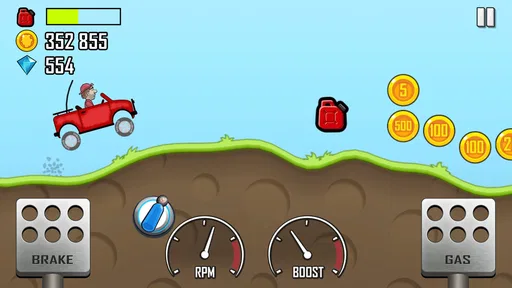
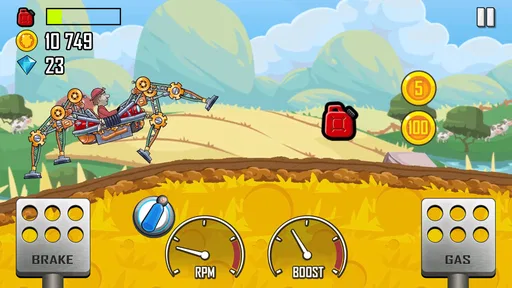
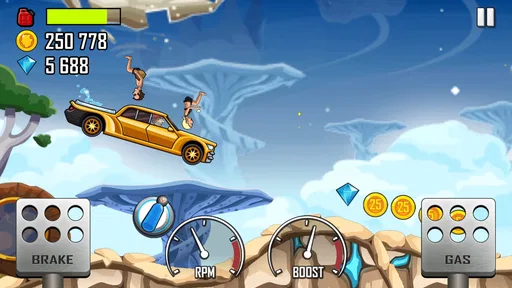
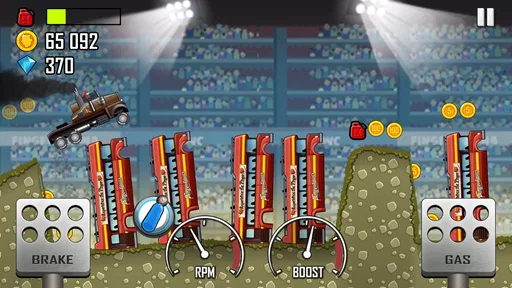
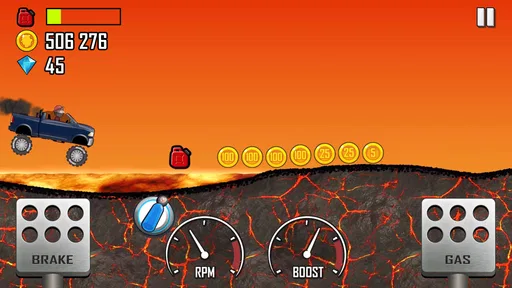
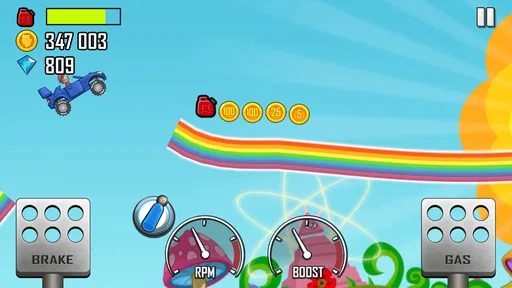
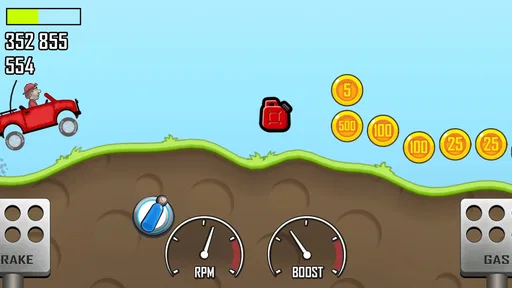
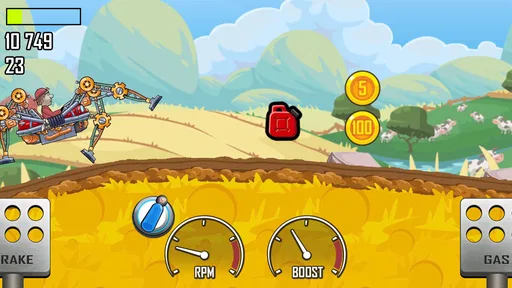
At a glance, the game’s art is cheerful and uncomplicated. Vehicles and drivers have an expressive, cartoon-like look, while the landscapes are built around slopes and obstacles rather than elaborate scenery. That simplicity works in its favor: I can read the shape of the road quickly, which matters when a hill crest or dip can upset the vehicle in a moment.
The setting is not trying to tell a detailed story. Instead, each stretch of terrain gives the driving a different feel. The road’s profile is the main character: steep climbs demand power, sudden drops test balance, and rough surfaces make a smooth approach more useful than blindly holding the accelerator. This keeps the scenery tied to play rather than treating it as decoration.
That visual clarity is particularly helpful on a small screen. I can focus on the vehicle’s angle and the next change in terrain without needing to decipher busy backgrounds. The trade-off is that anyone looking for realistic scenery, dramatic cinematic presentation, or a strong narrative may find the world plain. Its charm is in being legible and playful, not in looking like a serious motorsport broadcast.
Because the driver, vehicle, and terrain are easy to distinguish, failure feels understandable. If I land badly, I can usually connect the mistake to the jump or slope I just handled, then try a more controlled approach. Readable terrain makes each retry feel like a driving lesson, rather than a random punishment.
Fingersoft has kept the central idea recognizable since the game’s release on September 22, 2012. It has grown into a familiar mobile racer, with over a billion installs and an average rating of 4.3 from around 11 million ratings. Those figures suggest broad appeal, but they do not guarantee that its deliberately simple presentation will suit every player.
The soundscape serves the action rather than competing with it. Engine noise and the effects of movement help make acceleration and rough landings feel immediate, while the overall presentation stays light. I like that the audio does not make every run feel like a high-pressure race; a failed attempt can be amusing, and restarting does not feel like returning to a dramatic set piece.
That modest tone also suits short sessions. I can play a few runs while waiting for something, stop, and come back without needing to remember a plot or a long sequence of events. If I prefer playing with sound off, the visual motion still communicates the essentials, though audio adds a bit of feedback to the engine and the bumps.
The rhythm comes mostly from the terrain and the player’s decisions. A run alternates between pushing uphill, managing a descent, and reacting to the next uneven patch. That creates a pleasant stop-start tension: a little burst of speed can help clear a rise, but carrying too much momentum into a landing can leave the vehicle in trouble. The game’s mood is light, yet the driving still rewards attention.
The controls are straightforward, which is one reason I find the game easy to recommend for casual play. The challenge is not memorizing a complicated button layout. It is learning how your chosen vehicle responds and adjusting your inputs to suit the terrain. For me, the satisfying part is gradually replacing frantic corrections with deliberate taps and better timing.
Upgrading vehicles gives the runs a longer-term purpose. Rather than treating every failure as a sign that I should simply press harder, I can think about whether a vehicle needs improvement and whether my driving is wasting the performance I already have. A useful habit is to change one thing at a time: make a run, notice where control breaks down, then see whether a different upgrade or a gentler approach helps. That makes progress easier to understand than changing several things between attempts.
There is a trade-off here. Progress can make repeated runs more satisfying, but players who dislike upgrading as part of a racing game may find the loop less appealing than a track racer with fixed cars and direct head-to-head competition. Hill Climb Racing is about improving a run and the vehicle behind it; it is not the best pick if your main goal is precise circuit racing, realistic handling, or a strong sense of competition against other drivers.
It is free to download, with in-app purchases ranging from $0.09 to $134.99 per item, and the store summary notes that purchases can include random items. I would treat spending as optional rather than necessary to enjoy a quick session. If you are sensitive to random-item purchases or prefer games with no purchase prompts, that is worth considering before you start. The listed content rating is Everyone, which fits its light, cartoonish presentation.
One small but useful adjustment is to stop treating the accelerator as an on-off switch. On an uneven slope, short controlled inputs can keep the vehicle’s nose from rising too sharply, while easing off before a landing can help avoid carrying unnecessary speed into the next dip. The right response depends on the vehicle and terrain, but watching the vehicle’s angle is more useful than trying to maintain maximum speed throughout.
Another good approach is to separate a driving problem from an upgrade problem. If a run ends because I repeatedly misjudge a crest, I first try changing my timing. If the same obstacle remains a consistent bottleneck despite cleaner inputs, it may be time to revisit vehicle upgrades. That distinction can save time and make the game feel less like a grind.
It also suits a very ordinary use case: a few minutes between errands or during a short break. Each run gives me a clear goal, and I can stop after one attempt without losing track of a story. On the other hand, someone wanting a long, uninterrupted campaign with detailed objectives may find that this compact retry rhythm feels repetitive rather than relaxing.
Compared with the usual mobile racing game built around laps, lanes, or direct races, this one puts much more weight on terrain and balance. There is no need to master a circuit before the fun begins; the hill itself creates the problem. That makes it easier to pick up than a simulation-style racer, but it also means it offers a different kind of satisfaction: less about perfect cornering and more about getting a vehicle over rough ground without losing control.
If I wanted realistic cars, competitive racing, or detailed track layouts, I would choose another kind of game. If I wanted a quick, approachable challenge where a tiny adjustment can change the outcome, this is a stronger fit. It is also a better match for players who enjoy retrying a short section and learning its shape than for those who quickly tire of repeating a familiar route.
The current version is 1.73.3, and the minimum operating-system requirement is 7.0. I would still check compatibility in the app store before installing, especially on an older device. The game’s uncomplicated visual style is part of its appeal, but the best reason to try it is the driving loop itself, not a promise of elaborate presentation.
I would suggest it to anyone who likes accessible games with a little physics-driven trial and error, especially if they want something that works in short bursts. It is also a good choice for players who enjoy seeing a small improvement turn a frustrating hill into a manageable one. The combination of readable scenery, comic mishaps, and vehicle upgrades gives each attempt a clear purpose without asking for a large time commitment.
I would steer away from it if you need realistic racing, deep story content, or a consistently fresh challenge without repeating runs. It may also frustrate players who prefer to make progress solely through racing skill and do not enjoy upgrades or optional in-app purchases. Knowing that distinction matters: the game’s simplicity is both its strength and the reason it can feel limited.
What stays with me is how well the art, sound, and pacing support the same idea. The bright presentation makes crashes feel playful; the uncomplicated sound keeps the focus on movement; and the short-run rhythm encourages another attempt without demanding a long session. Under that easygoing surface, good timing and restraint matter more than brute force.
My recommendation is straightforward: try Hill Climb Racing if you want a free, approachable mobile racer built around hills, vehicle control, and gradual improvement. Its enormous audience and long life are understandable, but the game is not magic for everyone; repetition and upgrade-focused progress will be deal-breakers for some. For me, though, it is a satisfying little diversion when I want a clear challenge, a quick restart, and the pleasure of finally cresting a hill cleanly.
Hill Climb Racing is a physics-based driving game in which you guide a vehicle across uneven tracks, hills, and other obstacles. Your goal is to travel as far as possible without flipping over or running out of fuel. Collect coins during each run, then use them to improve vehicles or unlock new options. Its simple controls are easy to learn, though balancing speed and stability takes practice.
Hill Climb Racing is generally available as a free-to-download game, and you can play its core driving challenges without paying. The game may offer optional in-app purchases, such as currency or other items, and advertisements may appear depending on the version and platform. Check the current store listing for pricing, available purchases, and regional details before downloading, and use device-level purchase controls if you want to prevent accidental spending.
Many of Hill Climb Racing’s central driving runs can be played without an active internet connection, which makes it suitable for short sessions while traveling or when Wi-Fi is unavailable. However, online features, advertisements, store functions, or certain updates may require connectivity, and availability can vary by version. If offline play matters to you, install the game and test it in airplane mode before relying on it during a trip.
Hill Climb Racing is offered for Android and iOS, but compatibility depends on your device and the game’s current store requirements. Before downloading, check the listing for the minimum operating-system version, available storage, and any other requirements shown for your phone or tablet. Keeping the operating system and app updated can help with performance, while older devices may experience slower loading or less smooth gameplay.
Hill Climb Racing has straightforward controls and cartoon-style driving, but parents should still review the current age rating and store details for their region. The app may include advertising and optional in-app purchases, so the experience can differ from a completely ad-free game. Before giving a child access, check the listing’s privacy information and purchase options, and consider enabling parental controls or requiring approval for payments.
On Android, Hill Climb Racing asks for these permissions.
Hill Climb Racing is also available in 2 other languages on our site.
4.3 out of 5
10,540,669 reviews
Racing · Fingersoft

Racing4.6 out of 5

Racing4.3 out of 5
Racing4.5 out of 5

Racing4.6 out of 5
Racing4.5 out of 5
Racing4.5 out of 5
Racing4.5 out of 5
Racing4.5 out of 5

Racing4.6 out of 5
Racing4.6 out of 5

Racing4.3 out of 5

Racing4.4 out of 5
Racing4.5 out of 5
Racing4.2 out of 5
Racing4.5 out of 5
Racing4.6 out of 5

Racing4.6 out of 5

Racing4.4 out of 5
Racing4.6 out of 5



Gamesive reviews games on its own and is not paid by developers for scores. We do not host game files: the download buttons open the official Google Play and App Store pages. Names, icons and screenshots belong to their owners.