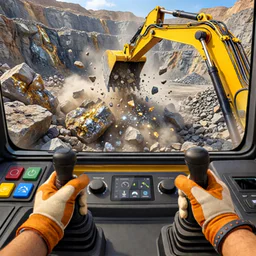
Bulldozer Master: Crush & Mine
For Android · Supercent, Inc.
- 4.4 out of 5Rating
- 151.98KReviews
- 5.00M+Downloads
- ArcadeGenre
Game details
- Version
- 11.2.0
- Updated
- Requires
- 6.0
- Price
- Free
- Age rating
- Everyone
- In-app purchases
- $0.49 - $99.99 per item
Screenshots
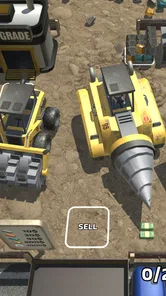
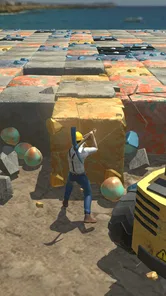
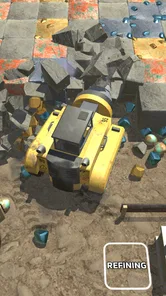
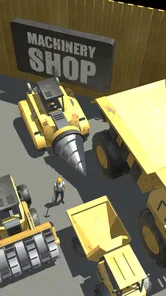
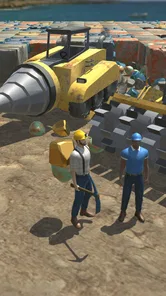
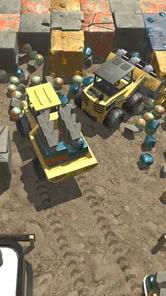
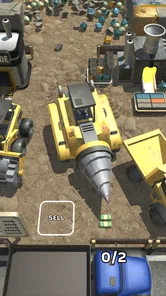
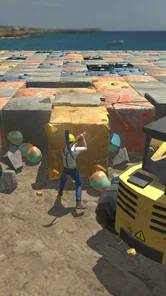
Bulldozer Master: Crush & Mine review
 Analysis by Gamesive
I like arcade games that make their central action clear within moments, and Bulldozer Master: Crush & Mine builds its appeal around exactly that kind of physical task: using a bulldozer to tear through material and work toward a gold-mining business. The hook is easy to understand, but the more useful question is whether crushing things stays satisfying after the first few minutes. In my view, it works best as a casual, stop-and-start game for people who enjoy watching a small operation grow, rather than as a deep construction simulator or a demanding action challenge.
From the first push to a growing mine
The opening idea is pleasingly direct: take control of heavy machinery, demolish obstacles, and turn that work into progress for a mining enterprise. That gives each run a simple purpose. You are not just driving a bulldozer around for its own sake; destruction is the hands-on part of a broader idle-tycoon premise. The contrast between forceful machine work and gradual business growth is the game’s defining flavor.
That combination also sets expectations. This is an arcade game, so I would approach it as a compact loop of action and progression, not as a realistic vehicle simulator. If you want careful engineering, detailed planning, or a large world to explore, the basic premise may feel too narrow. If you want a clear task that can be picked up without a long tutorial or a complicated story, the premise is a better fit.
Supercent, Inc. developed the game, and its presentation is aimed at a broad audience: it carries an Everyone age rating. I would be comfortable suggesting it to someone looking for light, non-intense play, though that does not mean every player will find the progression equally engaging. The appeal depends on whether the satisfaction of clearing material and building toward the next step is enough to keep you curious.
The first action is the point
The bulldozer is the natural entry point. The immediate pleasure comes from making contact with something and seeing it give way, a simple cause-and-effect exchange that is easy to grasp. I find that sort of feedback useful in a casual game: I do not have to remember a long chain of controls before I can understand what I am trying to accomplish. The machine gives the task a physical identity, while the mine-tycoon framing gives the destruction a reason.
One practical way to get more from the opening is to treat each stretch of demolition as a short work cycle. Focus on what the current area is asking you to clear, then look at what that work enables before rushing onward. In games built around repeated destruction, it is easy to tune out and tap or steer without noticing how the business side connects to the action. Pausing briefly to read the progression cues helps the bulldozer feel like a tool in an operation, not just a moving object.
The main trade-off is that a simple action can become repetitive if you expect every encounter to demand a new technique. The premise promises a satisfying rhythm more than a changing set of tactical problems. I would not pick it for a quick burst of reflex competition, and anyone who wants every level to introduce a fresh puzzle may want a more varied arcade game. Its strength is instead the low barrier to re-entry: returning after a break should not require relearning a complicated system.
Feedback, momentum, and the value of small rewards
The loop is easiest to enjoy when I pay attention to the sequence: act with the bulldozer, see the demolition, receive progress, then decide whether to continue or let the business side carry some of the appeal. The visible result of the action is important because it makes an otherwise repetitive task feel productive. The tycoon framing gives that productivity a longer horizon than simply clearing one object and moving on.
That is also where expectations matter. “Idle” in the game’s premise suggests a progression fantasy that is not limited to hands-on bulldozer time, but I would not treat it as a promise that every part of the game advances exactly as I want without attention. When I return, the useful question is whether there is a meaningful next action to take, not whether the game can replace active play altogether. Players who enjoy checking in, making a little progress, and leaving again are more likely to appreciate this rhythm than people who want uninterrupted, high-intensity play.
A helpful habit is to avoid spending rewards automatically just because a new improvement is available. First consider what currently slows you down: the work of clearing, the pace of progression, or simply the desire to reach the next milestone. Choosing upgrades in response to the actual bottleneck can make a small amount of progress feel more deliberate. I am not claiming a hidden optimization system; it is a practical way to keep an incremental game from becoming a sequence of unconsidered taps.
Another useful check is to stop after a clear point of progress rather than playing until the action feels stale. That preserves the pleasure of the next return. Since the central appeal is repetition with growth, sessions can lose their charm if I keep doing the same task after I have stopped noticing the results. For a short break, that is not a serious flaw; it is a reason to treat the game as a snack rather than an evening-long campaign.
What makes the next session tempting
The reward structure is most convincing when a bulldozer action contributes to something larger than the immediate clearing. A small task then has two layers: the physical payoff of breaking through material and the longer-term sense of expanding a gold-mining operation. That relationship is the reason I would return after closing the game. I want to see what the previous work has made possible and whether the next stretch changes the pace of the operation.
For everyday use, I can imagine opening it during a short wait, clearing a manageable section, checking the resulting progress, and putting the phone away. That is a better fit than launching it when I want a story-driven game or a session that demands full concentration. If you have a few spare minutes between errands or during a quiet break, the clear objective helps you get started quickly. If you need a game that rewards precise timing or social competition, this loop is unlikely to scratch that itch.
The reset between sessions is part of the design appeal, but it can also expose the game’s limits. A return is satisfying when there is a fresh goal or a visible change to work toward. If the same demolition action begins to feel like routine labor, the idle-tycoon layer may not be enough to make each revisit feel new. I would therefore judge it by the quality of those small returns, not by expecting a constantly evolving adventure.
It is also worth separating a reset in your play routine from a reset of progress. I would not start a session assuming that closing the game means losing the operation, nor would I make plans around a particular offline progression rate. The sensible approach is to check what the game actually shows when you come back and use that feedback to decide whether to continue actively. That keeps expectations grounded and avoids turning a casual game into a timer-watching chore.
How it compares with other arcade choices
Compared with a conventional arcade game built around short reflex tests, this one has a slower, more accumulative reason to play. Its bulldozer action supplies the immediate sensation; the mine-tycoon premise supplies the longer thread. Compared with a full management simulator, it appears much more approachable in concept, because the central activity is demolition rather than a dense slate of business decisions. That middle ground is appealing, but it may disappoint players who want either extreme: complex management on one side or a constantly changing action challenge on the other.
The best audience is someone who likes simple physical tasks, incremental progress, and the option to stop without losing the thread of what they were doing. It may also suit a player who finds pure idle games too passive and wants a hands-on action attached to the growth loop. I would skip it if repetition is your main frustration in mobile games, if you need substantial tactical depth, or if you dislike games whose appeal rests on returning to build gradually.
Its popularity suggests that plenty of players are willing to give the loop a try: it has a 4.4 average from around 152,000 ratings and has passed 5 million installs. Those figures are useful context, not a guarantee that you will enjoy the same pacing. I would read them as evidence that the straightforward premise has broad reach, while still making the decision based on whether a demolition-and-growth loop sounds appealing to you.
Practical expectations before you play
The game is free to download, with in-app purchases ranging from $0.49 to $99.99 per item. That is a wide span, so I would go in with a simple rule: play the basic loop first and only consider spending if you understand what a purchase changes for your own experience. There is no need to buy something just to find out whether the bulldozer action suits you. If you are trying it for a child, the Everyone rating is reassuring as an age classification, while purchase decisions are still worth handling thoughtfully.
On Android, the listed minimum operating system is version 6.0, and the current version is 11.2.0. I would check compatibility on the device before installing, especially on an older phone or tablet. If you are choosing between this and another casual game, the deciding factor is not a promise of realistic machinery; it is whether you prefer a tangible demolition task tied to gradual business progress.
The simplest way to decide is to play with a small goal in mind: clear a section, notice what the action contributes, and stop when the next step feels clear. If that creates a natural reason to reopen the game later, its loop is doing its job. If you find yourself continuing only because the same action is available, rather than because you care about the next stage of the mine, a more varied arcade game will probably be a better use of your time.
My verdict on the loop
I see Bulldozer Master: Crush & Mine as a deliberately accessible arcade-tycoon hybrid: use machinery to make immediate, visible progress, then let the larger mining goal give that work a reason to continue. Its strongest quality is the clarity of that relationship. Its main weakness is the same simplicity that makes it easy to start; the demolition rhythm may wear thin if you want fresh challenges throughout a session.
I would recommend it to a friend who enjoys casual progress, likes a little hands-on action in an otherwise incremental game, and is happy to play in short visits. I would point a strategy fan toward a deeper management game, and a reflex-focused player toward an arcade title with more varied challenges. For the right person, the reason to begin another session is straightforward: return, see what the last bit of work has opened up, and decide whether the next push is still satisfying.
What we like
- The simple controls make it easy to start driving and crushing.
- Bulldozer upgrades give players goals to work toward.
- The destruction-focused gameplay offers a satisfying power fantasy.
- Short levels suit quick play sessions.
- Its colorful presentation is easy to read on a small screen.
What could be better
- The core loop may feel repetitive after several levels.
- Progress can slow down when upgrades become more expensive.
- Precision driving may feel awkward on touchscreens.
- Frequent ads can interrupt the flow of play.
- The game offers limited variety for players seeking a deeper challenge.
Frequently Asked Questions
What do you do in Bulldozer Master: Crush & Mine?
Bulldozer Master: Crush & Mine is a vehicle-themed game built around operating a bulldozer to break, move, or mine materials. The central appeal is the hands-on machinery experience: players guide the vehicle through work areas and complete tasks involving obstacles or resources. Exact objectives and controls can vary by version, so check the game listing and on-screen instructions to see what is included in the current release.
Is Bulldozer Master: Crush & Mine easy for beginners to play?
The basic idea is straightforward, but getting comfortable with the bulldozer’s movement and any digging or crushing actions may take a little practice. New players should follow the tutorial or prompts when available and try the controls in a low-pressure area before tackling more demanding tasks. Since touch controls and difficulty can differ between releases, consult the current store description and reviews for details about the version offered on your device.
Can I play Bulldozer Master: Crush & Mine offline?
Offline availability depends on how the current version handles gameplay, advertisements, and other online features. A game may allow its main activities without a connection while still needing internet access for ads, updates, or optional services. The safest way to confirm is to review the store listing and test the game with your connection disabled after installation. Do not assume every feature will work offline.
Is Bulldozer Master: Crush & Mine free, and does it include ads or in-app purchases?
The price, advertising, and purchase options can vary by platform, region, and release. Before downloading, check the Google Play or Apple App Store listing for whether the game is free, whether it offers in-app purchases, and whether ads are disclosed. If you are setting it up for a child, review purchase controls and device settings as well. Store information is the best source for current monetization details.
What should I check before downloading Bulldozer Master: Crush & Mine?
Confirm that the app is available for your device and operating-system version, and check its download size, permissions, age rating, and recent update information on the official store. Also read recent user reviews to spot reports about performance, controls, or crashes on devices like yours. Download from Google Play or the Apple App Store rather than unfamiliar sites, and make sure you have enough storage for installation and updates.
Permissions
On Android, Bulldozer Master: Crush & Mine asks for these permissions.
- Wi-Fi connection information
- view Wi-Fi connections
- Other
- view network connections, full network access, control vibration, prevent device from sleeping, Google Play license check
Languages
Bulldozer Master: Crush & Mine is also available in 2 other languages on our site.
User reviews
4.4 out of 5
151,979 reviews
- 68%
- 16%
- 9%
- 2%
- 4%
Download Bulldozer Master: Crush & Mine
Arcade · Supercent, Inc. · Free
Games like Bulldozer Master: Crush & Mine
View all: Games like Bulldozer Master: Crush & Mine
Block Craft 3D:Building Game
Arcade4.5 out of 5

Mob Control
Arcade4.3 out of 5

Paper.io 2
Arcade4.1 out of 5

Sled Surfers
Arcade4.4 out of 5
More from Supercent, Inc.
View all: More from Supercent, Inc.
XP Hero
Role Playing4.4 out of 5
About this listing
- Game
- Bulldozer Master: Crush & Mine
- Developer
- Supercent, Inc.
- Package
- io.supercent.bulldozermasters
- Version reviewed
- 11.2.0
Gamesive reviews games on its own and is not paid by developers for scores. We do not host game files: the download buttons open the official Google Play and App Store pages. Names, icons and screenshots belong to their owners.