Gangster Miami RP: Grand City
For Android · Universe Game Labs
- 4.7 out of 5Rating
- 6.41KReviews
- 5.00M+Downloads
- Role PlayingGenre
Game details
- Version
- 1.1.7
- Updated
- Requires
- 7.1
- Price
- Free
- Age rating
- Everyone
- In-app purchases
- $8.99 per item
Screenshots
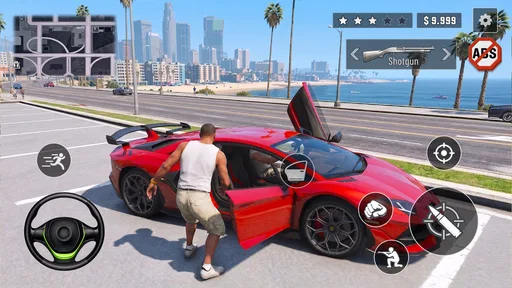
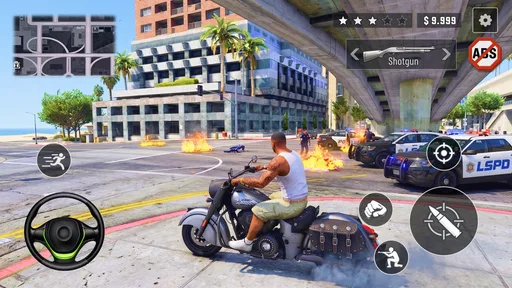
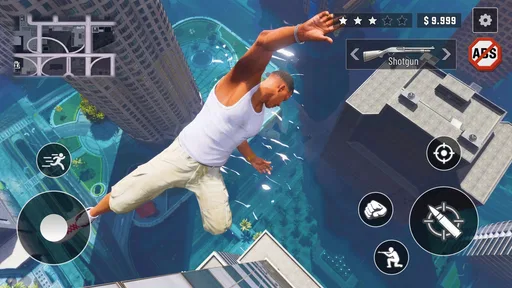
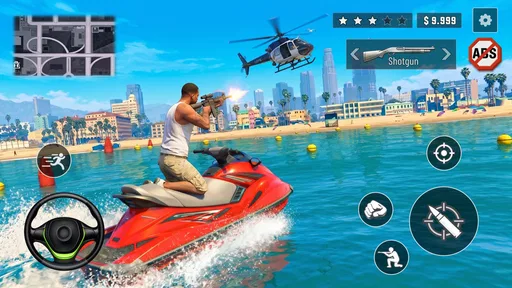
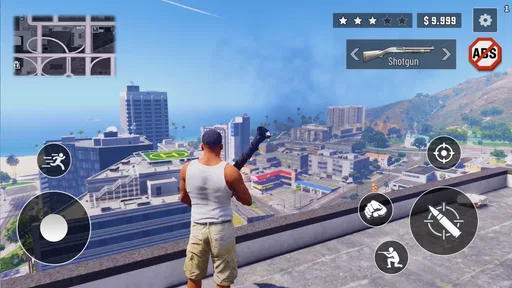
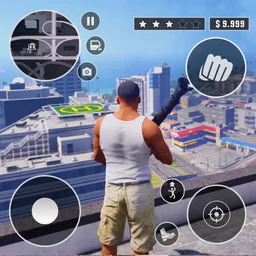
Gangster Miami RP: Grand City review
 Analysis by Gamesive
I approach Gangster Miami RP: Grand City as a role-playing game built around the appeal of moving through a crime-themed city and deciding how to spend my time there. That premise can be satisfying when I want an open-ended session rather than a tightly guided quest, but it also asks me to supply some of the motivation myself. My impression is that the game suits players who enjoy setting their own short-term goals and seeing where a city outing leads, more than players who want a carefully plotted story to carry every moment.
Choosing how to spend a city session
The important decision in a game with an open-world action focus is not simply what to do, but what kind of session I want. I might be looking for a quick burst of movement and activity, or I might want to settle in and explore at a slower pace. The city premise gives those different moods room to coexist, though the experience depends on whether I enjoy making my own plans rather than following a clear chain of objectives.
I find it useful to begin with one modest intention instead of treating the whole city as a checklist. For example, I can decide to explore a particular stretch, get a feel for the atmosphere, and then choose whether I want to continue. That approach makes an unstructured game easier to enjoy: even if I do not make major progress, the session has a purpose. It also helps me notice whether the role-playing side is engaging me or whether I am simply roaming without a reason.
That flexibility is a genuine part of the attraction, but it is not automatically a strength for everyone. Players who like sandbox games often enjoy choosing their own direction; players who rely on frequent prompts, explicit milestones, or a strong narrative may find that freedom less compelling. I would give it a fair trial with a clear personal goal, rather than expecting the game to guide every decision for me.
Balancing ambition with the time available
A practical way to approach an open city is to match the size of the plan to the time I have. On a brief break, I would focus on a small outing rather than beginning a long exploration and hoping to finish it before I need to stop. With more time, I can let the session develop naturally and change direction if something catches my interest. This simple distinction avoids one common sandbox frustration: feeling that a short play session was too small to count.
In an everyday situation, I might open the game while waiting for an appointment, decide to explore for a few minutes, and leave when I need to go. That is a better fit than starting with the expectation that every session must deliver a major accomplishment. If I have a longer, uninterrupted stretch, the open-world format has more room to breathe. The trade-off is clear: flexibility helps me fit play around my day, but it can also make the experience feel diffuse if I never choose a direction.
I would also treat each session as an opportunity to learn what kind of play I actually enjoy here. Am I drawn to the sense of being in a city, the role-playing premise, or the action? Paying attention to that distinction helps me decide what to pursue next instead of repeating activities out of habit. This is a useful planning habit, not a claim about a particular in-game system: it keeps my expectations grounded in the parts of the experience that are genuinely working for me.
Where risk and reward meet
The gangster setting naturally suggests tension between taking chances and keeping a session under control. I would approach that tension as a matter of pacing: when I am curious and have time, I can lean into exploration; when I am only dropping in briefly, I can keep the outing simple. I do not assume that every risky choice will produce a clear reward, so I would avoid building a plan around a specific payoff unless I have seen it happen in play.
That restraint matters because open-world games can tempt players to chase whatever seems most dramatic. A more satisfying approach is to make choices deliberately: decide what you are trying to get from the session, then judge whether a detour is worth the time. If the activity is enjoyable in itself, the detour can be the point. If I am playing mainly to make steady progress, a distraction may feel like lost time instead.
One useful habit is to pause after an unexpected change in the session and reassess rather than pushing ahead automatically. I can ask whether continuing still suits the time I have and whether the situation is entertaining enough to justify it. This is especially helpful for casual play, where the goal is often to have a good few minutes rather than to optimize every move. The game’s role-playing identity makes that kind of self-directed decision-making feel more fitting than treating every moment as a race toward a reward.
There is a limit, though: players who want dependable, clearly signposted rewards may find a self-directed city experience less reassuring than a mission-led role-playing game. If I am in the mood to follow a defined objective and see a definite outcome, I would choose a more structured alternative. Here, the reward I can confidently look for is the appeal of inhabiting an open city and shaping my own session, not a guaranteed result from any one choice.
Adapting instead of forcing one play style
I would not approach every visit with the same plan. If wandering feels aimless, I would narrow the scope and pick one part of the experience to focus on. If a short outing feels too limited, I would save the game for a longer break when I can explore without watching the clock. That adjustment is simple, but it is more useful than blaming the game for a mismatch between its open-ended premise and the way I am trying to play.
Another practical tip is to notice when I am repeating a pattern without enjoying it. Open-world freedom can turn into routine if I always make the same choice by default. Changing the intention for the next session—exploring rather than chasing action, for instance, if that is available and appealing in my play—can refresh the experience without requiring me to invent elaborate goals. I would keep that suggestion flexible, because the best alternative depends on what the game actually presents as I play.
For newcomers, I recommend allowing a little time to understand the game’s rhythm before deciding whether it is for them. A first impression based on hurried, unfocused play may not show what the role-playing format can offer. At the same time, nobody needs to force a lengthy trial if the core city experience is not enjoyable. The useful question is whether making your own choices feels freeing or like work; that answer is a better guide than the genre label alone.
How it sits among role-playing alternatives
Compared with a more linear role-playing game, Gangster Miami RP: Grand City puts the emphasis on an open-world action setting rather than on following a clearly defined story from one scene to the next. That makes it a more natural fit for players who enjoy choosing their own pace. By contrast, someone who wants character development framed by a strong plot, carefully arranged encounters, or a clear sequence of goals may be happier with a conventional story-driven RPG.
It also differs from a purely action-focused game in the promise of role-playing: the setting is meant to feel like a place to inhabit, not merely a backdrop for quick action. That distinction is appealing if I want the mood of a crime-themed city. It may matter less to someone who mainly wants precise, fast combat or a compact arcade loop. I would choose based on the experience I am seeking that evening, rather than assuming that every game in the broad role-playing category offers the same kind of depth.
For a player deciding whether to install it, the most important question is therefore not whether open-world games sound appealing in general. It is whether this particular combination of a gangster-city premise, action, and self-directed role-play fits the way you like to spend time on a phone. If you enjoy making your own objectives, the concept has a clear audience. If you need the game to continually explain what matters next, it is a more uncertain match.
What the long-term appeal depends on
Over time, the game’s value will depend on whether I keep finding fresh reasons to return to its city. In a sandbox, a player’s own planning can provide continuity: I can remember what I wanted to explore, vary my approach, and see whether a different kind of session feels more rewarding. That is a real source of depth for people who like to create their own structure, but it is not a substitute for authored progression if that is what they want most.
I would judge lasting appeal by a simple standard: after several sessions, do I still want to open the game because I am curious about what I can do, or am I doing so out of habit? That question helps separate genuine engagement from the novelty of a new setting. It also keeps my recommendation honest. The city premise may be enough to hold the attention of an open-world fan, while someone who depends on substantial story momentum may move on sooner.
In practical terms, it is worth alternating focused outings with unplanned exploration. A small plan prevents aimlessness; an occasional free-roaming session leaves room for surprises. I would not turn that into a rigid routine, because the appeal is partly in choosing what feels fun at the time. The balance is the point: too much structure can make a sandbox feel like chores, while no structure at all can make a session feel empty.
The game is free to start, and it includes in-app purchases priced at $8.99 per item. I would treat optional spending carefully: first decide whether the core experience is enjoyable on its own, then consider a purchase only if it addresses something I genuinely want. That is a sensible approach for any free-to-play game, especially when I am still learning whether its style suits me. The listed content rating is Everyone, so the broad audience label is accessible, though parents should still make their own judgment about whether the game’s gangster theme is a fit for a particular child.
Who I would recommend it to
Universe Game Labs’ role-playing game has a 4.7 average from around 6,400 ratings and has passed 5 million installs. It is currently version 1.1.7, and its release date is June 22, 2026. I see those figures as useful context for a prospective player, not as proof that the game will suit every taste: ratings can tell me that many people have responded positively, but they cannot replace trying the particular open-world style for myself.
I would recommend it to someone who likes crime-themed city settings, enjoys deciding what to do without needing a constant stream of instructions, and is comfortable with sessions that may be more about exploring than following a plot. It is also a reasonable option for a casual player who wants the freedom to fit a small outing into an ordinary day, provided they are willing to choose their own focus.
I would steer a friend toward a different RPG if they asked for a deeply guided story, a tightly balanced progression path, or a game built around clearly defined objectives. I would also suggest a more focused action game to someone who wants immediate, concentrated combat rather than the broader feeling of an open city. Those are not flaws in themselves; they are different expectations, and choosing around them makes for a better experience.
My verdict is that Gangster Miami RP: Grand City is best approached as a self-directed city role-playing experience, not as a guaranteed story adventure. Its strongest appeal is the freedom to set the pace and shape an outing around your own curiosity. Its main trade-off is that this freedom asks you to bring some structure of your own. If that sounds enjoyable, start with a small goal, keep spending optional, and see whether the city gives you a reason to come back. If you want the game to make every next step obvious, a more mission-driven alternative will probably be the better choice.
What we like
- Open-world city gives players room to explore at their own pace.
- Role-play scenarios can make sessions feel more personal.
- Driving around adds variety beyond on-foot activities.
- Character progression offers goals to work toward.
- The urban setting suits fans of crime-themed games.
What could be better
- Online play may depend on a stable internet connection.
- Crowded areas can feel hectic for new players.
- Progress may require considerable time and repetition.
- In-app purchases may affect the pace of progression.
- Performance can vary across older mobile devices.
Frequently Asked Questions
What is Gangster Miami RP: Grand City about?
Gangster Miami RP: Grand City is a crime-themed mobile game set in a city inspired by Miami. It centers on exploring an urban environment and taking part in action-oriented activities associated with an open-world gangster setting. The exact missions, features, and progression can vary by version, so check the current store listing and in-game description before downloading if you are looking for a particular mode or activity.
Is Gangster Miami RP: Grand City an online multiplayer game?
The word “RP” in the title may suggest role-playing, but it does not by itself confirm that the game supports online multiplayer or live role-play with other players. Check the app’s store page for details about internet access, multiplayer modes, and account requirements. If a connection is needed, a stable network may be required for some features, while offline availability can depend on the version.
Is Gangster Miami RP: Grand City free to download and play?
The game may be offered as a free download, but availability, pricing, and optional purchases can differ between the Google Play Store and Apple App Store or change over time. Before installing, review the listing for in-app purchases, advertisements, and any paid content. These details can help you understand whether the core experience is free and whether spending is needed to access additional items or features.
What age group is Gangster Miami RP: Grand City suitable for?
Because the game uses a gangster and crime theme, it may include action, weapons, or other material that is not suitable for every age group. Check the age rating and content descriptors shown in your country’s app store before downloading, and use the game’s settings or device parental controls where appropriate. Ratings can differ by region and platform, so do not rely on the title alone.
What should I check before installing Gangster Miami RP: Grand City?
Confirm that your Android or iOS device meets the current compatibility requirements and has enough free storage for the download and any additional game data. Also review the latest update date, permissions, privacy information, and user feedback on the official store page. These checks are useful because performance and available features can vary with device model, operating system, region, and the version currently offered.
Permissions
On Android, Gangster Miami RP: Grand City asks for these permissions.
- Location
- approximate location (network-based), precise location (GPS and network-based)
- Wi-Fi connection information
- view Wi-Fi connections
Languages
Gangster Miami RP: Grand City is also available in 1 other languages on our site.
ItalianoGangster Miami RP: Grand City
User reviews
4.7 out of 5
6,406 reviews
- 84%
- 6%
- 5%
- 1%
- 4%
Download Gangster Miami RP: Grand City
Role Playing · Universe Game Labs · Free
Games like Gangster Miami RP: Grand City
View all: Games like Gangster Miami RP: Grand City
Avatar World ®
Role Playing4.7 out of 5

Fashion Queen: Dress Up Game
Role Playing4.4 out of 5

CookieRun: Kingdom
Role Playing4.8 out of 5

XP Hero
Role Playing4.4 out of 5
About this listing
- Game
- Gangster Miami RP: Grand City
- Developer
- Universe Game Labs
- Package
- com.bf8.car.street.racing.game3d
- Version reviewed
- 1.1.7
Gamesive reviews games on its own and is not paid by developers for scores. We do not host game files: the download buttons open the official Google Play and App Store pages. Names, icons and screenshots belong to their owners.